The Starship has landed and it's a big deal.
After 22 hours and 14 trips around the Earth, SpaceX's Ship 42 came down over Texas and was caught by the tower it left from. Its booster was lost 22 hours earlier. Why the catch still matters for everyone, not just SpaceX.
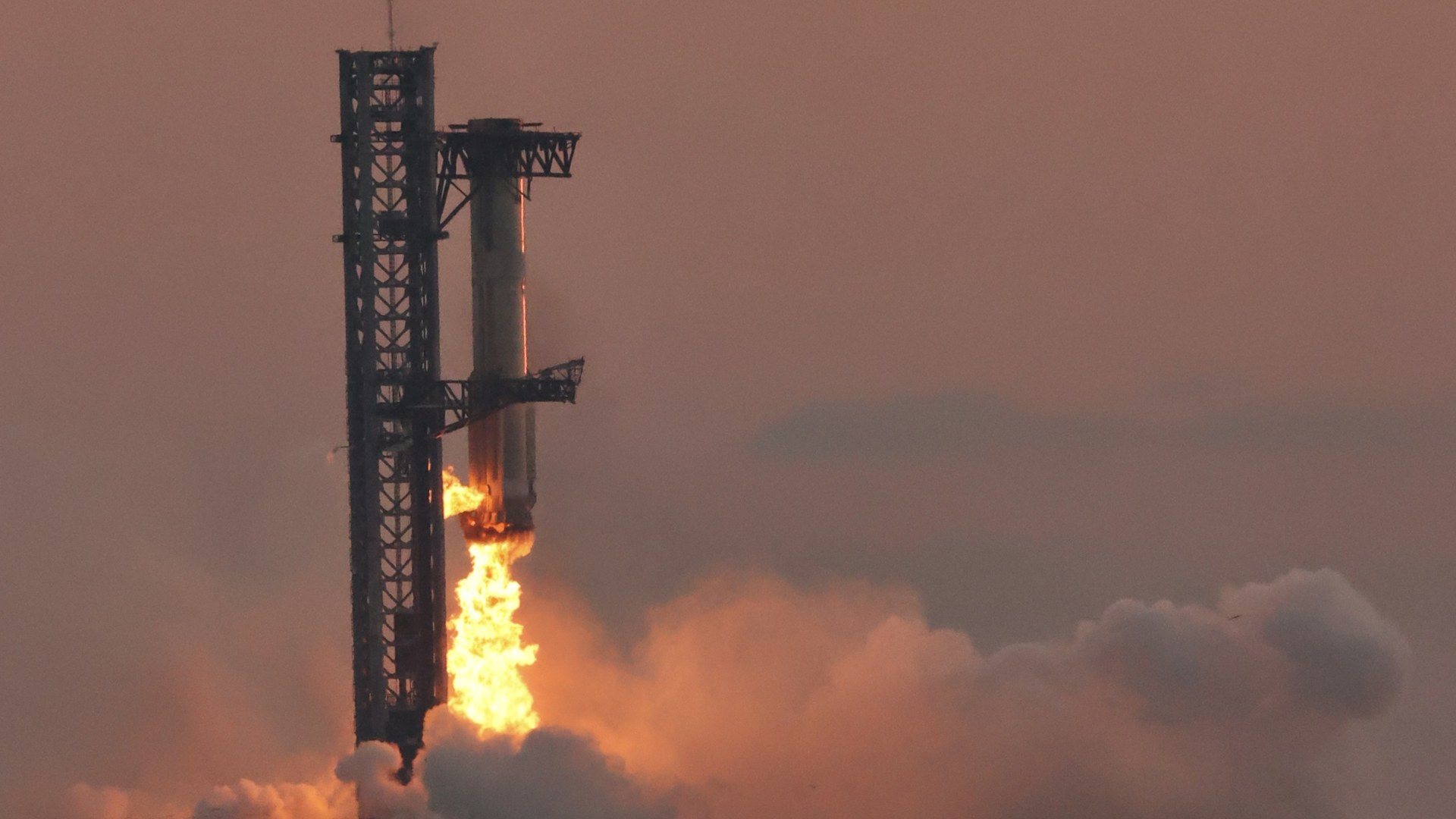
By Boggle Riley · Photo: Steve Jurvetson, CC BY 2.0, cropped (the tower's first booster catch, Flight 5, October 13, 2024)
Published November 15, 2026. Facts as of November 14, 2026. Some details may have changed since.
At 3:20 in the afternoon, Central Time, on Saturday, November 14, 2026, a spaceship came down out of the clouds over the south tip of Texas, turned itself upright on its engines, and stopped in midair between two steel arms. The arms held it. The engines went quiet.
That ship, SpaceX's Ship 42, had left the same tower about 22 and a half hours earlier. In between it went around the Earth about 14 times, let go of 26 Starlink internet satellites, and fell back through the atmosphere at orbital speed, the hottest, hardest part of any trip to space. Then, instead of ending its flight in the ocean, as every Starship that came back before it had, it was caught.
"We caught a Starship," SpaceX's Dan Huot told viewers on the company's broadcast. "And now everything changes."
Why this is a big deal for all of us
For almost 70 years, every rocket that carried something to orbit was thrown away, or most of it was. Imagine flying across the country and then scrapping the airliner when you land. That is roughly how spaceflight has worked, and it is the main reason getting anything into space has cost so much.
SpaceX already changed half of that. Its Falcon 9 boosters land and fly again, and its Starship boosters have been caught by the launch tower three times before this flight. But a booster only climbs part of the way and turns back. The upper stage, the part that actually reaches orbit, has always been the hard one to save, because it has to survive coming home from about 17,500 miles per hour. Until Saturday, no rocket's upper stage had come home from orbit and been caught by the tower it launched from. The Space Shuttle came back from orbit too, but it glided to a runway on wings, and its giant fuel tank was thrown away on every flight.
A rocket whose two halves both come home could be refilled and flown again in days, the way an airplane is. That is SpaceX's goal for Starship, and the whole idea behind it.
Walter Isaacson, who wrote Elon Musk's biography, put it this way on X: "This is actually a bigger deal for humanity than most people can imagine." Clayton Swope, an aerospace expert at the Center for Strategic and International Studies, told AFP it was a "huge technical achievement and proves the whole idea of Starship as a fully reusable spaceship can work."
NASA's Administrator, Jared Isaacman, posted his own reaction. "It was almost magic," he wrote. "Making more believers by the day."
Twenty-two hours, start to finish
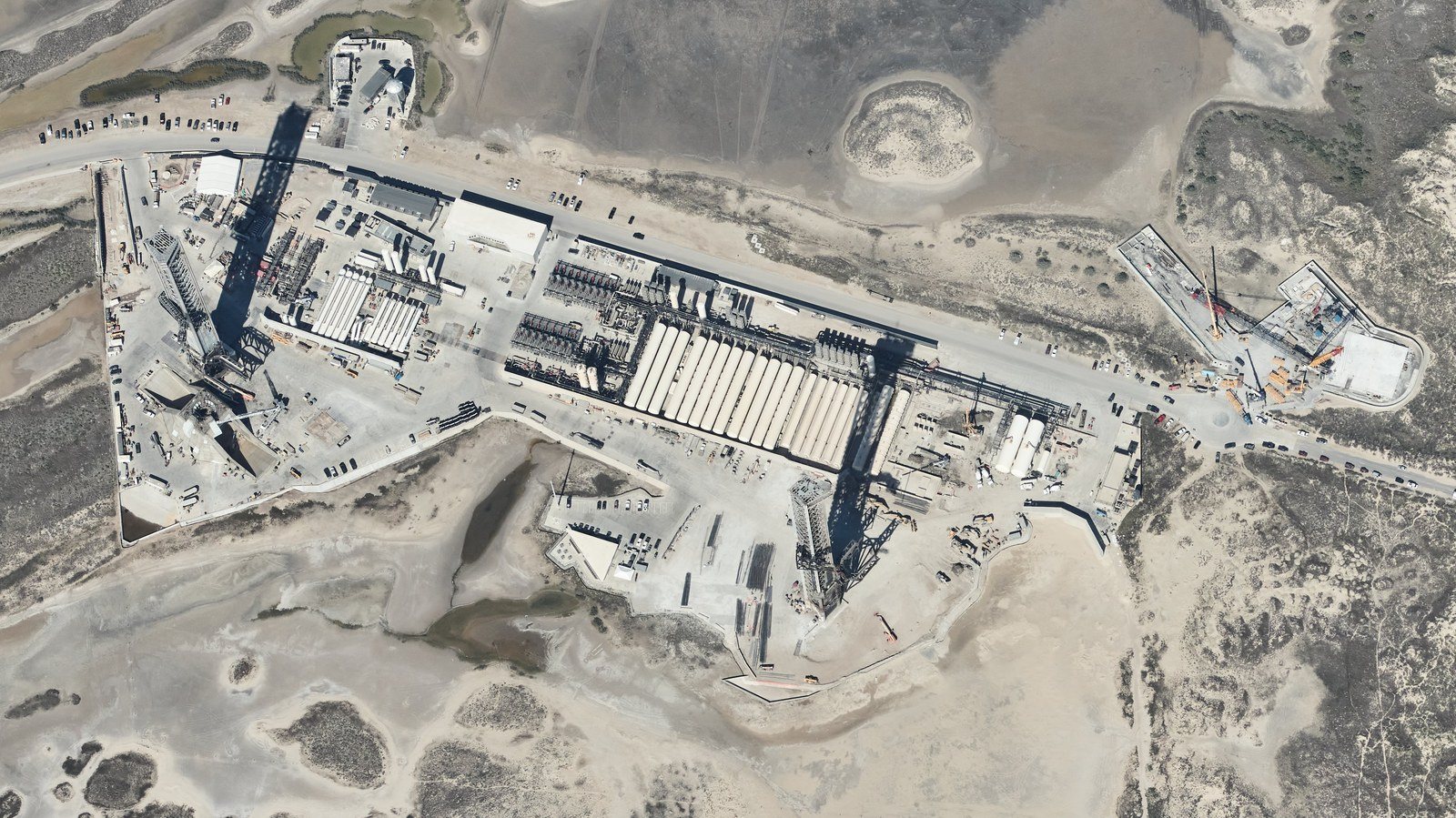
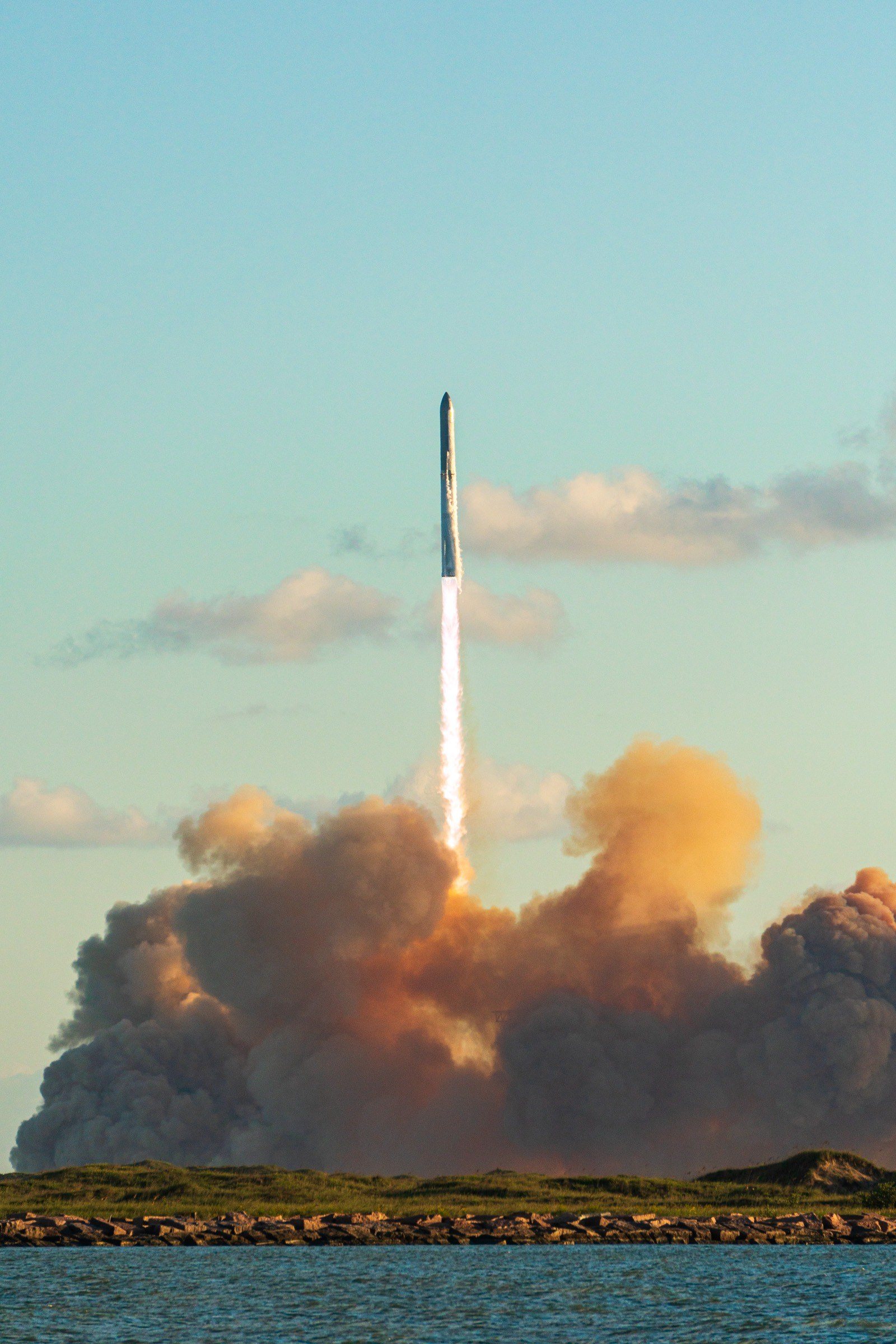
Friday, 4:47 p.m. Central. Starship lifted off from Starbase's second launch pad, Super Heavy Booster 22 under Ship 42, both of the newest version, called Block 3. It was Starship's fifteenth test flight and its second to reach orbit.
About seven minutes in. The booster tried to come home, and did not make it (more on that below).
About half an hour in. Ship 42 reached an orbit about 172 miles up and began letting go of its 26 Starlink V3 satellites. Three of them carried cameras pointed back at the ship, to photograph its heat shield before it had to face the fall home.
Through the night. The ship kept going around: about 14 laps of the planet, the longest Starship flight so far. The Starship before it, Flight 14 in September, stayed up about three hours.
Saturday afternoon, about 21 and a half hours in. One engine fired for about ten seconds to slow the ship and drop it out of orbit. It fell back into the atmosphere belly first, steering with its flaps around the populated parts of northern Mexico and southern Texas, then swung in over the Gulf toward the coast.
Saturday, 3:20 p.m. Central. Three engines lit and flipped the ship upright. They throttled down to two, then one, and the ship eased into the tower's arms. SpaceX calls the tower Mechazilla; the arms are known as the chopsticks. Musk's verdict on the ship afterward: it "looks great!"
The booster that did not come home
The day had already had its setback, about 22 hours before the catch.
The plan for Flight 15 was to catch both halves: the booster back at the tower about six and a half minutes after launch, and the ship the next day. It would have been the first time both stages of a Starship came home from one flight.
It did not happen. When the booster turned around and fired its engines to fly back toward Texas, only 32 of its 33 engines relit. That burn ended early, Payload reported, because the booster was running low on fuel. The booster's own software then did what it is built to do when a catch looks unsafe: it called off the return and steered out over the Gulf of Mexico, away from the tower and the people around it. It slowed itself and hovered over the water, and then its flight termination system, the explosive charge every big rocket carries, destroyed it moments before it would have hit the water.
SpaceX is still working out why. Early reports pointed to the booster's guidance system; Payload and Universe Today both reported the root cause is still under investigation. It would have been the first catch of a Block 3 booster. SpaceX has caught three boosters before, all of the earlier version.
Losing a booster that size over the water is a real loss, and a public one. It is also how SpaceX has always tested: fly, break something, fix it, fly again. A booster that knows to give up and drop safely into the sea instead of forcing a landing at the tower is, in its own way, a system working.
What changes now
A ship that flies again. SpaceX's president, Gwynne Shotwell, said on the company's last earnings call that it aims to "refly the second stage by early next year." Until now there was no second stage to refly. Ship 42's heat shield is now being studied on the ground, with photographs from those three satellites, which is something no one has ever been able to do with a Starship that came back from orbit.
More flights, more often. Musk has said he expects weekly Starship flights at some point in the first half of 2027, and SpaceX told reporters it can now build a ship every two weeks and a booster every four. Claims about pace are worth holding loosely; Starship's schedule has slipped before.
The Moon. NASA is counting on a version of Starship to land its Artemis astronauts on the Moon, a landing CBS News reported is planned for 2028, with NASA also open to Blue Origin's Blue Moon lander. A Moon-bound Starship has to be filled with propellant in orbit by other Starships first. Moving propellant from one ship to another in orbit has not been done yet; AFP called it "the unsolved problem." A ship that can be caught and refilled is what makes a fleet of tanker flights affordable at all.
Mars. SpaceX built Starship to carry people and cargo to Mars. Nothing about that is close. But every version of that plan starts with a rocket that comes back whole and flies again, and on Saturday half of that rocket did.
On SpaceDew's Dew Point ladder, the rung for this stage is a fully reusable super-heavy rocket that completes an orbital mission and recovers both stages. Flight 15 recovered the harder stage for the first time. Because the booster was lost on the same flight, the rung stays in progress. The next rung after it is the one NASA is waiting for: propellant moved between two vehicles in orbit.
Flight 15 at a glance
- Launched: Friday, November 13, 2026, 4:47 p.m. Central (5:47 p.m. Eastern), Starbase, Texas, Pad 2
- Vehicles: Super Heavy Booster 22 and Ship 42, Block 3
- Orbit: about 171 by 173 miles up (276 by 278 kilometers), inclined 30.5 degrees
- Payload: 26 Starlink V3 satellites, all deployed
- Booster: boostback cut short, diverted over the Gulf of Mexico and destroyed by its flight termination system about 6 and a half minutes after launch
- Ship: about 14 orbits, caught by the launch tower's arms on Saturday, November 14, at 3:20 p.m. Central, about 22 hours 32 minutes after launch
- First: the first time an orbital upper stage was caught by its launch tower
Sources
- Wikipedia, Starship flight 15 (the flight's timeline, orbit and vehicles, each line with its own sources), read November 14, 2026
- Payload, SpaceX successfully catches Starship upper stage, November 14, 2026 (Dan Huot's words, the booster's boostback, Shotwell and Musk on what comes next)
- Universe Today, Baby, she's back: SpaceX catches a Starship from orbit for first time, November 14, 2026 (Isaacman's post, the investigation)
- CBS News (William Harwood), SpaceX launches Starship, November 13 and 14, 2026 (launch time, the booster's loss, the Moon landing plans)
- AFP, via RTÉ, November 15, 2026 (Clayton Swope, Musk's verdict, the earlier booster catches, propellant transfer, the build rate)
- Fox Business (Brittany Miller), SpaceX makes history as Starship spacecraft caught by launch tower for first time, November 14, 2026 (Walter Isaacson's post)
- Spaceflight Now, Live coverage: Starship Flight 15, November 13, 2026 (the plan to catch both stages)
- SpaceDew, The Space Shuttle, the machine that built the station
- Associated Press, via NBC News, September 28, 2026 (the speed of orbit, Flight 14)
- SpaceX, the catch, on X, November 14, 2026
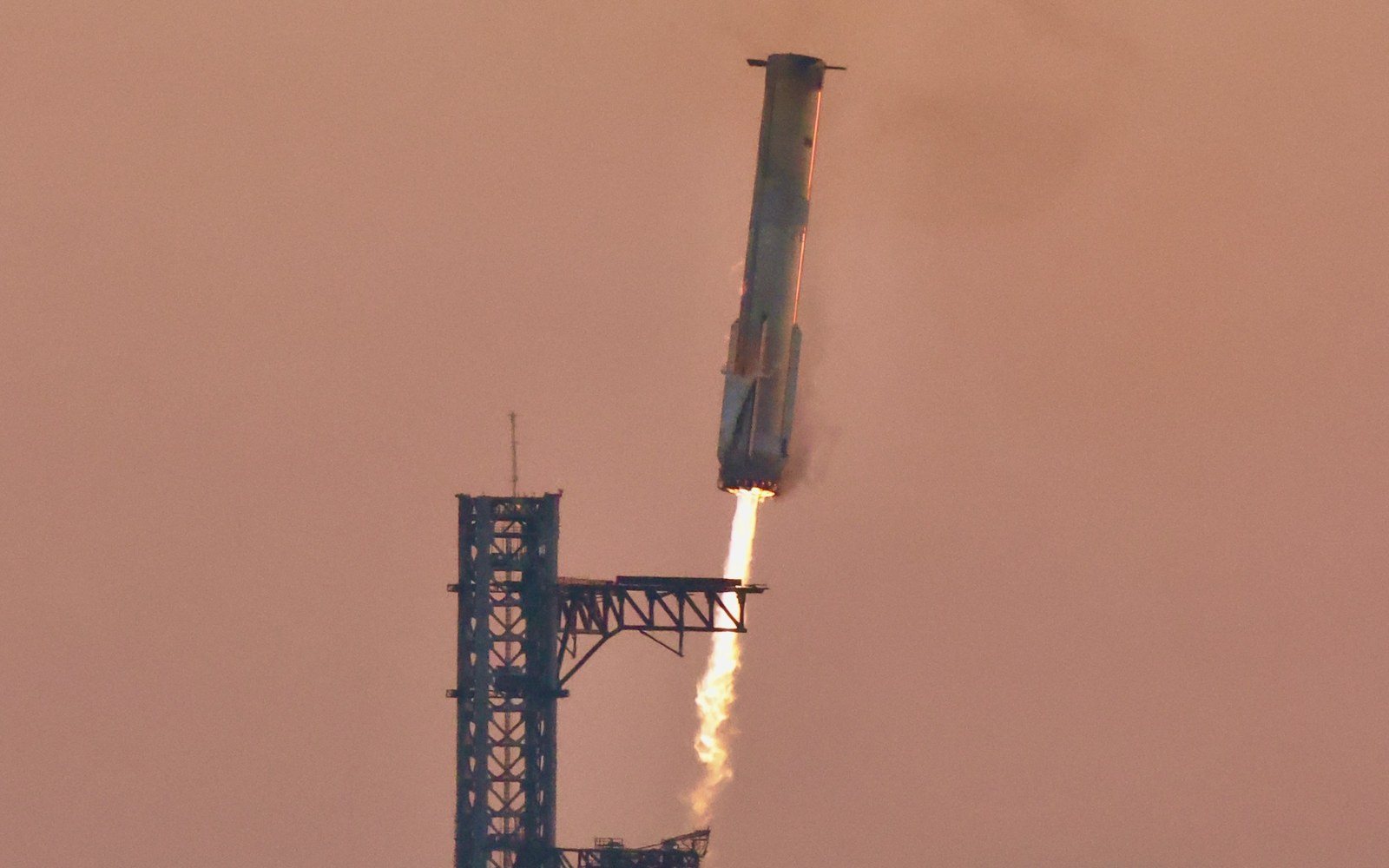
- Photos: Steve Jurvetson, Starship Booster Landing on Mechzilla and Starship Booster Return on Final Approach, Flight 5, October 13, 2024, licensed CC BY 2.0, both cropped; Shujianyang, Starship lifted off from Starbase during flight test 11, October 13, 2025, licensed CC BY-SA 4.0; NOAA, SpaceX Starbase Launch Site Early 2026, public domain. No freely licensed photograph of Flight 15 itself was available on November 14, 2026.


Follow SpaceX on SpaceDew
Get the Morning Dew
The daily brief, live quotes and the newest stories, every morning. Plus a Friday recap of the week. Nothing else, ever.