Meet Apeiron: Virgin Galactic's New Spaceship and Its Long Road Back to Space
Named by a public vote and unveiled today, Apeiron is the ship Virgin Galactic needs to fly paying passengers again. What a seat costs, where the company has already been, and how a stock that closed at $59.41 in 2021 came to be worth the same as about 13 cents.
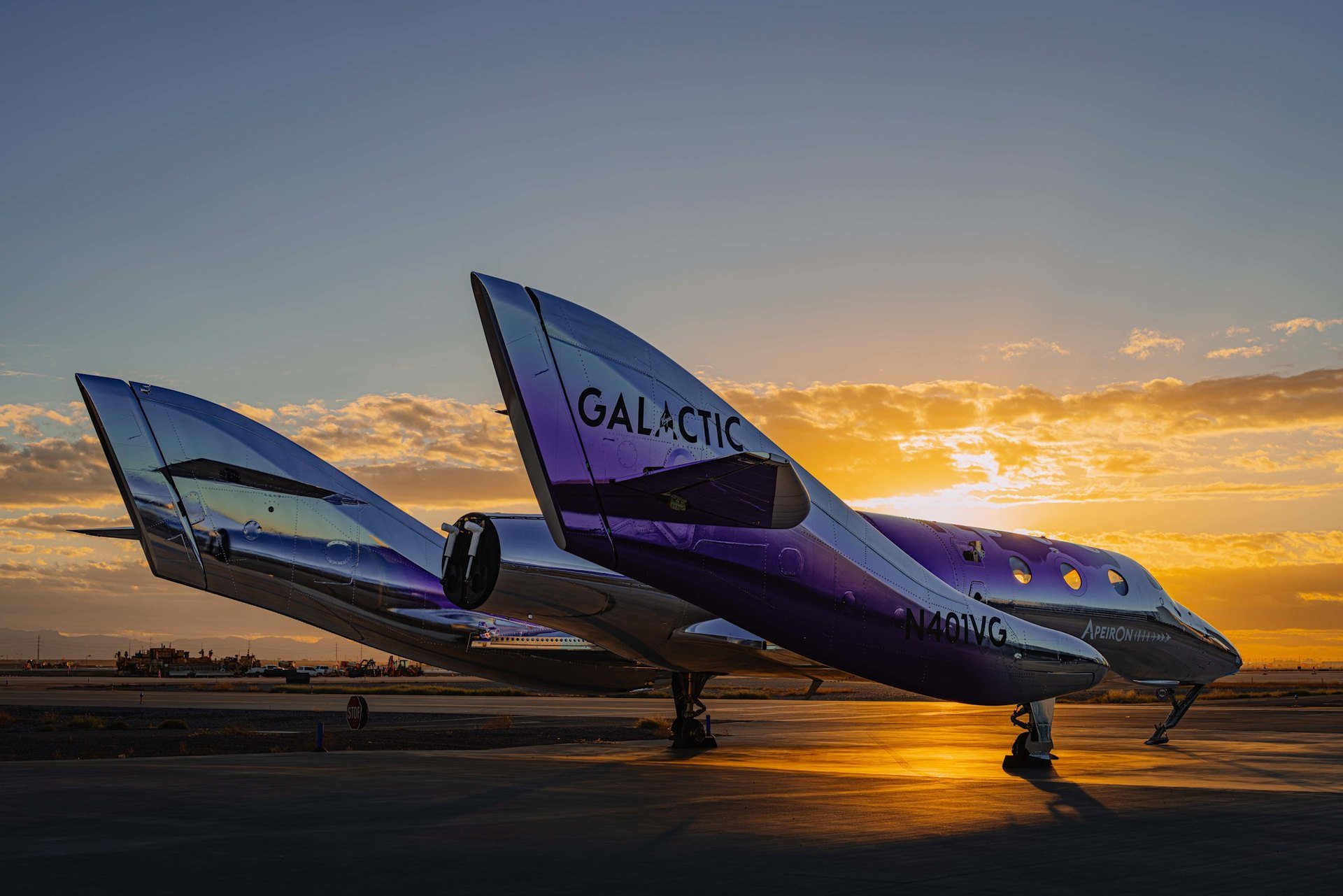
By SpaceDew · Photo: Virgin Galactic
Published October 28, 2026. Facts as of that day. Some details may have changed since.
Virgin Galactic showed the world its new spaceship this morning and gave it a name: Apeiron, said App-Err-On. It is an ancient Greek word for "the boundless." The name came from a public vote that drew thousands of answers from 83 countries on six continents.
Later today, the company said, Apeiron is to ride under the wing of its carrier plane, Eve, from the factory in Mesa, Arizona, to Spaceport America in New Mexico, the base its flights leave from. There, engineers plan to finish checking the ship's flight software before the flight tests begin.

"We're proud that the lead ship in Virgin Galactic's Spaceship fleet will carry a name chosen by the people who share our excitement for what comes next," said Michael Colglazier, the company's chief executive.
It is a big day for a company that has not been to space since June 2024. Everything it hopes to earn next depends on this ship and its twin.
A new ship, built to fly twice a week
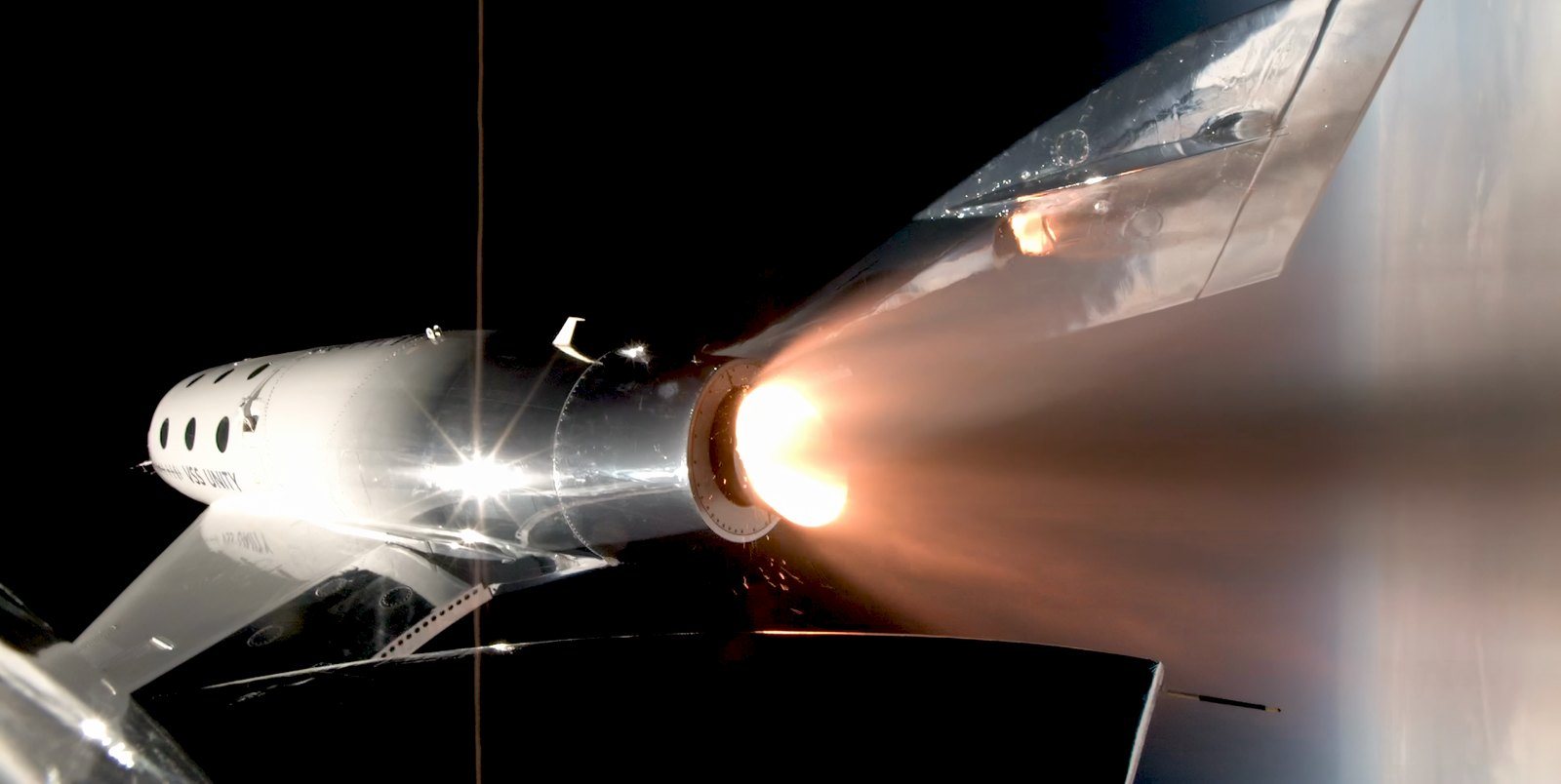
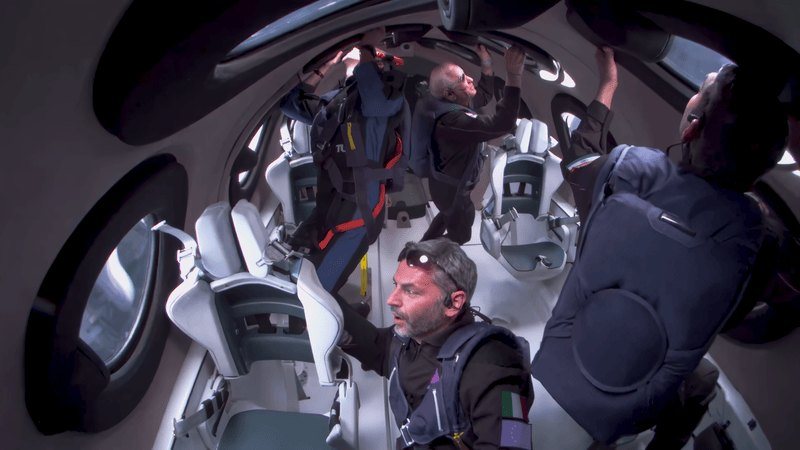
Apeiron is the first of Virgin Galactic's Delta class, its third generation of spaceship. It works much like the one before it. Eve, a twin-bodied jet, carries the spaceship up to about 50,000 feet and lets it go. The spaceship lights its rocket motor, climbs straight up, and coasts over the top of its arc, where the passengers float free of their seats and look down at Earth through the windows. Then it glides home to the runway it left from. The whole trip takes about 60 to 90 minutes, Space.com reported in August.
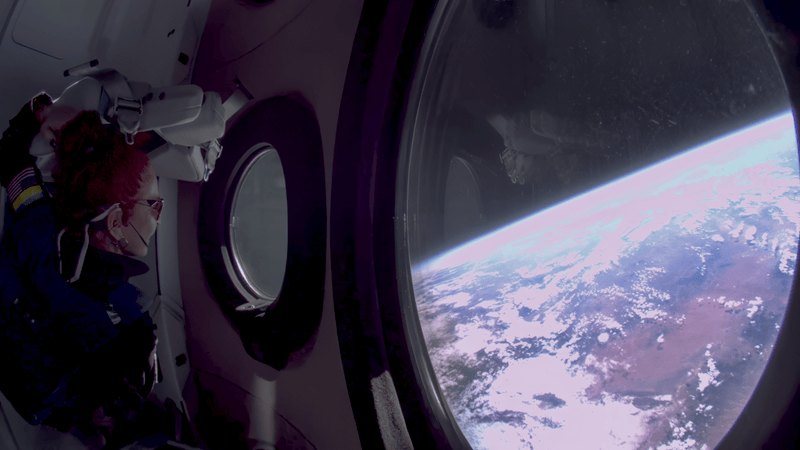
The differences are in the numbers. Each Delta ship carries six passengers, two more than Unity did, and is built to fly about twice a week. Unity flew seven paying missions in a year. With two ships flying, the company forecasts 10 or more spaceflights a month by the end of June 2027.
It is also built to pay its way. Doug Ahrens, the finance chief, said in August that each new ship should cost about $60 million to build and last at least 500 flights. With six seats a flight at an average of $600,000 a seat, he said, each ship could earn more than $1.4 billion over its life after the cost of flying it.
The schedule has already moved twice. In the spring the company was aiming for spaceflight in the last three months of 2026. In August it moved the first commercial flight to February 2027, blaming "hundreds of relatively small but important installation tasks." On Monday it moved again: the first commercial flight is now expected early in the April to June quarter of 2027, and the second ship is to start flying customers around the middle of the year.
Where Virgin Galactic has already been
The company has done this before, with one ship. VSS Unity crossed 50 miles above the Earth twelve times between December 2018 and June 2024, all from the runways of California and New Mexico. Its flights topped out at about 55 miles. That is above the 50-mile line the U.S. uses to award astronaut wings, and below the 62-mile Kármán line most of the world uses as the edge of space.
The flight people remember came on July 11, 2021, when the company's founder, Richard Branson, rode Unity to about 53 miles, nine days before Jeff Bezos flew on Blue Origin's New Shepard.
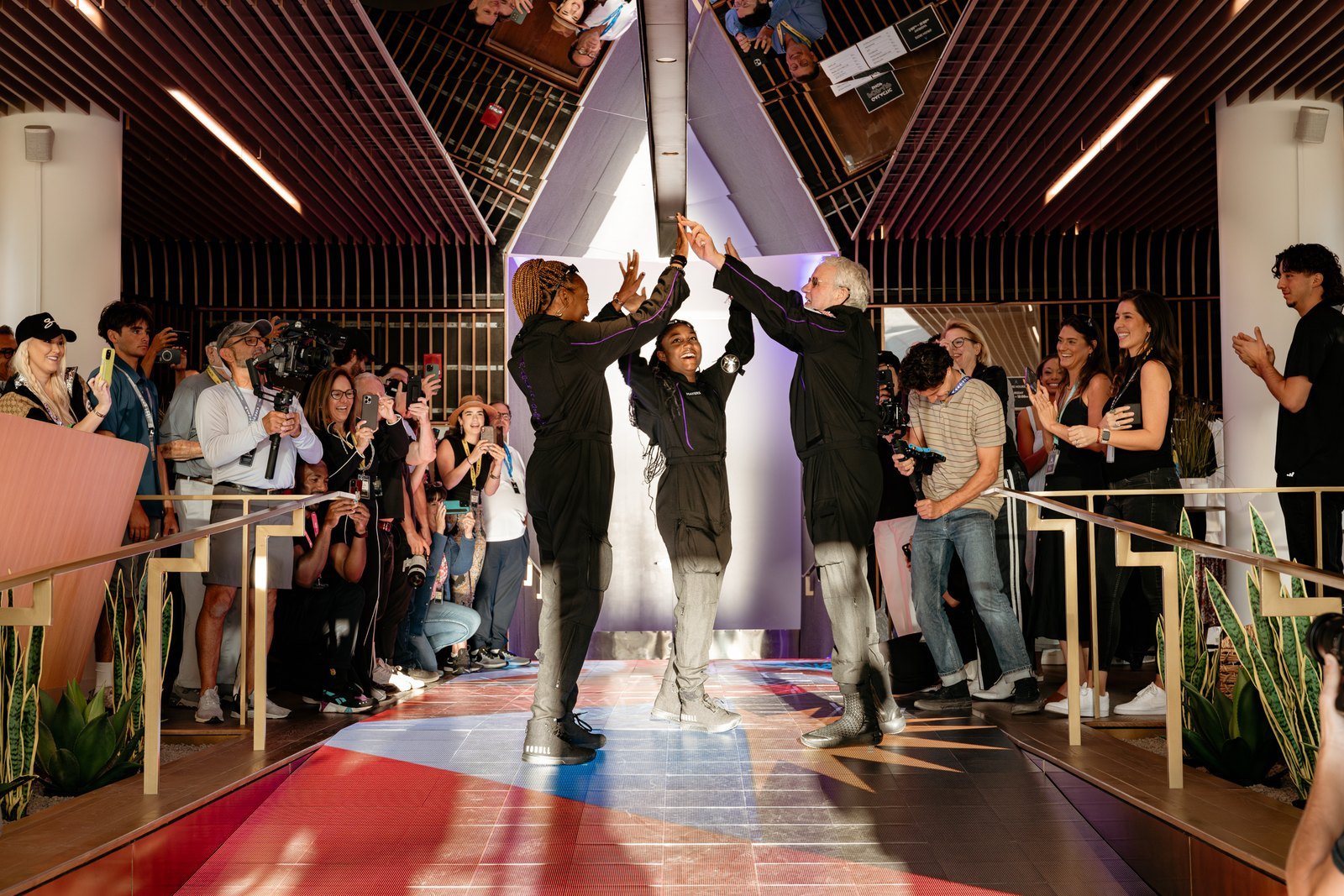
Paying service began on June 29, 2023, with Galactic 01, which carried researchers from the Italian Air Force. Six weeks later, Galactic 02 flew the company's first private passengers. Keisha Schahaff of Antigua and Barbuda had won two seats in a sweepstakes, and she flew with her daughter, Anastatia Mayers, the first mother and daughter to go to space together. Beside them was Jon Goodwin, a British Olympian who became the second person with Parkinson's disease to fly to space.
Five more flights followed, the last of them Galactic 07, on June 8, 2024. Then Unity was retired, and the company put everything into building the Delta ships.
The road to all of it was not smooth. On October 31, 2014, the first SpaceShipTwo, VSS Enterprise, broke apart during a rocket-powered test flight over California's Mojave Desert. The co-pilot, Michael Alsbury, was killed. The pilot, Peter Siebold, survived with serious injuries.
What a seat costs
Nobody can buy one today. The price has climbed every time the company has opened a new batch of seats:
| When | Price of a seat |
|---|---|
| Early bookings, by 2009 | $200,000 |
| From May 2013 | $250,000 |
| From 2021 | $450,000 |
| Next batch | $600,000 |
| Latest batch, sold out by August 2026 | $750,000 |
In August, Colglazier said the $750,000 batch was oversubscribed. "We have retired the $750,000 price point, and we plan to open a new tranche of spaceflight expeditions this fall at higher price points," he said. He did not say how much higher. On Monday the company said more than 100 of its future astronauts are starting their preparation.
For now Virgin Galactic will have the market to itself when it returns. Its main rival, Blue Origin, has put New Shepard's flights on hold to focus on NASA's return to the Moon. Blue Origin never published its prices; Ahrens said they were believed to be $1 million to $2 million a seat.
A stock that went up like a rocket
Virgin Galactic went public seven years ago today. On October 28, 2019, it became the first space tourism company on the New York Stock Exchange, by merging with a blank-check company, Social Capital Hedosophia. Its shares closed that first day at $11.75.
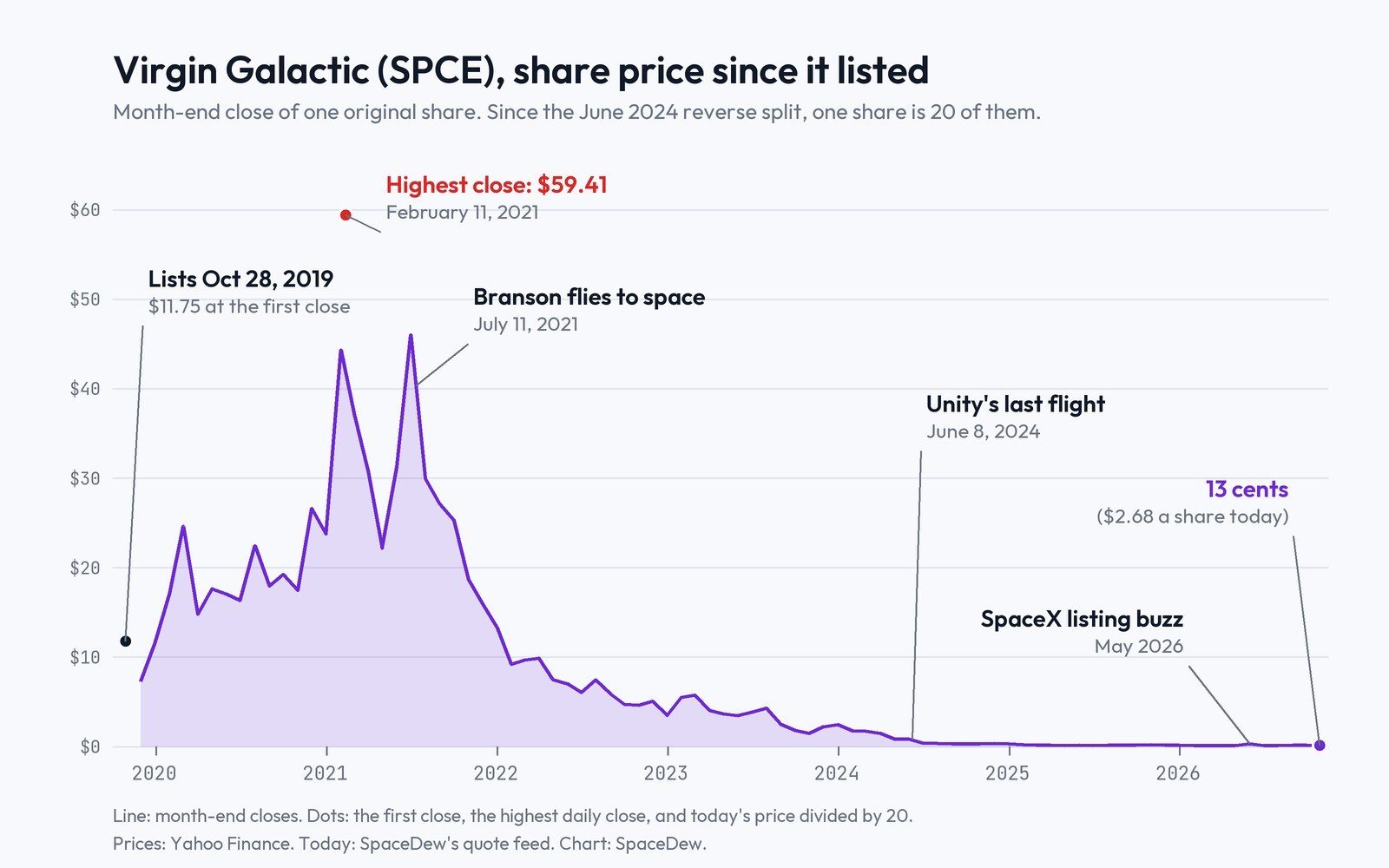
Then the market fell in love with space. On February 4, 2021, the stock touched $62.80 during the day, and on February 11 it closed at $59.41, its highest close ever.
Since then the price fell so far that in June 2024 the company combined every 20 shares into one, to keep it above the New York Stock Exchange's minimum. So today's price has to be divided by 20 to compare. This morning SPCE traded at about $2.68, the same as about 13 cents for one of the shares that once closed at $59.41: a fall of roughly 99.8 percent. Ten thousand dollars put in at the top close would be worth about $23 now.
The long slide had plain causes. Flights came slower than promised, the company kept losing money (nearly $56 million in the April to June quarter of 2026 alone), and it sold new shares to pay for the Delta ships, which spread each share's claim on the business thinner. The stock did come alive once this year: as SpaceX prepared its own listing in May, investors bid up space stocks, and SPCE more than doubled that month, reaching $8.90 in June before falling back.
What comes next
Virgin Galactic says it will give more detail on the flight tests and its money when it reports its July to September results in November. The flight tests come first, and no paying passenger flies until they are done. In August the company forecast that it would start bringing in more cash than it spends in some quarter of 2027.
If the ships fly as often as the company forecasts, Virgin Galactic could fly more people to space in a month than it did in all of Unity's paying service. If they slip again, the stock already shows what that costs.
Sources
- Virgin Galactic, Virgin Galactic unveils Spaceship Apeiron, October 28, 2026
- Virgin Galactic, Virgin Galactic sets October 28 for lead Delta Class Spaceship's arrival at Spaceport America, October 26, 2026 (the new schedule and the astronaut community)
- Space.com (Mike Wall), Virgin Galactic delays next commercial spaceflight to 2027, August 13, 2026 (the Delta ships, the $750,000 batch and the prices before it, the costs and flight rate, Blue Origin)
- Wikipedia, Virgin Galactic (the flight list, early ticket prices, the 2014 accident and the 2019 listing, each with its own sources), Galactic 02 and Galactic 07
- Virgin Galactic, Galactic 02 press kit and the 2021 sweepstakes announcement
- Virgin Galactic, Virgin Galactic to effect a reverse stock split, June 12, 2024
- Share prices: Yahoo Finance month-end closes, read October 28, 2026, shown per original share (since the June 2024 reverse split, divided by 20); the first day's close as reported at the listing; the February 2021 high and close from Yahoo Finance's daily prices for that month; today's price from SpaceDew's quote feed
- TrendSpider, Virgin Galactic stock rockets 180% in May rally (the May 2026 run)
- Pictures: Virgin Galactic newsroom and media assets, for editorial use. The chart is SpaceDew's.
Follow Virgin Galactic on SpaceDew
Get the Morning Dew
The daily brief, live quotes and the newest stories, every morning. Plus a Friday recap of the week. Nothing else, ever.