Observatories you can visit
The big telescopes of the world, and the smaller ones near you, that let the public in: what is there, how to visit, and a link to each one's own website. 99 observatories in 27 countries, searchable by country and state. Start with the three record holders, or jump to the search.
The big three, oldest first
The largest refractor, the largest single-mirror reflector, and the largest space telescope. The three drawings use one scale; the person is 1.8 m (5 ft 11 in) tall.
1 · LARGEST REFRACTOR · 1897
Yerkes Observatory
Williams Bay, Wisconsin, a 50-acre campus on Geneva Lake · 334 m above sea level
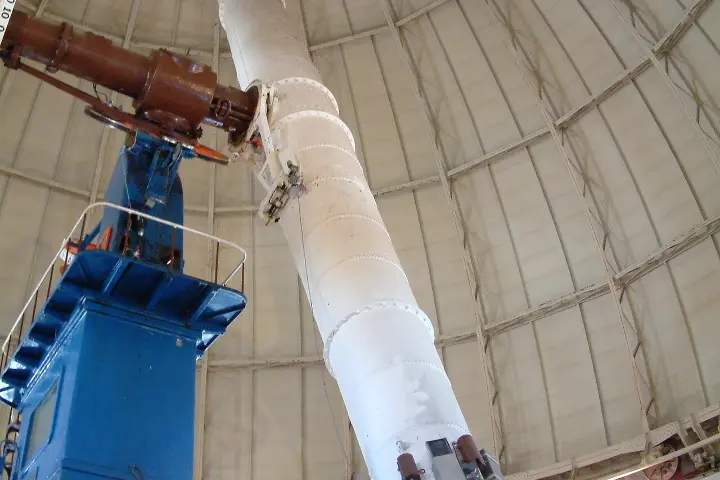
- How it started: in 1892 astronomer George Ellery Hale learned that two 40-inch glass lens blanks were sitting unused. University of Chicago president William Rainey Harper backed him, and Chicago businessman Charles T. Yerkes paid. It was dedicated on October 21, 1897.
- The 40-inch: the largest refracting telescope ever used for astronomy. The Alvan Clark & Sons lens weighs 225 kg and it took 18 tries to cast the glass. It focuses light 19.3 m (63 ft) behind the lens.
- Why it matters: often called the birthplace of modern astrophysics. The Astrophysical Journal was edited here until the 1960s, and a meeting of astronomers here in October 1897 led to the American Astronomical Society.
- Today: the University of Chicago ran it for 121 years and closed it on October 1, 2018. The Yerkes Future Foundation, a nonprofit started by local residents, took ownership in 2020, restored it and reopened it in 2022.
Who worked here and what they found
- 1897George Ellery Hale opens Yerkes. He invented the spectroheliograph for photographing the Sun, then founded Mount Wilson Observatory and planned Palomar's 200-inch.
- 1900sE. E. Barnard photographs the Milky Way; his niece and assistant Mary Ross Calvert worked as a computer and astrophotographer from 1905 to 1946. S. W. Burnham, a court reporter by day, is credited with 1,340 double stars.
- 1914-17Edwin Hubble is a graduate student here. Later he showed there are other galaxies and that the universe is expanding.
- 1921Otto Struve arrives, a refugee from the Russian Revolution; he later became director. Albert Einstein visits in May, on his first trip to the United States.
- 1936-50Subrahmanyan Chandrasekhar works here; Nobel Prize in Physics, 1983. NASA's Chandra X-ray Observatory is named for him.
- 1943William W. Morgan, Philip Keenan and Edith Kellman begin the MKK system for sorting stars by their spectra, still used today.
- 1944Gerard Kuiper finds that Saturn's moon Titan has an atmosphere. In 1951 he proposed the icy belt beyond Neptune now called the Kuiper Belt.
- 1946-54Nancy Grace Roman studies here; she became NASA's first Chief of Astronomy.
- 1951Morgan, with Donald Osterbrock and Stewart Sharpless, discovers the Milky Way's spiral arms.
- 1950sMargaret Burbidge helps show in 1957 that most heavy elements are made inside stars. Carl Sagan is a graduate student here, 1956-60.
Einstein, Pluto and a movie
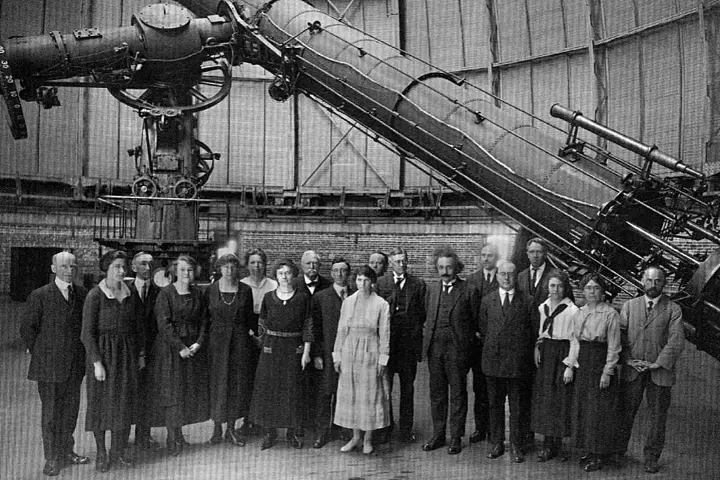
1921: Albert Einstein visits. He was photographed in front of the 40-inch. His theory predicted that the Sun's gravity bends starlight, and eclipse photographs in 1919 had just shown that it does. Telescopes were how his ideas got tested.
Pluto, from old glass to New Horizons. In 1909 a Yerkes photograph caught Pluto, 21 years before Clyde Tombaugh discovered it at Lowell Observatory; nobody noticed. Nearly a century later NASA borrowed glass plates from the Yerkes archive to help pin down Pluto's path for the New Horizons mission, which flew past Pluto on July 14, 2015.
Lights, camera, Yerkes. Scenes for the 1996 movie Chain Reaction, with Keanu Reeves, Morgan Freeman and Rachel Weisz, were filmed here.
2 · LARGEST SINGLE-MIRROR REFLECTOR · 2009
Gran Telescopio Canarias (GTC)
Roque de los Muchachos Observatory, La Palma, Canary Islands, Spain · about 2,300 m
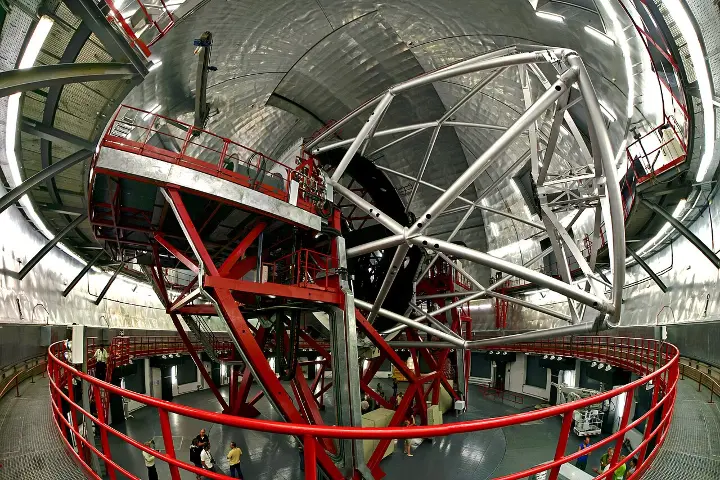
- The mirror: 10.4 m across, made of 36 hexagonal segments that computer-controlled actuators keep aligned (active optics).
- Timeline: first light July 13, 2007 with 12 segments; science from May 2009; opened by King Juan Carlos I of Spain on July 24, 2009.
- Problem it solves: the bigger the mirror, the fainter and farther the objects it can study. La Palma is one of the best observing sites in the Northern Hemisphere.
- Close rivals: the twin Keck telescopes in Hawaii (10 m each, also 36 segments). The Extremely Large Telescope (39 m, 798 segments) is being built in Chile.
3 · LARGEST SPACE TELESCOPE · 2021
James Webb Space Telescope
In orbit around the Sun-Earth L2 point, about 1.5 million km from Earth
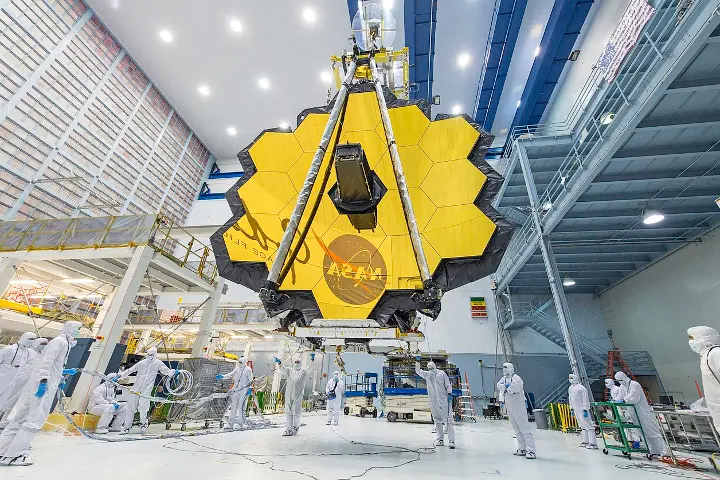
- The mirror: 6.5 m across, 18 hexagonal beryllium segments coated with a thin layer of gold. It is 2.7 times wider than Hubble's mirror.
- The sunshield: 21.2 m by 14.2 m, the size of a tennis court: five layers of aluminum-coated film that keep the telescope cold enough to see infrared.
- Launch: December 25, 2021, on an Ariane 5 rocket from Kourou, French Guiana. A NASA, European and Canadian mission.
- Problem it solves: it sees infrared light, which passes through dust clouds and carries the light of the very first galaxies, stretched into infrared by the expanding universe.
- Visit: you can't, it is 1.5 million km away. Its pictures are free at science.nasa.gov/mission/webb.
FIND AN OBSERVATORY
All 99 observatories.
Websites and visiting notes were checked on Nov 12, 2026. Hours, tickets and tours change, so open the observatory's own page before you travel.
Von Braun Astronomical Society
Huntsville, Alabama, United States
Open to visitors
A volunteer astronomical society's campus with two observatories, a planetarium and a library.
Visit: Planetarium shows are held every Saturday night in Monte Sano State Park, followed by telescope viewing on clear nights.
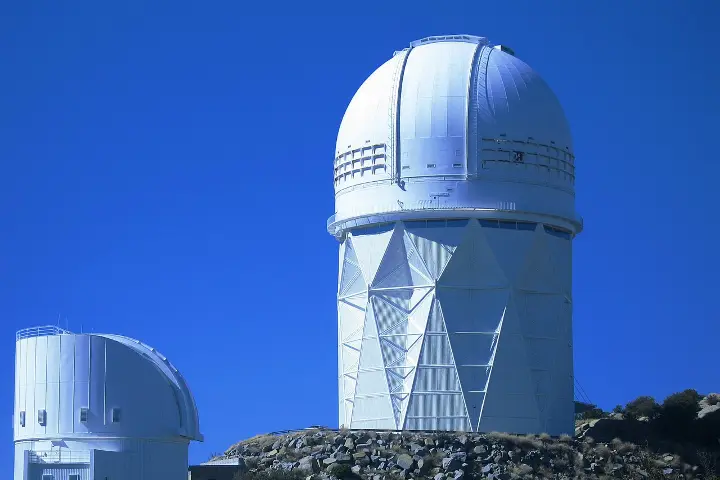
Photo: Montebest (the picture's source, opens in a new tab), CC BY 3.0 Kitt Peak National Observatory
Tucson, Arizona, United States · 2,096 m · since 1960
Open to visitors
More than twenty telescopes, including the Mayall 4 m and the WIYN 3.5 m.
On land leased from the Tohono O'odham Nation. In 1976 the Mayall found methane ice on Pluto; today its DESI instrument maps millions of galaxies to study dark energy.
Visit: The visitor center is open daily. The telescopes are seen on guided daytime tours and bookable nighttime observing programs.
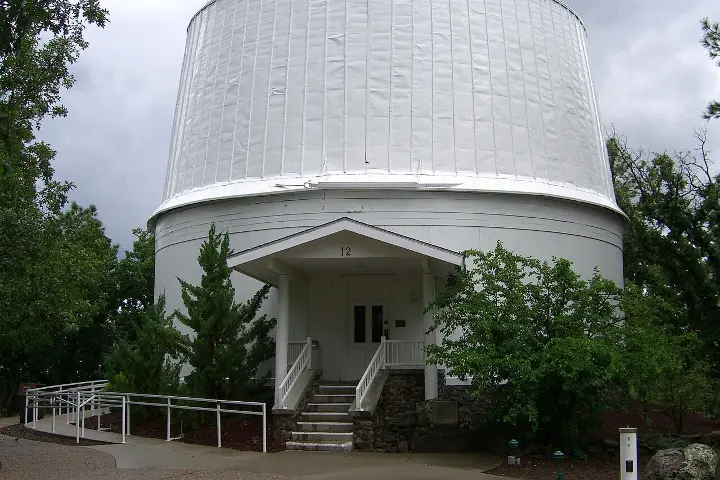
Photo: en:User:Pretzelpaws (the picture's source, opens in a new tab), CC BY-SA 3.0 Lowell Observatory
Flagstaff, Arizona, United States · 2,210 m · since 1894
Open to visitors
The 24-inch Clark refractor (1896) and the 4.3 m Lowell Discovery Telescope.
Founded by Percival Lowell. Clyde Tombaugh discovered Pluto here on February 18, 1930, and V. M. Slipher's measurements of galaxies speeding away helped lead to the discovery that the universe is expanding.
Visit: General admission covers the campus, guided tours, the historic telescopes and evening stargazing, with no reservation needed.
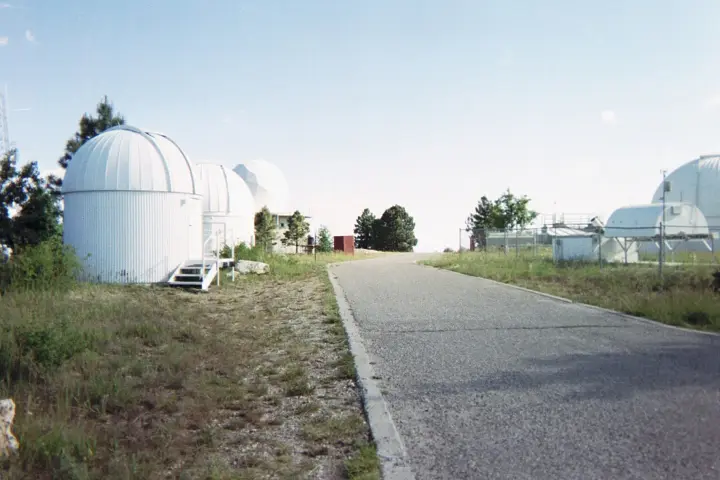
Photo: Yvette Cendes (the picture's source, opens in a new tab), Public domain Mount Lemmon SkyCenter
Tucson, Arizona, United States
By booking or on set days
The University of Arizona's public observatory on Mount Lemmon, whose 32-inch Schulman telescope it bills as the largest dedicated public telescope in the Southwest.
Visit: The SkyNights evening stargazing program is offered by reservation on many nights of the year.
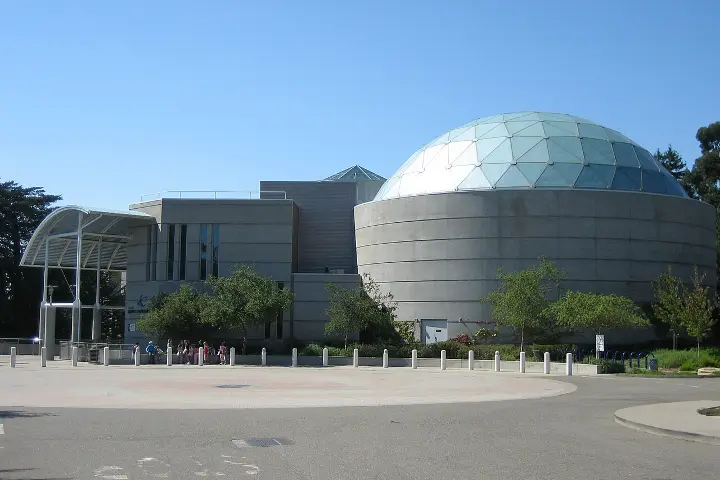
Photo: The original uploader was Daniel Olsen at English Wikipedia . (the picture's source, opens in a new tab), CC BY 2.5 Chabot Space & Science Center
Oakland, California, United States · since 1883
Open to visitors
Home to three large telescopes named Leah (an 8-inch refractor from 1883), Rachel (a 20-inch refractor) and Nellie (a 36-inch reflector).
Visit: Free telescope viewing is offered on the observatory deck on Friday and Saturday evenings, weather permitting.
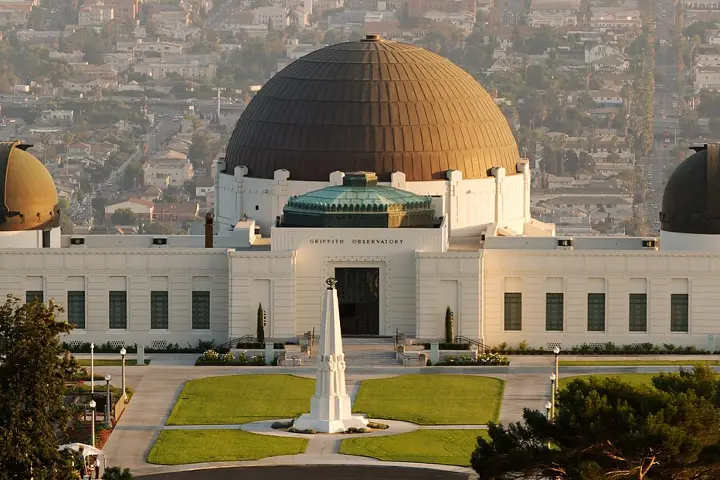
Photo: Matthew Field (the picture's source, opens in a new tab), CC BY 2.5 Griffith Observatory
Los Angeles, California, United States
Open to visitors
A city observatory with free public telescopes and the Samuel Oschin Planetarium.
Visit: Admission to the building, grounds and public telescopes is free on the days it is open, and a public star party is held once a month.
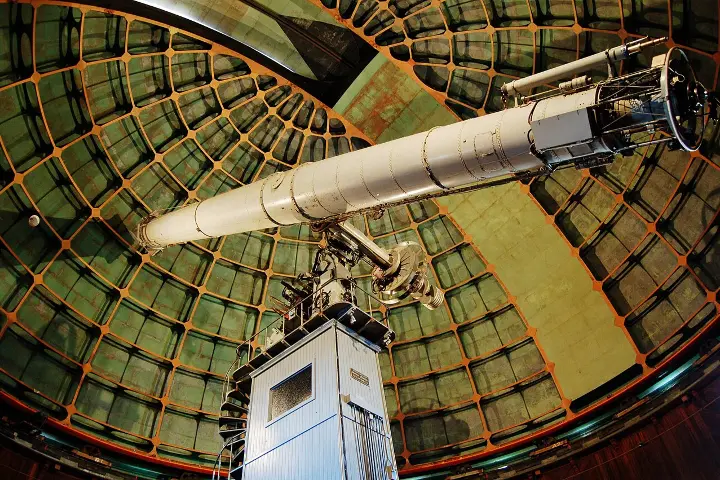
Photo: myyorgda (the picture's source, opens in a new tab), CC BY 2.0 Lick Observatory
San Jose, California, United States · 1,283 m · since 1888
Open to visitors
The 36-inch Great Lick Refractor, the 3 m Shane reflector and the Automated Planet Finder.
Funded by James Lick; the world's first permanently occupied mountain-top observatory. E. E. Barnard discovered Jupiter's moon Amalthea here in 1892.
Visit: The observatory says it is open to the public with free admission. The visitor center and gift shop keep shorter days than the grounds.
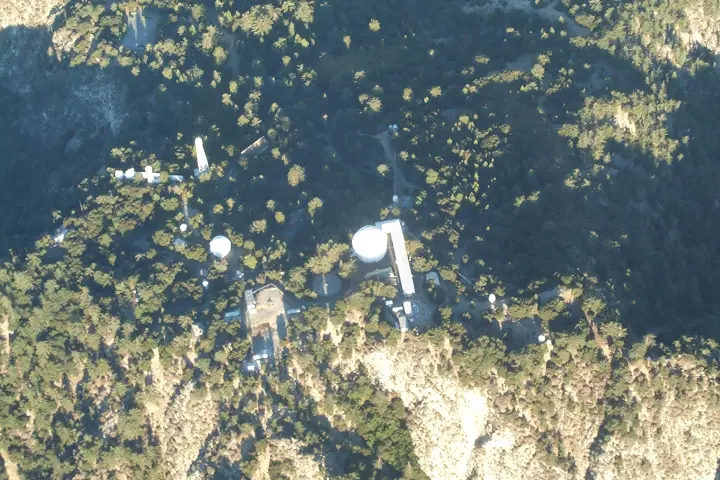
Photo: Gerard T. van Belle (the picture's source, opens in a new tab), Public domain Mount Wilson Observatory
Pasadena, California, United States · 1,742 m · since 1908
Open to visitors
The 100-inch Hooker Telescope, the world's largest from 1917 to 1949, and the 60-inch (1908).
Edwin Hubble used the 100-inch to prove the Andromeda nebula is a separate galaxy and, with Milton Humason in 1929, that the universe is expanding.
Visit: The grounds are open to the public, with weekend docent tours and ticketed nights looking through the 60-inch and 100-inch telescopes from spring to autumn.
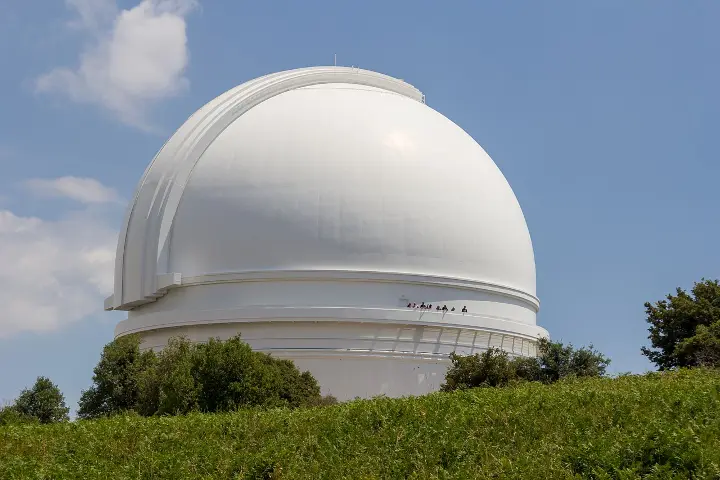
Photo: Photograph by Mike Peel ( www.mikepeel.net ). (the picture's source, opens in a new tab), CC BY-SA 4.0 Palomar Observatory
Palomar Mountain, California, United States · 1,712 m · since 1949
Open to visitors
The 200-inch (5.1 m) Hale Telescope, the world's largest from 1949 to 1975.
Edwin Hubble was its first user. The dwarf planets Eris and Sedna and Comet Shoemaker-Levy 9 were found here, and Caltech still observes every clear night.
Visit: The visitor center and the Hale Telescope's visitors gallery are open to the public on most days. Guided weekend tours run in season.
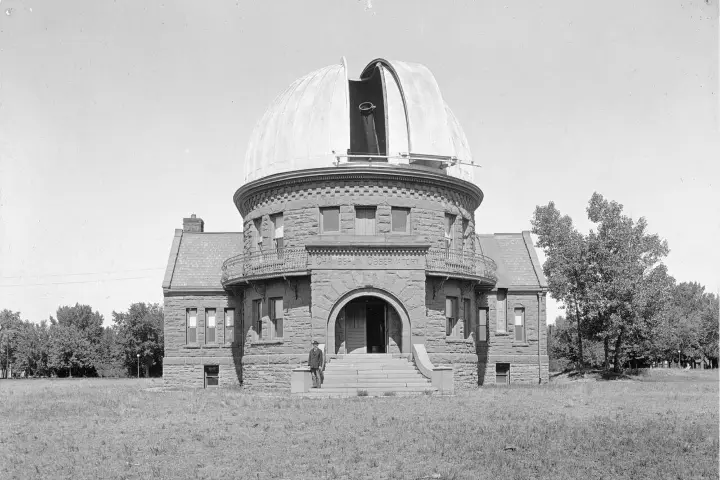
Photo: Unknown author Unknown author (the picture's source, opens in a new tab), Public domain Chamberlin Observatory
Denver, Colorado, United States · since 1894
Open to visitors
A University of Denver observatory whose 20-inch Alvan Clark refractor saw first light in 1894.
Visit: The Denver Astronomical Society runs ticketed public nights on Tuesdays and Thursdays and a monthly open house on the observatory lawn.
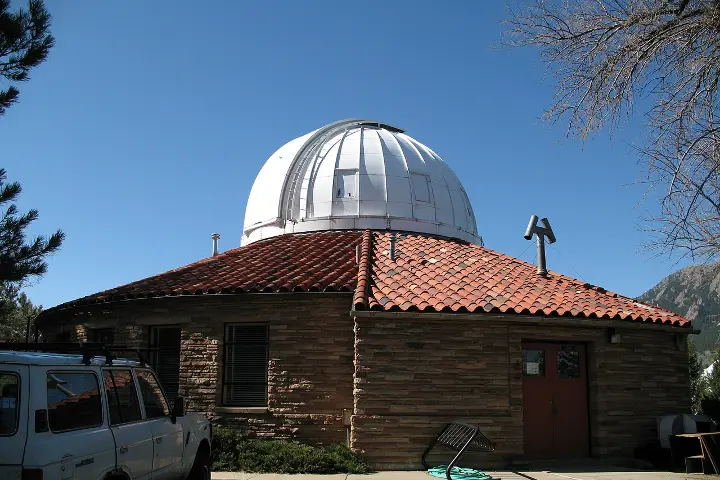
Photo: MECU ( MECU ≈ talk ) (the picture's source, opens in a new tab), CC BY-SA 3.0 Sommers-Bausch Observatory
Boulder, Colorado, United States · since 1953
Open to visitors
A campus teaching observatory with two 20-inch telescopes and a 24-inch Cassegrain reflector.
Visit: Free open houses are held on most Friday evenings when University of Colorado classes are in session, weather permitting.
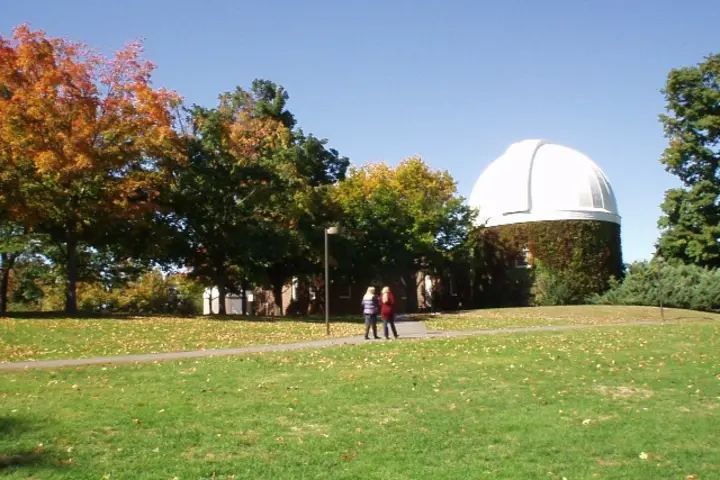
Photo: Original uploader was Daydrmgirl at zh.wikipedia (the picture's source, opens in a new tab), CC BY-SA 3.0 Van Vleck Observatory
Middletown, Connecticut, United States
By booking or on set days
Wesleyan University's observatory, known for its refurbished 20-inch refracting telescope.
Visit: The Astronomical Society of Greater Hartford holds monthly Saturday public observing with the 20-inch refractor, and Wesleyan runs weeknight Space Nights by free registration during the school year.
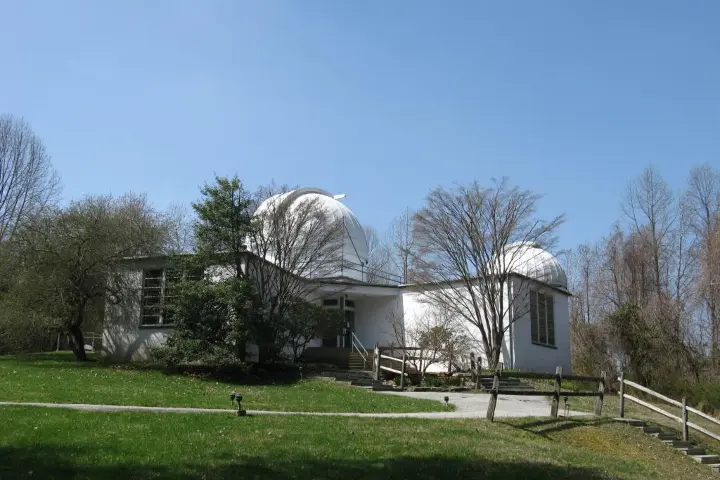
Photo: Paulo Henrique Silva de Santana (the picture's source, opens in a new tab), CC BY 2.0 Mount Cuba Astronomical Observatory
Greenville, Delaware, United States
By booking or on set days
A nonprofit observatory that pairs evening talks with planetarium shows and telescope viewing.
Visit: Public Nights and Family Nights are held on scheduled evenings by reservation only, with telescope viewing when the sky is clear.
University of Florida Campus Teaching Observatory
Gainesville, Florida, United States
Open to visitors
The University of Florida astronomy department's on-campus observatory, used for teaching and free public programs.
Visit: Free public nights are held on Friday evenings while University of Florida classes are in session in fall and spring, weather permitting.
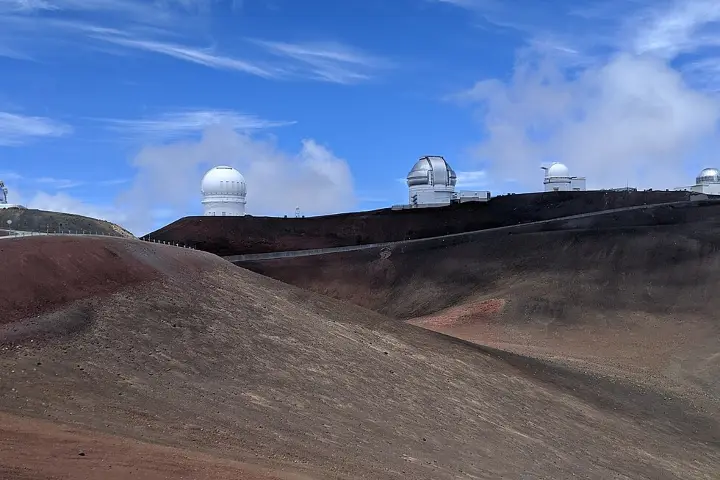
Photo: Leijurv (the picture's source, opens in a new tab), CC BY-SA 4.0 Maunakea Visitor Information Station
Hilo, Hawaii, United States · 4,205 m at the summit · since 1970
Open to visitors
On the summit above it: the twin 10 m Keck telescopes, the 8.2 m Subaru and the 8.1 m Gemini North, 13 facilities in all.
The summit is above most of the air's water vapor: dry, dark and clear. Many Native Hawaiians consider the mountain sacred.
Visit: The Visitor Information Station at 9,200 feet is open daily and hosts free stargazing. Stop there at least 30 minutes to get used to the thin air before going higher.
Bruneau Dunes Observatory
Bruneau, Idaho, United States
Open to visitors
A state park observatory whose 27.5-inch telescope, dedicated in 2023, is described by the park as the largest public telescope in Idaho.
Visit: Open to the public on Friday and Saturday evenings from spring to mid-October, with solar viewing before sunset and telescope viewing after dark.
Dearborn Observatory
Evanston, Illinois, United States
Open to visitors
Northwestern University's observatory, built around an 18.5-inch refractor that was the largest telescope in the United States when it was made.
Visit: Free tours are held on Friday nights, with the first hour by reservation and the second hour open to walk-ins.
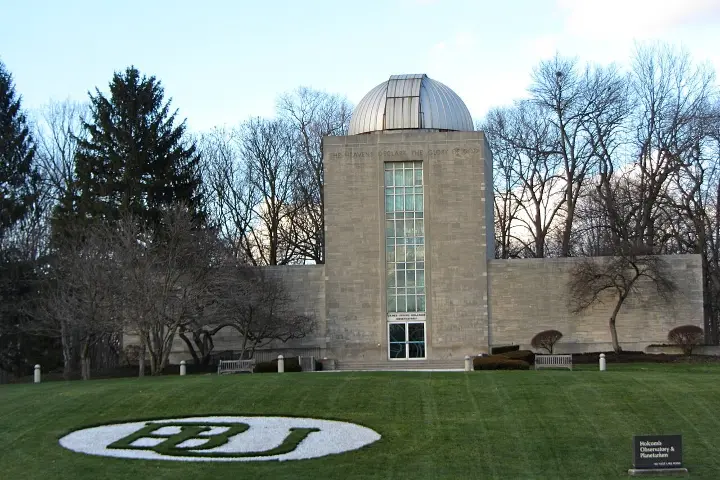
Photo: Richie Diesterheft (the picture's source, opens in a new tab), CC BY-SA 2.0 Holcomb Observatory and Planetarium
Indianapolis, Indiana, United States · since 1954
Open to visitors
Butler University's observatory, home to a 38-inch reflector that is the largest telescope in Indiana.
Visit: Weekend public tours on selected Friday and Saturday evenings combine a planetarium show with telescope viewing.
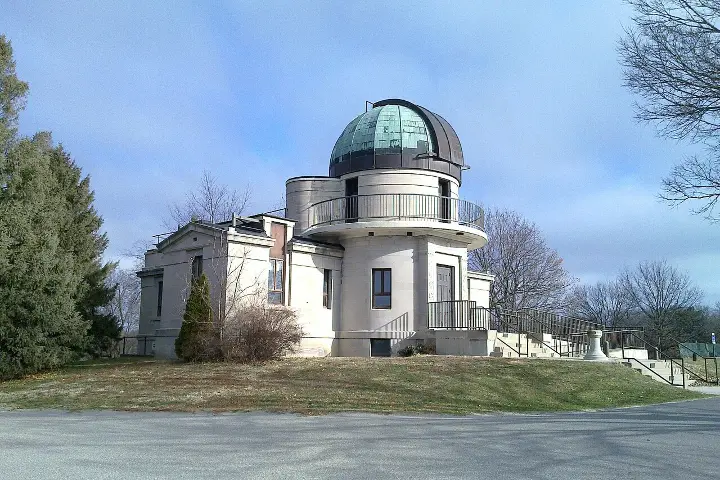
Photo: PopePompus (the picture's source, opens in a new tab), CC BY-SA 4.0 Drake Municipal Observatory
Des Moines, Iowa, United States
Open to visitors
An observatory in Waveland Park known for its weekly Public Night Series of astronomy lectures and stargazing.
Visit: Free public night lectures followed by stargazing are held on Friday nights in spring, summer and fall series.
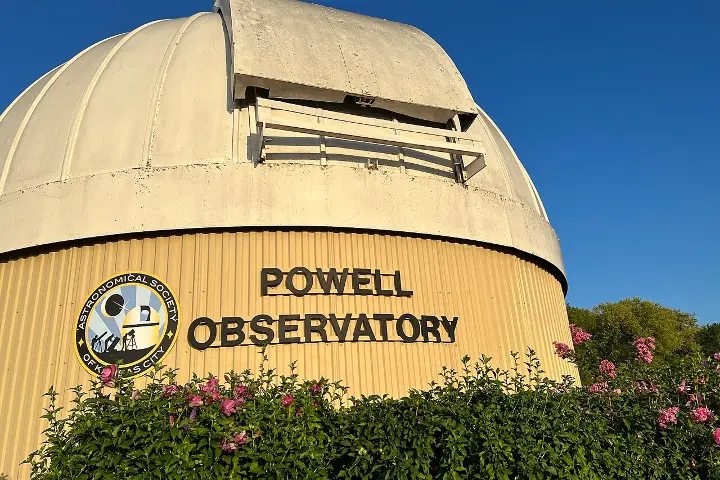
Photo: NorthArrow (the picture's source, opens in a new tab), CC BY-SA 4.0 Powell Observatory
Louisburg, Kansas, United States
Open to visitors
A volunteer-run observatory whose 30-inch Ruisinger Telescope is used for public viewing and live imaging.
Visit: The Astronomical Society of Kansas City runs public programs on Saturday evenings during its season.
Golden Pond Planetarium and Observatory
Golden Pond, Kentucky, United States
By booking or on set days
A planetarium and observatory in Land Between the Lakes National Recreation Area.
Visit: The planetarium is open year-round, and the observatory behind it opens for star parties on selected Saturday nights with the West Kentucky Amateur Astronomers.
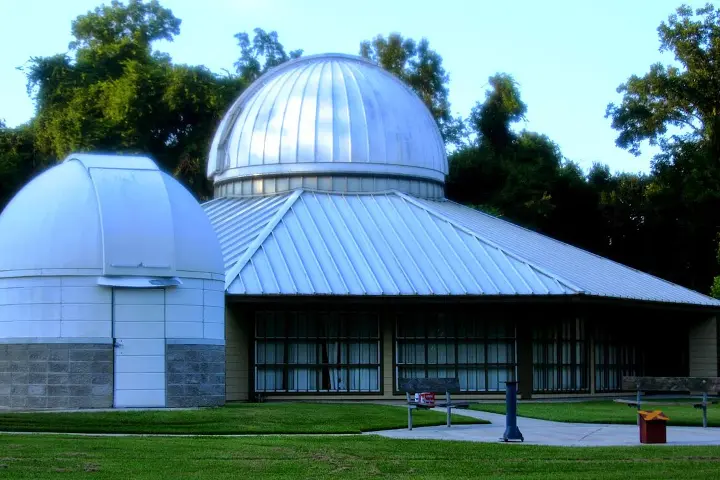
Photo: Bayoustarwatch (the picture's source, opens in a new tab), CC BY-SA 4.0 Highland Road Park Observatory
Baton Rouge, Louisiana, United States
Open to visitors
A public observatory in Highland Road Park, run with the BREC parks system, where the professional telescopes are opened to visitors.
Visit: Evening sky viewing is offered on Friday and Saturday nights, weather permitting, alongside a Friday night lecture series.
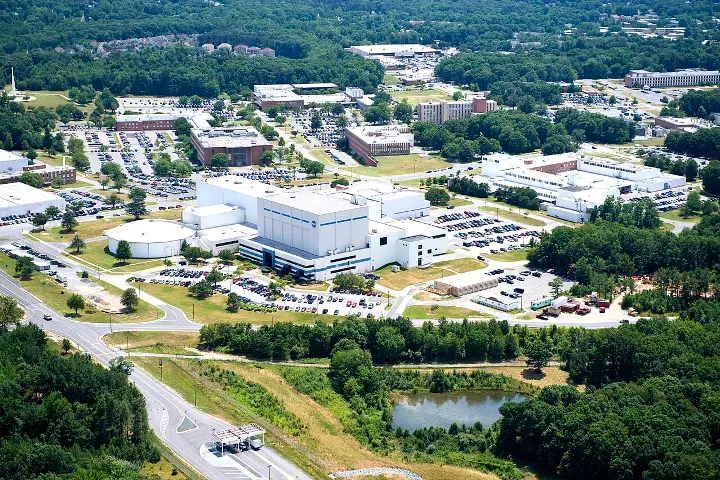
Photo: NASA Goddard/Bill Hrybyk (the picture's source, opens in a new tab), Public domain NASA Goddard Visitor Center
Greenbelt, Maryland, United States
Check before you go
The visitor center of the NASA center that managed the building of the James Webb Space Telescope.
Webb itself is 1.5 million km away, so this is as close as a visitor gets to where it came from.
Visit: NASA's pages describe free exhibits and public events, but a closure was reported in October 2025 and no reopening notice was found. Check NASA's page before you go.
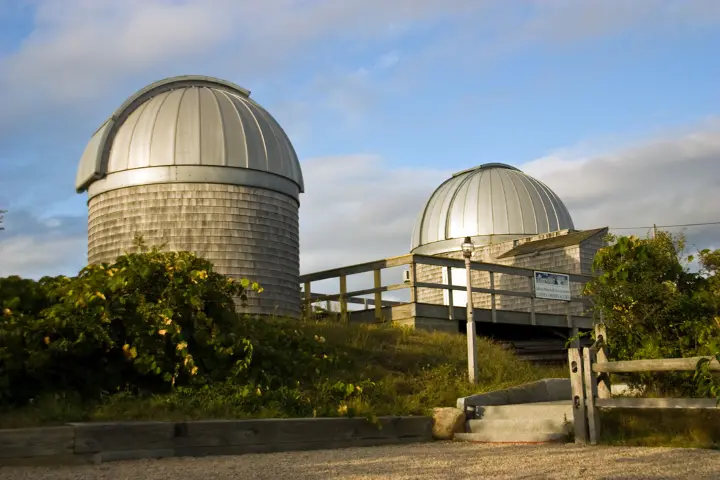
Photo: Versageek (the picture's source, opens in a new tab), CC BY-SA 3.0 Loines Observatory
Nantucket, Massachusetts, United States
Open to visitors
The Nantucket Maria Mitchell Association's observatory for public stargazing.
Visit: Stargazing open nights are held several evenings a week in season, changing to the Look Up program in late fall.
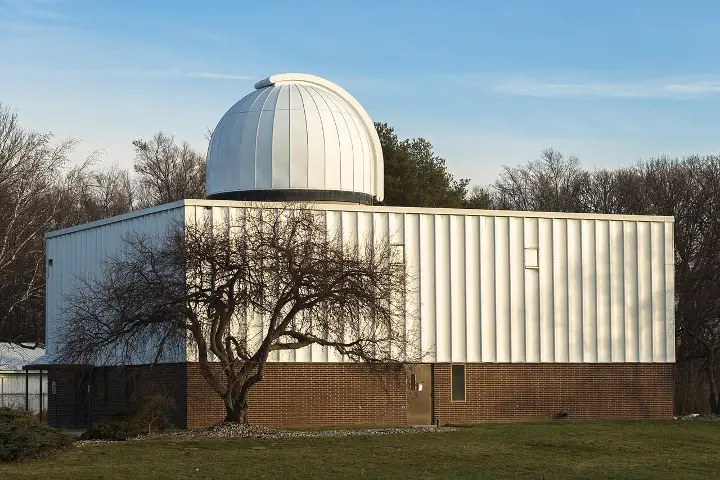
Photo: Paul R. Burley (the picture's source, opens in a new tab), CC BY-SA 4.0 Michigan State University Observatory
East Lansing, Michigan, United States
By booking or on set days
A campus observatory whose main instrument is a 24-inch Ritchey-Chretien reflecting telescope.
Visit: Free public observing nights are held about two nights a month from April to October, sky conditions permitting.
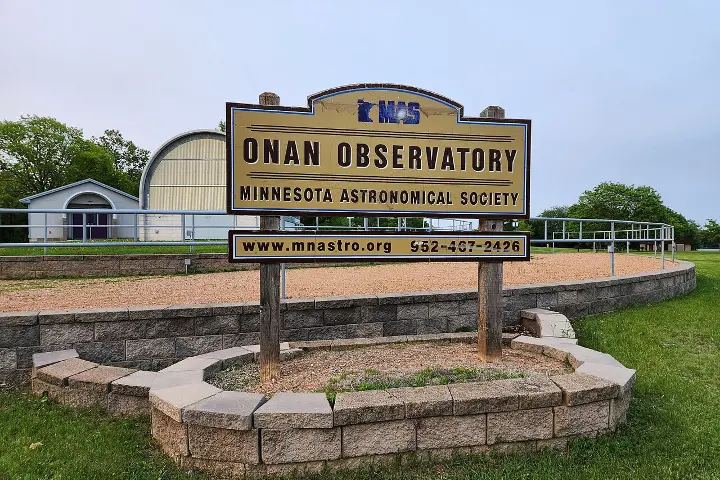
Photo: Minnastronomer and Jakob Miskell (the picture's source, opens in a new tab), CC0 Eagle Lake Observatory
Norwood Young America, Minnesota, United States
Open to visitors
The Minnesota Astronomical Society's observatory complex in Baylor Regional Park, which includes the Onan Observatory.
Visit: The Minnesota Astronomical Society holds public star parties here about every other Saturday from March through November, with no registration needed.
Rainwater Observatory and Planetarium
French Camp, Mississippi, United States
By booking or on set days
An observatory and planetarium just off the Natchez Trace Parkway that hosts the annual Mid-South Star Gaze.
Visit: A free public program is held one Friday evening a month, and groups can book visits.
Blue Mountain Observatory
Missoula, Montana, United States
By booking or on set days
The University of Montana's observatory on Blue Mountain, opened to the public for summer open houses.
Visit: The University of Montana holds ticketed public observing nights on selected summer evenings, weather permitting.
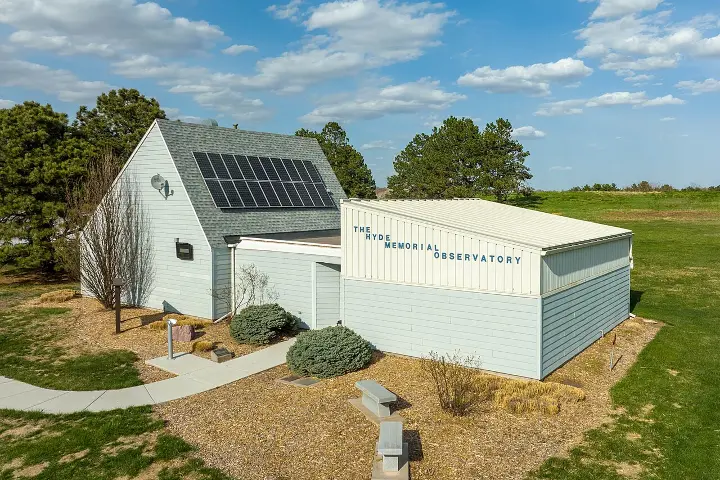
Photo: Mdahmke (the picture's source, opens in a new tab), CC BY-SA 4.0 Hyde Memorial Observatory
Lincoln, Nebraska, United States · since 1977
Open to visitors
A volunteer-run community observatory in Holmes Park with several Schmidt-Cassegrain telescopes.
Visit: Open free to the public every Saturday night year-round, except near major holidays, with no reservation needed.
Jack C. Davis Observatory
Carson City, Nevada, United States
Open to visitors
Western Nevada College's observatory at the north end of its Carson City campus.
Visit: Free public star parties are held twice a month on Saturday nights.
William Miller Sperry Observatory
Cranford, New Jersey, United States
Open to visitors
An observatory run by Amateur Astronomers, Inc., with two large telescopes used on public nights.
Visit: Open to the public every Friday night for observing through its two large telescopes and a short talk.
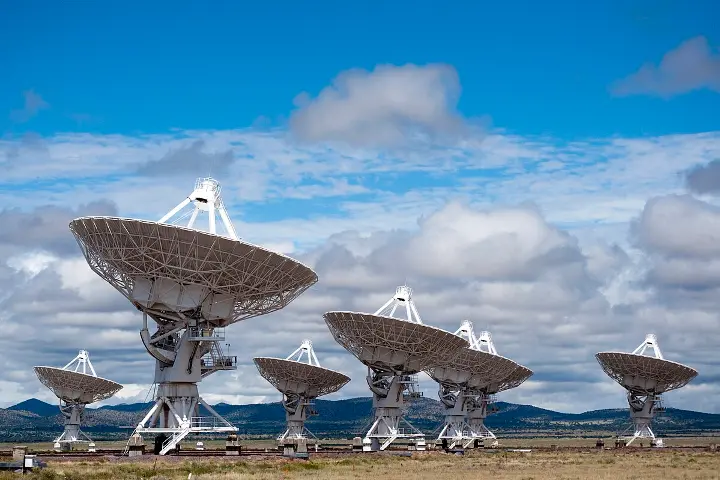
Photo: CGP Grey (the picture's source, opens in a new tab), CC BY 2.0 Very Large Array
Socorro, New Mexico, United States · 2,124 m · since 1980
Open to visitors
28 radio dishes, 25 m each, on a Y-shaped track with arms 21 km long.
Spread-out dishes work together like one giant radio telescope. It caught Voyager 2's signals at Neptune in 1989 and starred in the movie Contact (1997).
Visit: The visitor center is open daily with a film and a self-guided walking tour among the antennas. Guided tours and open houses run when scheduled.
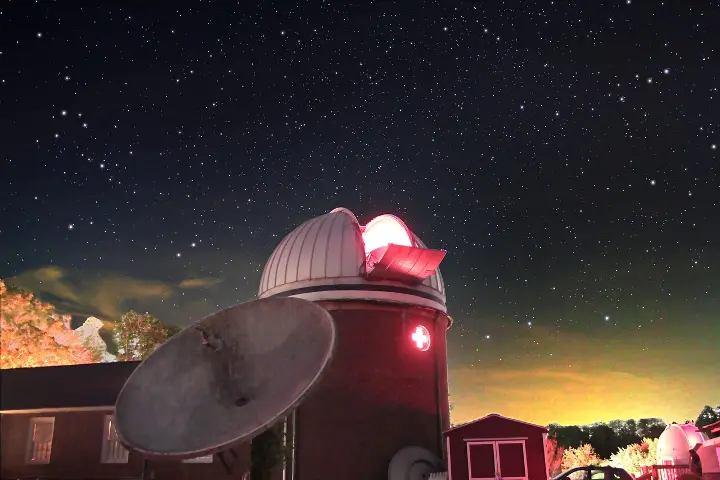
Photo: Astroval1 (the picture's source, opens in a new tab), CC BY-SA 4.0 Custer Institute and Observatory
Southold, New York, United States
Open to visitors
A volunteer-run observatory on Long Island where members share telescope views with visitors.
Visit: Open to the public every Saturday evening year-round for stargazing, weather permitting.
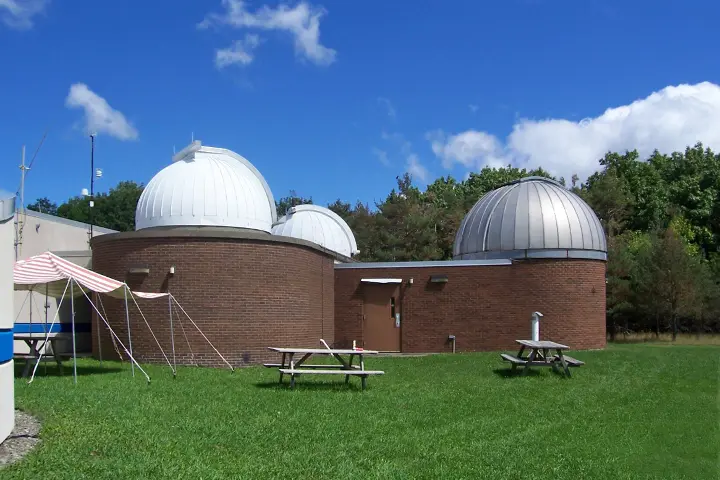
Photo: Tkeator at English Wikipedia (the picture's source, opens in a new tab), Public domain Kopernik Observatory & Science Center
Vestal, New York, United States
Open to visitors
An observatory and science center that hosts Friday night programs and the annual AstroFest.
Visit: Open every Friday night from March through mid-December for a talk and night sky viewing, with selected dates in winter.
Pisgah Astronomical Research Institute
Rosman, North Carolina, United States
By booking or on set days
A former NASA facility in Pisgah National Forest with radio and optical telescopes.
Visit: Visitors can book guided campus tours and evening stargazing programs, and the campus holds an annual Space Day open house.
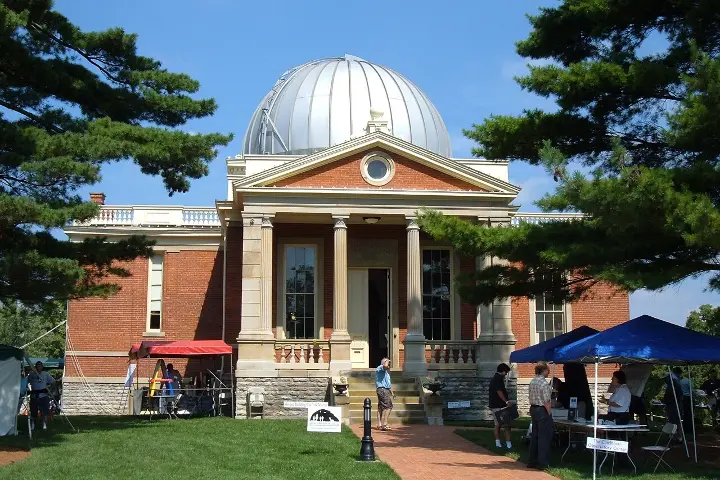
Photo: Analogue Kid at en.wikipedia (the picture's source, opens in a new tab), CC BY 2.5 Cincinnati Observatory
Cincinnati, Ohio, United States
Open to visitors
Its 11-inch Merz und Mahler refractor of 1845 may be the oldest continually used telescope in the world.
Visit: Daytime history tours and weekly Astronomy Evenings with viewing through the historic telescopes are offered, with reservations recommended.
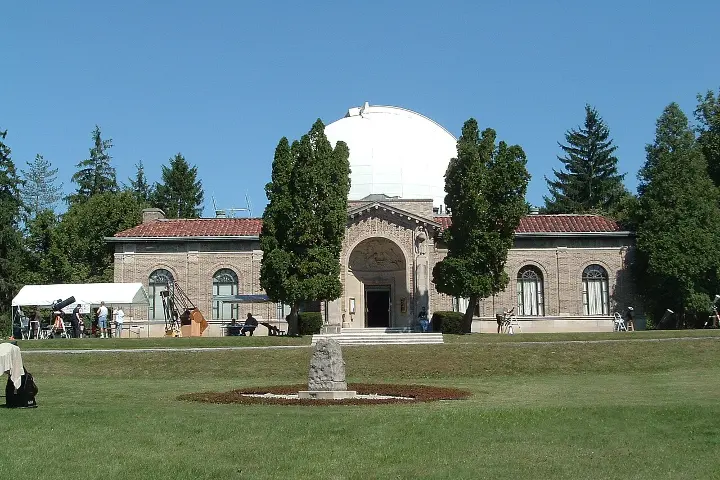
Photo: Analogue Kid at English Wikipedia (the picture's source, opens in a new tab), Public domain Perkins Observatory
Delaware, Ohio, United States · since 1931
By booking or on set days
Ohio Wesleyan University's observatory, home to a 32-inch reflector that is the second-largest telescope in Ohio.
Visit: Ticketed public programs run on most Friday evenings, with reduced capacity while maintenance continues, and tickets are sold by phone.
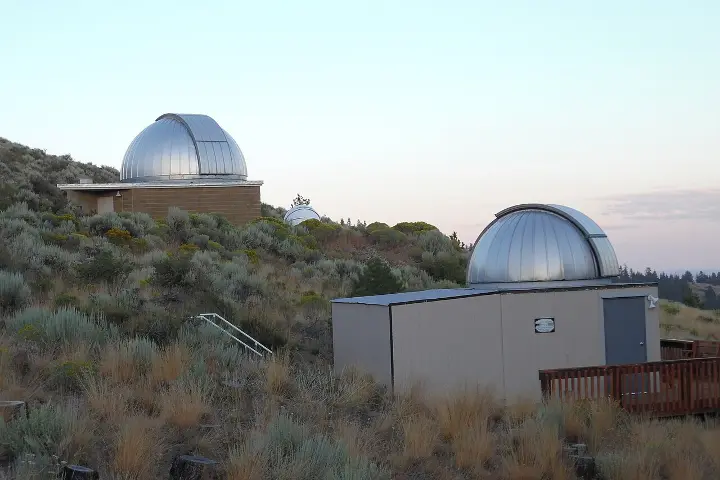
Photo: Orygun (the picture's source, opens in a new tab), CC BY-SA 4.0 Pine Mountain Observatory
Bend, Oregon, United States · since 1967
By booking or on set days
A University of Oregon observatory at 6,300 feet near the summit of Pine Mountain, whose 24-inch telescope was installed in 1967.
Visit: Open on posted Friday and Saturday evenings from late spring through September, with no reservations needed.
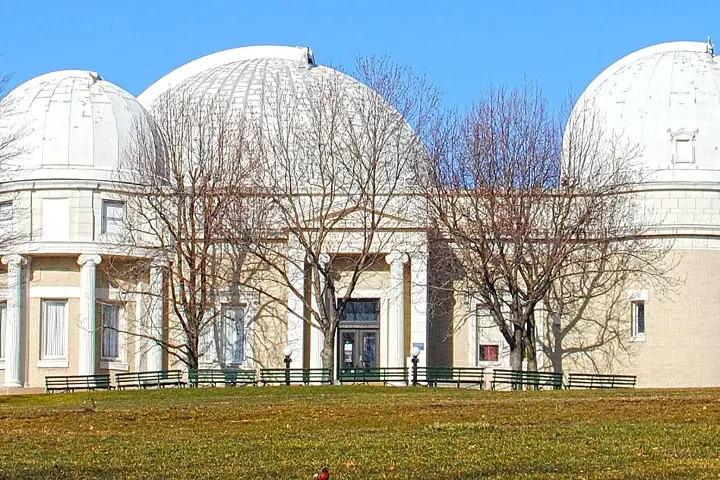
Photo: Observatory_(8603359753).jpg : David Bennett derivative work: User:Crazypaco (the picture's source, opens in a new tab), CC BY 2.0 Allegheny Observatory
Pittsburgh, Pennsylvania, United States
By booking or on set days
The University of Pittsburgh's observatory, known for the 30-inch Thaw refractor built by John Brashear.
Visit: Free evening tours run on Fridays from April through October and on Thursdays in summer, by reservation only.
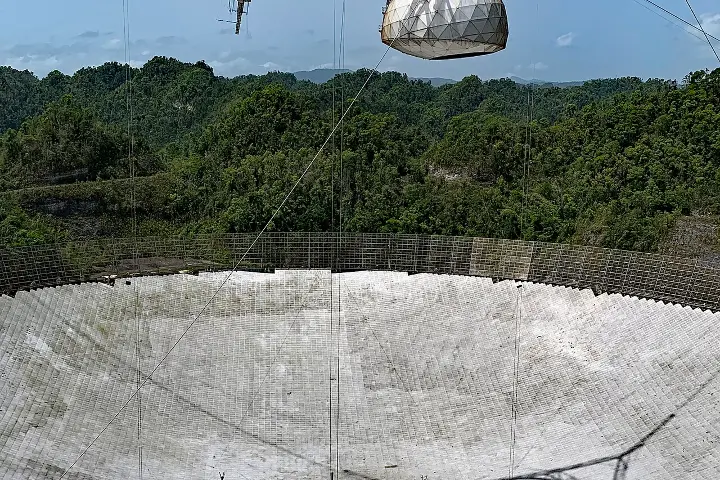
Photo: Mariordo (Mario Roberto Durán Ortiz) (the picture's source, opens in a new tab), CC BY-SA 4.0 Arecibo Observatory
Arecibo, Puerto Rico, United States · since 1963
Check before you go
The 305 m dish, built in a natural sinkhole, was the world's largest single dish for 53 years. Its platform fell on December 1, 2020, and it is not being rebuilt.
On November 16, 1974 it beamed the Arecibo message, 1,679 bits, toward the star cluster M13.
Visit: The site is becoming the Arecibo C3 science education center. Reports in January 2026 said its visitor center would open to the public later that year, and no confirmation that it has was found. Check before you go.
Frosty Drew Observatory
Charlestown, Rhode Island, United States
Open to visitors
An observatory and science center known for its Friday Stargazing Nights.
Visit: Stargazing Nights are held every Friday night, weather permitting.
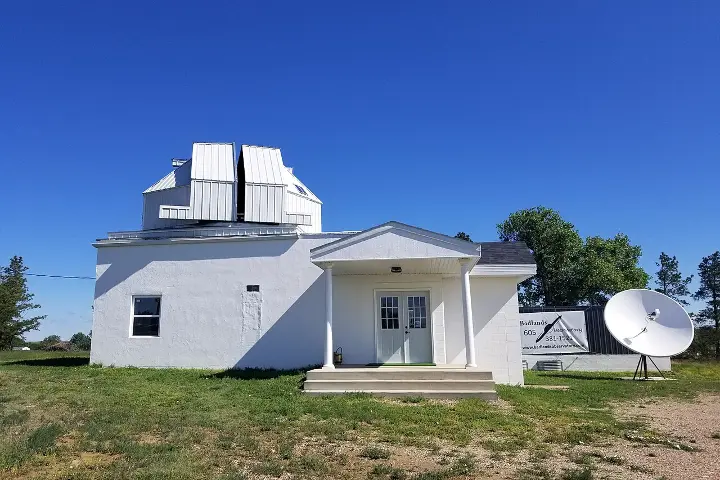
Photo: Dyvron (the picture's source, opens in a new tab), CC BY-SA 4.0 Badlands Observatory
Quinn, South Dakota, United States
By booking or on set days
A privately owned observatory near Badlands National Park with a 26-inch reflector telescope.
Visit: Night sky tours are offered by advance online reservation, as a Dark Sky Tour or a Bright Moon Tour depending on the Moon.
Dyer Observatory
Nashville, Tennessee, United States · since 1953
By booking or on set days
Vanderbilt University's observatory, whose 24-inch reflector is named for astronomer Carl Seyfert.
Visit: Ticketed Telescope Nights are held in an open-house format on scheduled evenings, and tickets often sell out.
George Observatory
Needville, Texas, United States · since 1989
By booking or on set days
A Houston Museum of Natural Science facility in Brazos Bend State Park with three domed telescopes, the largest a 36-inch research telescope.
Visit: Saturday Stargazing runs on Saturday nights year-round, weather permitting, with tickets sold in advance only.
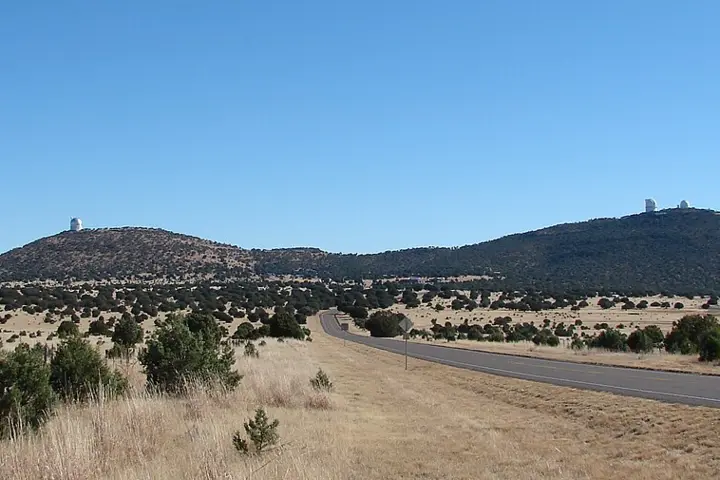
Photo: Jason Quinn (the picture's source, opens in a new tab), Public domain McDonald Observatory
Fort Davis, Texas, United States · 2,077 m · since 1933
Open to visitors
The Hobby-Eberly Telescope, 10 m effective with 91 mirror segments, and the 2.1 m Otto Struve Telescope (1939).
Banker William J. McDonald left about $1 million to the University of Texas to build it. Gerard Kuiper found the moons Miranda and Nereid here. Today it studies dark energy and bounces lasers off the Moon.
Visit: The Frank N. Bash Visitors Center has exhibits, daytime solar viewing, guided tours and ticketed evening star parties.
Stansbury Park Observatory Complex
Stansbury Park, Utah, United States
Open to visitors
A complex of four large telescopes at Sagers Memorial Park, managed by the Salt Lake Astronomical Society.
Visit: The Salt Lake Astronomical Society hosts public star parties on scheduled Saturday nights from spring through October, weather permitting.
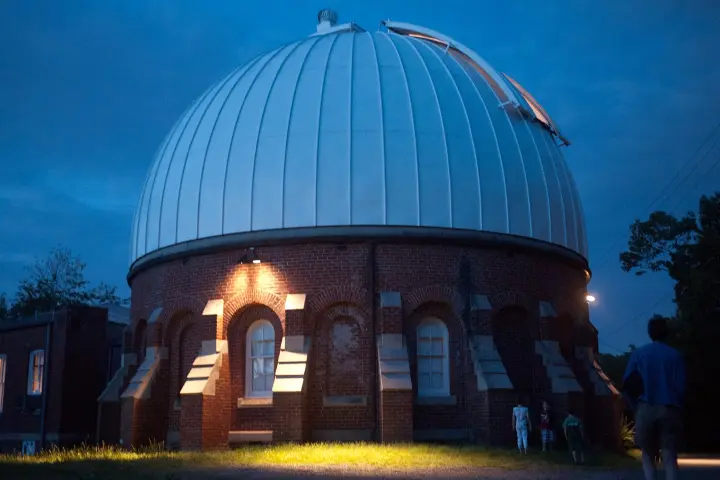
Photo: Rob (the picture's source, opens in a new tab), CC BY 2.0 Leander McCormick Observatory
Charlottesville, Virginia, United States
By booking or on set days
The University of Virginia's observatory, opened to visitors on public nights run by the astronomy department.
Visit: Free public nights are held on the first and third Friday of every month, with advance registration required.
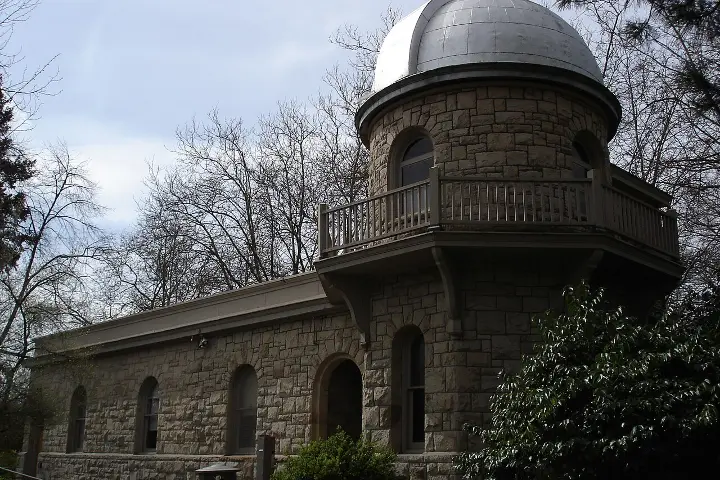
Photo: Unknown author (the picture's source, opens in a new tab), Public domain Theodor Jacobsen Observatory
Seattle, Washington, United States
By booking or on set days
A University of Washington campus observatory whose dome telescope is shown to visitors after a short astronomy talk.
Visit: Open houses with a talk and dome tours are held on scheduled evenings from spring to early fall, with registration required.
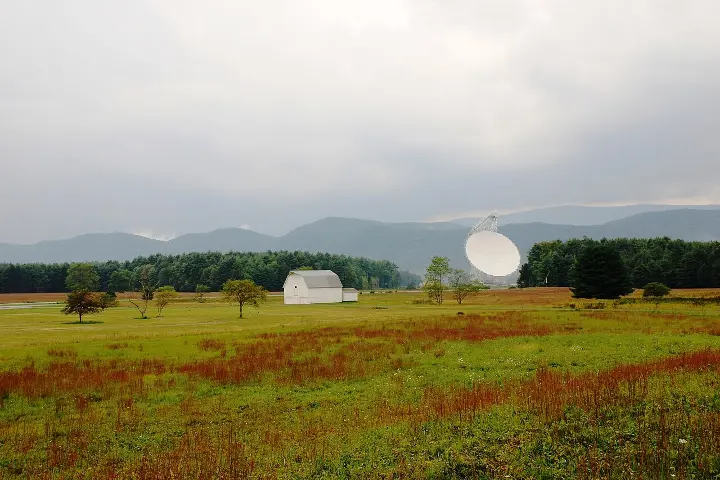
Photo: Jarek Tuszyński (the picture's source, opens in a new tab), CC BY-SA 3.0 Green Bank Observatory
Green Bank, West Virginia, United States · since 1956
Open to visitors
The 100 m Robert C. Byrd Green Bank Telescope (2000).
Project Ozma (1960), the first radio search for signals from other civilizations, ran here. It sits in the National Radio Quiet Zone, so cell phones are very restricted near the telescope.
Visit: The Science Center's exhibit hall is free to enter, and ticketed guided bus tours of the telescope site run regularly.
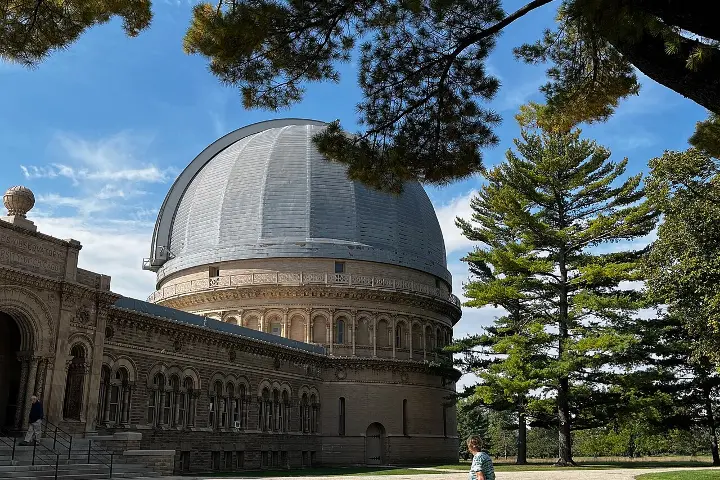
Photo: Wickanninish (the picture's source, opens in a new tab), CC BY-SA 4.0 Yerkes Observatory
Williams Bay, Wisconsin, United States · 334 m · since 1897
Open to visitors
The 40-inch Great Refractor (1897), the largest refracting telescope ever used for astronomy, plus a 41-inch and a 24-inch reflector.
Often called the birthplace of modern astrophysics. Edwin Hubble, Subrahmanyan Chandrasekhar, Gerard Kuiper, Nancy Grace Roman and Carl Sagan all worked or studied here.
Visit: The grounds and trails are open in daylight with no ticket. The building is seen on ticketed guided tours booked through the observatory's website, and some evening programs look through the telescopes.
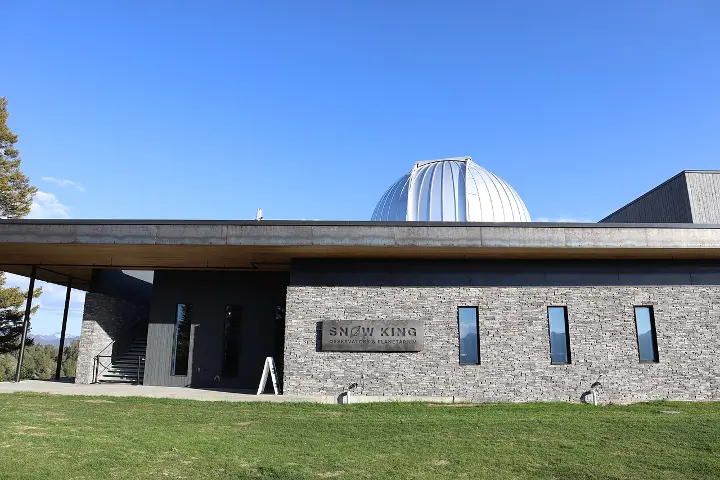
Photo: ChillyBlanket (the picture's source, opens in a new tab), CC BY-SA 4.0 Snow King Observatory and Planetarium
Jackson, Wyoming, United States · since 2024
By booking or on set days
An observatory and planetarium at the Snow King ski resort with a 1-meter PlaneWave telescope.
Visit: Ticketed observatory tours, planetarium shows and stargazing sessions run on select days, reached by gondola, with closures in the resort's spring and fall off-seasons.
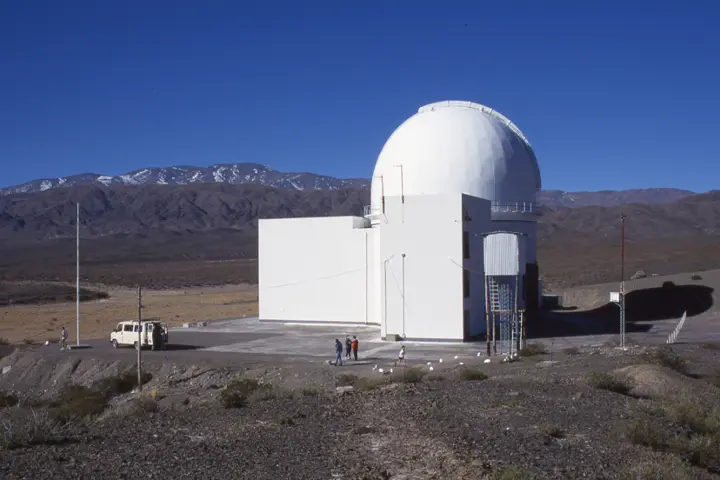
Photo: Murgatroyd49 (the picture's source, opens in a new tab), CC BY-SA 4.0 El Leoncito Astronomical Complex (CASLEO)
Barreal, San Juan, Argentina · since 1986
By booking or on set days
Its main instrument is the 2.15 m Jorge Sahade reflecting telescope.
Visit: Guided day visits and night visits run at the complex, and booking ahead is advised, above all for the night visit.
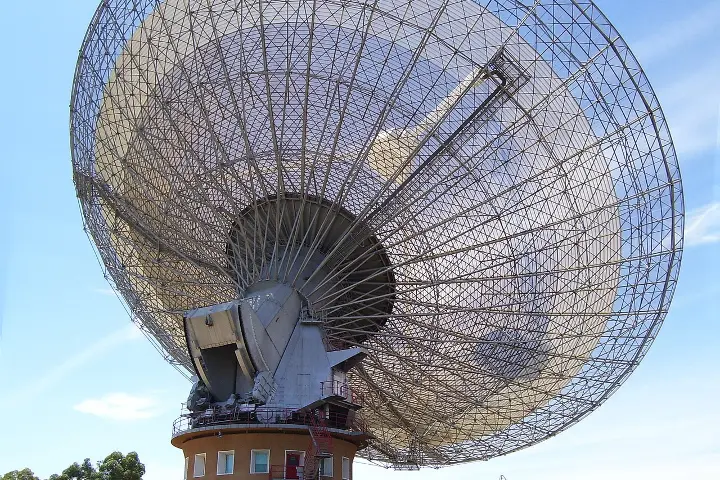
Photo: Diceman Stephen West (the picture's source, opens in a new tab), CC BY-SA 3.0 Parkes Observatory (Murriyang)
Parkes, New South Wales, Australia · since 1961
Open to visitors
A 64 m radio dish.
Nine minutes into the Apollo 11 moonwalk broadcast, NASA switched to Parkes for the rest of it. It also found the first fast radio burst.
Visit: The visitors centre beside the telescope is open seven days a week with free entry.
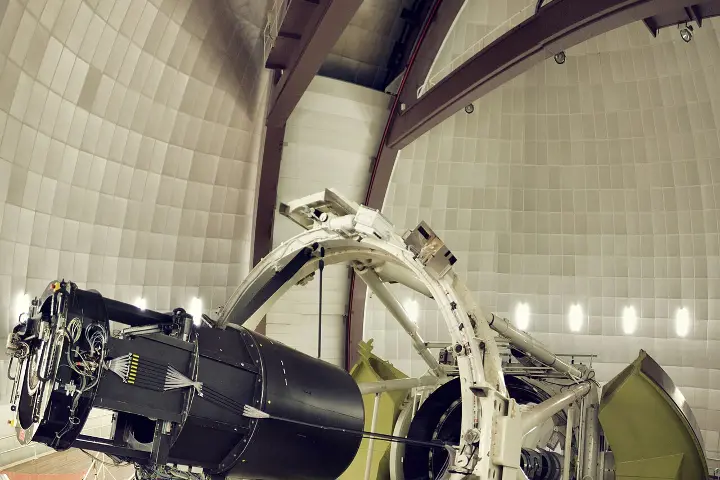
Photo: Ahilan Parameswaran (the picture's source, opens in a new tab), CC BY-SA 3.0 Siding Spring Observatory
Coonabarabran, New South Wales, Australia · since 1974
Open to visitors
The 3.9 m Anglo-Australian Telescope (1974) and SkyMapper; over 60 telescopes.
Canberra's city lights had swamped Mount Stromlo, so astronomers moved to these dark, clear skies.
Visit: A daytime visitor centre and a viewing gallery at the Anglo-Australian Telescope are open to the public. The site is not open at night.
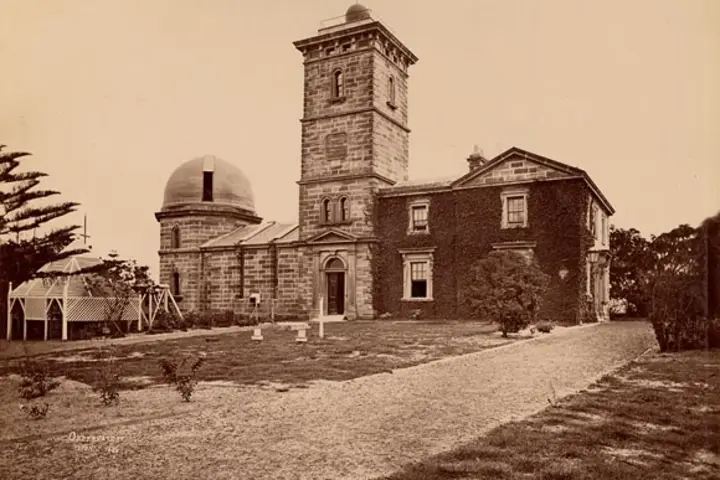
Photo: New South Wales Government Printing Office (the picture's source, opens in a new tab), Public domain Sydney Observatory
Sydney, New South Wales, Australia
By booking or on set days
A heritage observatory on Observatory Hill whose tours include time at historic and modern telescopes, among them an 1870s Schroeder refractor.
Visit: Entry is by booked guided tour on set days of the week, day and evening, while heritage conservation work continues on the site.
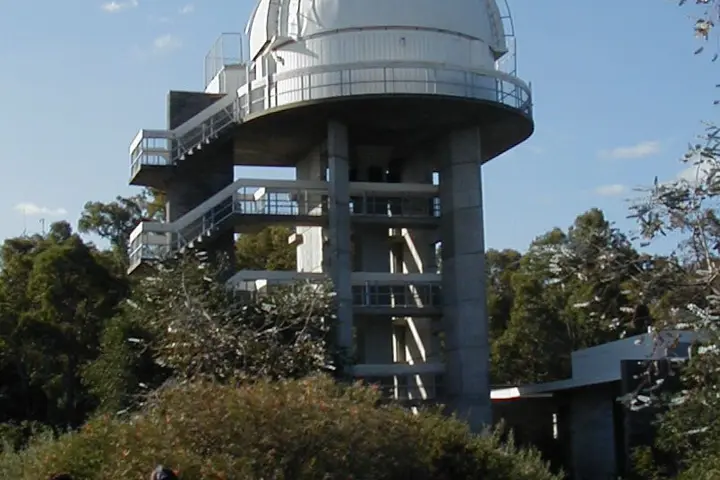
Photo: Nachoman-au (the picture's source, opens in a new tab), CC BY-SA 3.0 Perth Observatory
Bickley, Western Australia, Australia
By booking or on set days
Its guided day tour tells the story of astronomy in Western Australia, and night tours use its telescopes.
Visit: Visitors come on booked night sky tours and guided day tours listed on the observatory's tours page.
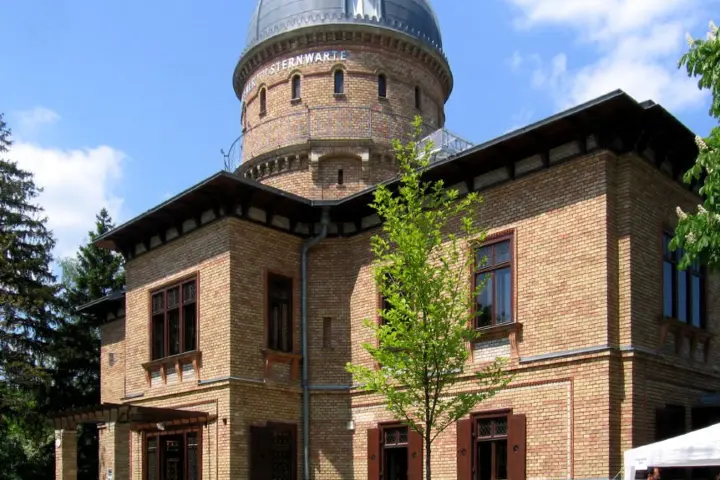
Photo: H. Raab ( User:Vesta ) (the picture's source, opens in a new tab), CC BY-SA 3.0 Kuffner Observatory
Vienna, Austria · since 1886
By booking or on set days
An 1886 observatory in the Ottakring district, preserved in its original state, with its great refractor of that year still used for visitors.
Visit: The observatory gives guided astronomy tours and, in clear weather, a look through its historic telescopes.
Observatório do Pico dos Dias
Brazópolis, Minas Gerais, Brazil
By booking or on set days
The observing site of Brazil's Laboratório Nacional de Astrofísica, home of the 1.6 m Perkin-Elmer telescope.
Visit: Free guided visits run only on days set by the laboratory and must be booked, and one open day a year is by invitation drawn from sign-ups.
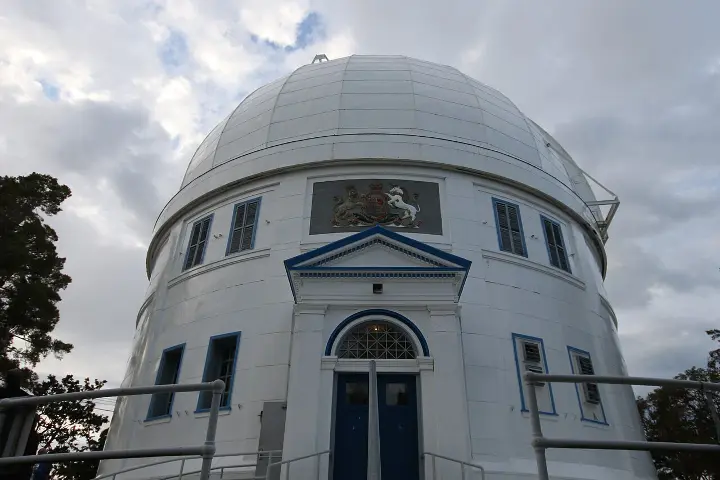
Photo: Colin Stepney (the picture's source, opens in a new tab), CC BY-SA 4.0 Dominion Astrophysical Observatory
Victoria, British Columbia, Canada
By booking or on set days
Home of the historic Plaskett Telescope, with exhibits and a planetarium in the Centre of the Universe.
Visit: The Friends of the DAO sell tickets for star parties, tours of the Plaskett Telescope and other events at the Centre of the Universe.
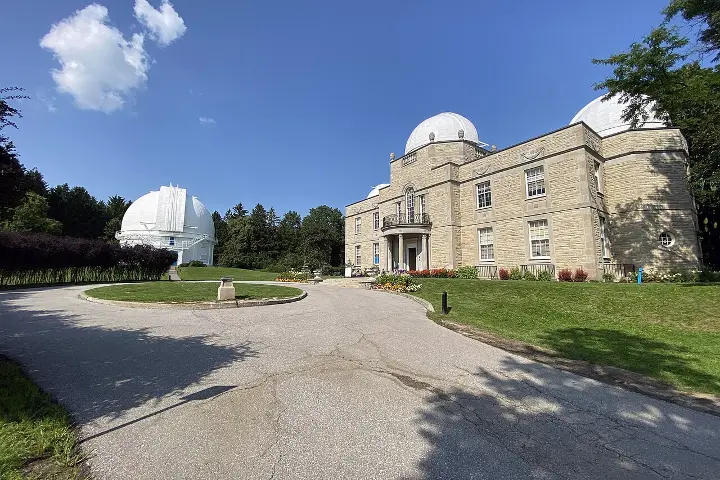
Photo: Canmenwalker (the picture's source, opens in a new tab), CC BY 4.0 David Dunlap Observatory
Richmond Hill, Ontario, Canada · since 1935
By booking or on set days
Its 74-inch reflector was the second largest telescope in the world when it opened and is billed as Canada's largest optical telescope.
Visit: Ticketed family nights, telescope nights and tours run through the year, listed by the Royal Astronomical Society of Canada's Toronto Centre.
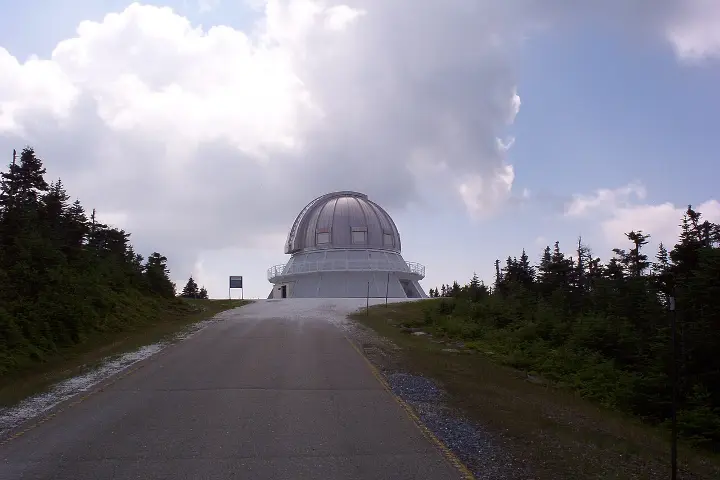
Photo: Khayman (the picture's source, opens in a new tab), CC BY-SA 3.0 Mont-Mégantic Observatory and ASTROLab
Notre-Dame-des-Bois, Quebec, Canada
By booking or on set days
The ASTROLab is the astronomy activity centre at the foot of Mont Mégantic, in the national park whose summit holds the observatory.
Visit: Astronomy evenings at the ASTROLab are booked through Sepaq, the park service. The summit observatory was closed for construction in summer 2026, so check what is open.
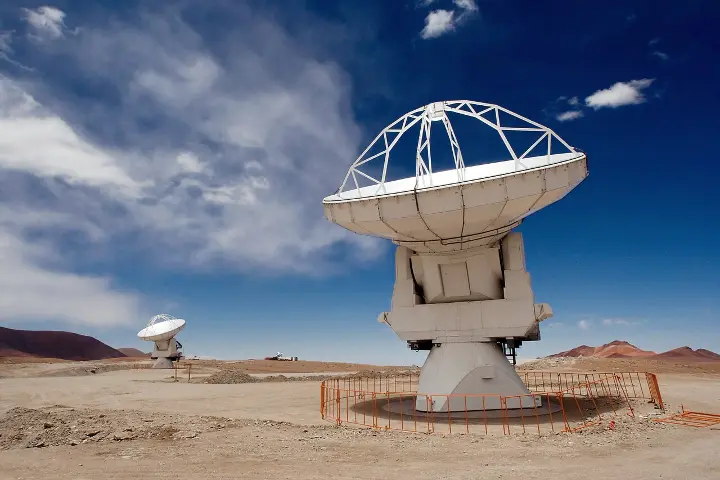
Photo: Iztok Bončina/ESO (the picture's source, opens in a new tab), CC BY 4.0 ALMA
San Pedro de Atacama, Antofagasta Region, Chile · about 5,000 m · since 2013
By booking or on set days
66 radio antennas that can be moved and spread kilometers apart.
It saw rings in the planet-forming disk around HL Tauri (2014) and was part of the first picture of a black hole (2019).
Visit: Free guided tours of the operations site run on weekend mornings, with advance registration and a bus from San Pedro de Atacama. One ALMA page still showed an old suspension notice, so confirm before you travel.
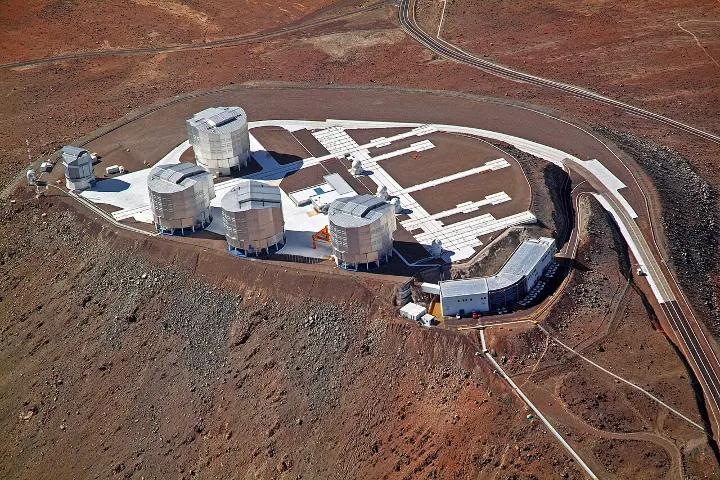
Photo: European Southern Observatory (the picture's source, opens in a new tab), CC BY 4.0 Paranal Observatory (ESO)
Taltal, Antofagasta Region, Chile · 2,635 m · since 1999
By booking or on set days
The Very Large Telescope: four 8.2 m telescopes plus four 1.8 m helpers that can work together as one.
The Southern Hemisphere's largest visible and infrared observatory. The 39 m Extremely Large Telescope is being built 20 km away.
Visit: ESO runs free guided tours on Saturdays, by advance registration only.
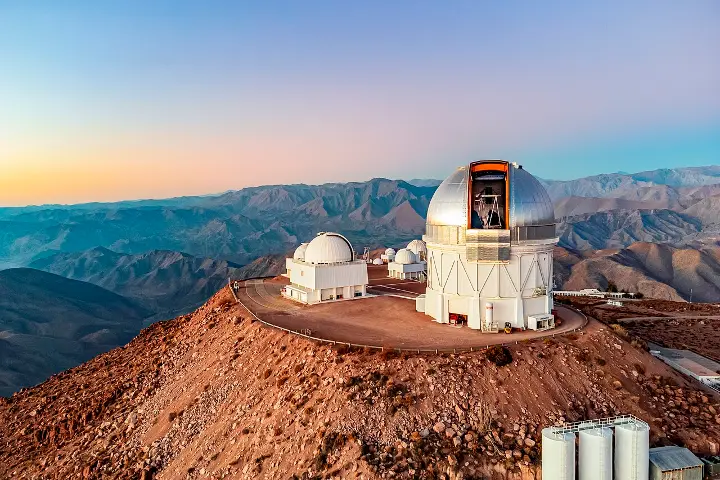
Photo: CTIO/NOIRLab/NSF/AURA/T. Matsopoulos (the picture's source, opens in a new tab), CC BY 4.0 Cerro Tololo Inter-American Observatory
La Serena, Coquimbo Region, Chile · 2,207 m · since 1965
By booking or on set days
The 4 m Victor M. Blanco Telescope (1974) and the 4.1 m SOAR telescope nearby.
Run with Kitt Peak by the U.S. NOIRLab; a home base for southern-sky research.
Visit: NOIRLab offers free guided tours on Saturdays, reserved at least a day ahead.
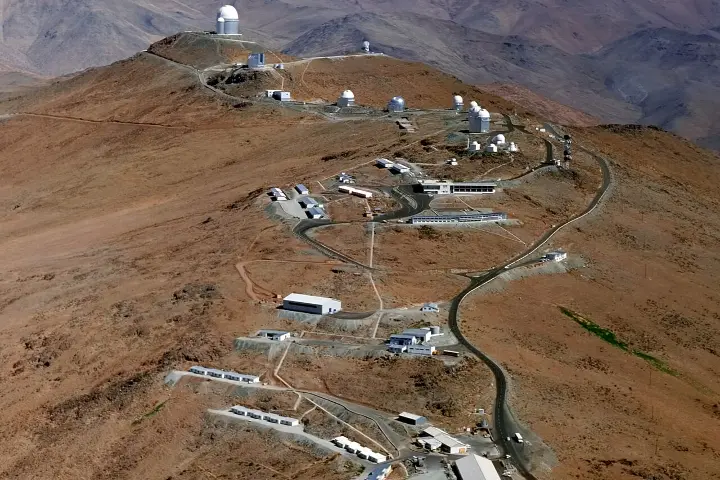
Photo: ESO/C.Madsen (the picture's source, opens in a new tab), CC BY 4.0 La Silla Observatory (ESO)
La Serena, Coquimbo Region, Chile · 2,400 m · since 1969
By booking or on set days
The ESO 3.6 m with the HARPS planet finder, and the 3.5 m New Technology Telescope, which pioneered active optics (1989).
Small planets around other stars were found here, under some of the darkest skies on Earth.
Visit: ESO runs free guided tours at weekends, by advance registration only.
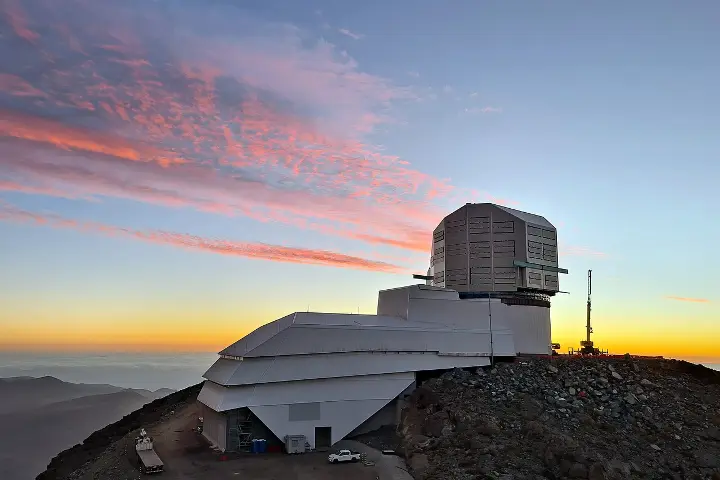
Photo: Rubin Obs/NSF/AURA (the picture's source, opens in a new tab), CC BY 4.0 Vera C. Rubin Observatory
La Serena, Coquimbo Region, Chile · about 2,670 m · since 2025
By booking or on set days
An 8.4 m telescope with a 3.2-gigapixel camera, the largest camera ever built.
It photographs the whole southern sky every few nights for ten years: a movie of the universe.
Visit: The observatory's site says public visits to Cerro Pachon began in January 2026, by reservation, and fill quickly.
Beijing Ancient Observatory
Beijing, China
Open to visitors
An observatory platform beside Jianguomen with eight large Qing-era bronze astronomical instruments on its terrace.
Visit: Open to ticketed visitors on most days of the week, with tickets sold through the Beijing Planetarium's channels.
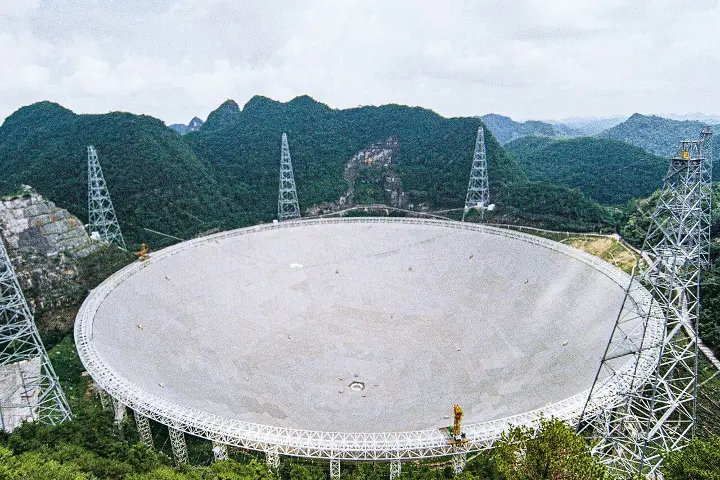
Photo: SCJiang (the picture's source, opens in a new tab), CC BY-SA 4.0 FAST
Kedu, Pingtang County, Guizhou, China · since 2016
By booking or on set days
A 500 m radio dish in a natural sinkhole, the world's largest single dish since 2016.
More than 1,000 pulsars found by November 2024. No phones are allowed within 5 km.
Visit: Visitors see the dish from an observation platform in the surrounding scenic area, after leaving phones and other electronics behind. Whether foreign passport holders are admitted was not confirmed.
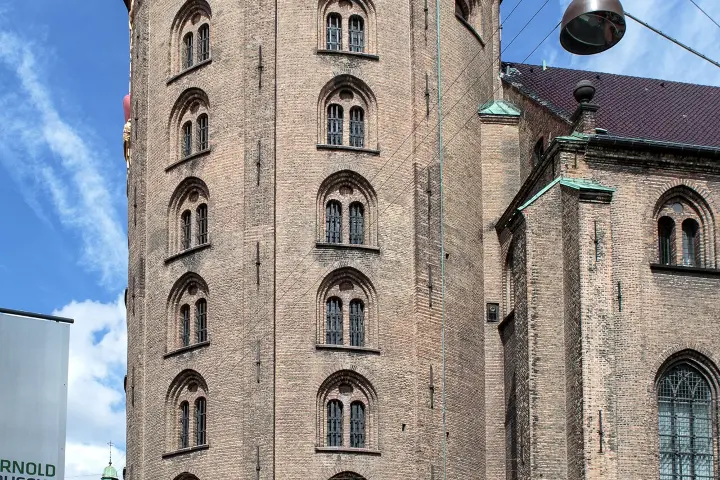
Photo: Avda (the picture's source, opens in a new tab), CC BY-SA 3.0 The Round Tower (Rundetaarn)
Copenhagen, Capital Region, Denmark
Open to visitors
A 17th century observatory tower with a public observatory and telescope under a copper dome that was restored in 2026.
Visit: The tower is open to ticketed visitors. Press reports said the rooftop observatory was due back in public use from October 2026 after a restoration.
Tartu Old Observatory
Tartu, Tartu County, Estonia
Open to visitors
A University of Tartu museum on the UNESCO-listed Struve Geodetic Arc, where a 9-inch Fraunhofer refractor arrived in 1824 as the largest achromatic telescope of its time.
Visit: The University of Tartu Museum opens the Old Observatory on set days that change with the season.
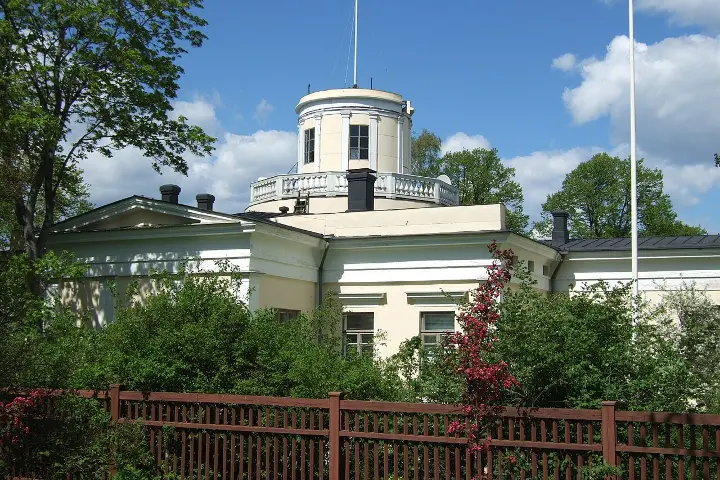
Photo: Eva Isaksson (the picture's source, opens in a new tab), CC BY-SA 3.0 Helsinki Observatory
Helsinki, Uusimaa, Finland
By booking or on set days
The University of Helsinki's historic observatory, now a site of the Helsinki University Museum Flame.
Visit: The observatory opens on irregular days posted by the Helsinki University Museum Flame, which also gives guided tours.
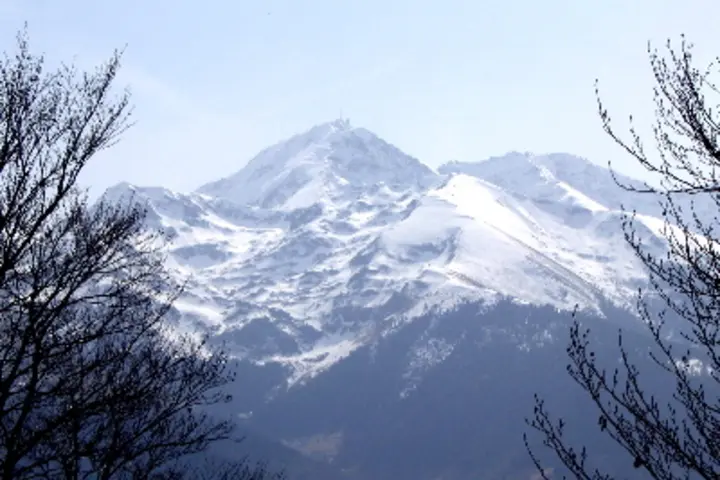
Photo: The original uploader was Nathan Hamblen at French Wikipedia . (the picture's source, opens in a new tab), CC BY-SA 3.0 Pic du Midi Observatory
La Mongie (Bagnères-de-Bigorre), Occitanie, France
Open to visitors
A mountaintop observatory whose Baillaud dome, the oldest astronomical installation on the site, now houses a planetarium.
Visit: A cable car from La Mongie takes ticketed day visitors to the summit, and a small number of booked guests can stay the night.
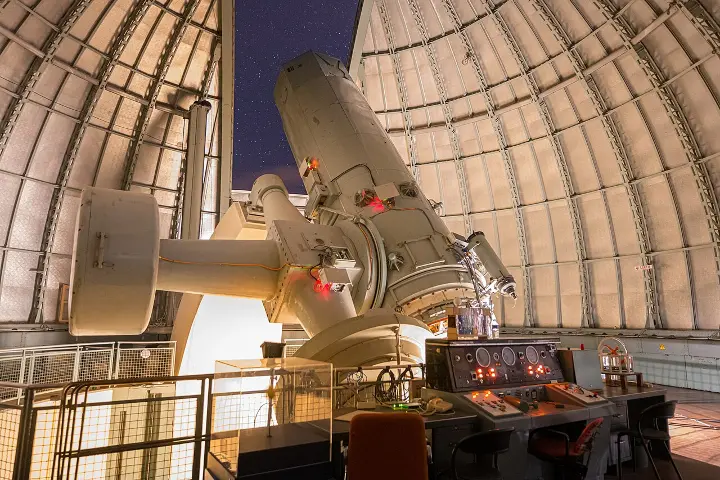
Photo: José Rodrigues (the picture's source, opens in a new tab), CC BY-SA 4.0 Observatoire de Haute-Provence
Saint-Michel-l'Observatoire, Provence-Alpes-Côte d'Azur, France
By booking or on set days
A CNRS research observatory in Provence whose public visit goes inside its large telescope dome.
Visit: Guided public visits run on set weekday afternoons in French school holidays, with booking advised through the Centre d'Astronomie, plus open days.
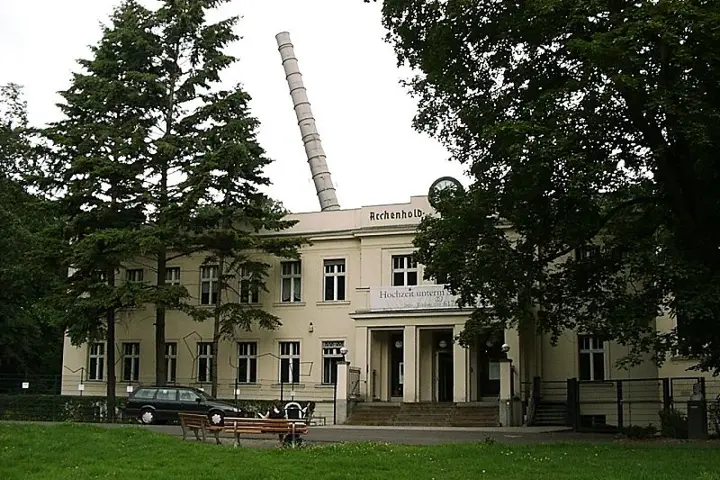
Photo: Sebastian Wallroth (the picture's source, opens in a new tab), Public domain Archenhold Observatory
Berlin, Germany
Open to visitors
Described as Germany's oldest and largest public observatory, it houses the longest movable refracting telescope in the world.
Visit: The Stiftung Planetarium Berlin runs guided tours, family visits and observing nights, with tickets sold at the observatory.
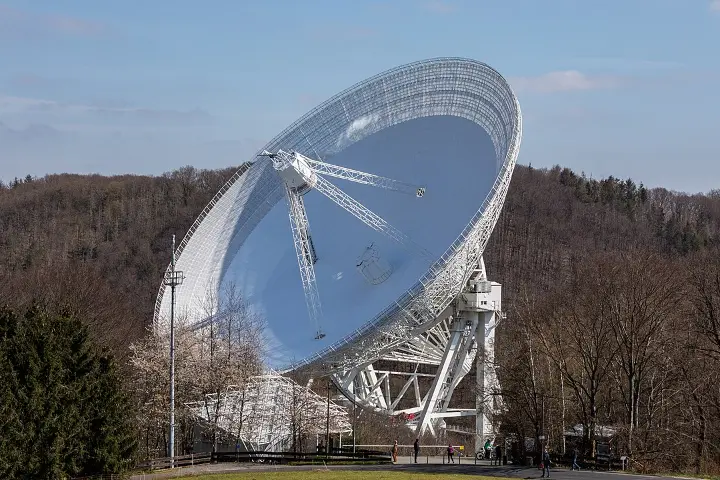
Photo: Raimond Spekking (the picture's source, opens in a new tab), CC BY-SA 4.0 Effelsberg Radio Telescope
Bad Münstereifel-Effelsberg, North Rhine-Westphalia, Germany
By booking or on set days
A large radio telescope run by the Max Planck Institute for Radio Astronomy, with a visitor pavilion on the observatory site.
Visit: In the visitor season the pavilion at the telescope gives talks to booked groups of 10 to 80 people.
National Observatory of Athens
Athens, Attica, Greece
By booking or on set days
The historic Thissio site of the National Observatory of Athens, where tours include the Doridis refractor.
Visit: Visitors enter only on pre-booked evening tours of the Thissio Visitor Center.
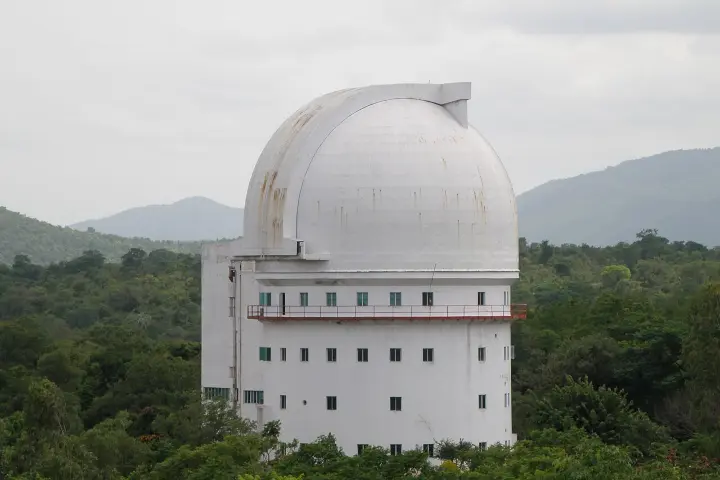
Photo: Prateek Karandikar (the picture's source, opens in a new tab), CC BY-SA 4.0 Vainu Bappu Observatory
Kavalur, Tamil Nadu, India
By booking or on set days
An Indian Institute of Astrophysics observatory where Saturday visitors see an astronomy museum of retired telescopes and instruments.
Visit: Open to the public every Saturday, with evening stargazing when the sky is clear.
Birr Castle and the Great Telescope
Birr, County Offaly, Ireland
Open to visitors
The Leviathan, the Great Telescope that was the world's largest for over 70 years, stands in the grounds beside a science centre and the I-LOFAR radio station.
Visit: The demesne, with the Great Telescope and the science centre, is open to ticketed visitors nearly every day of the year.
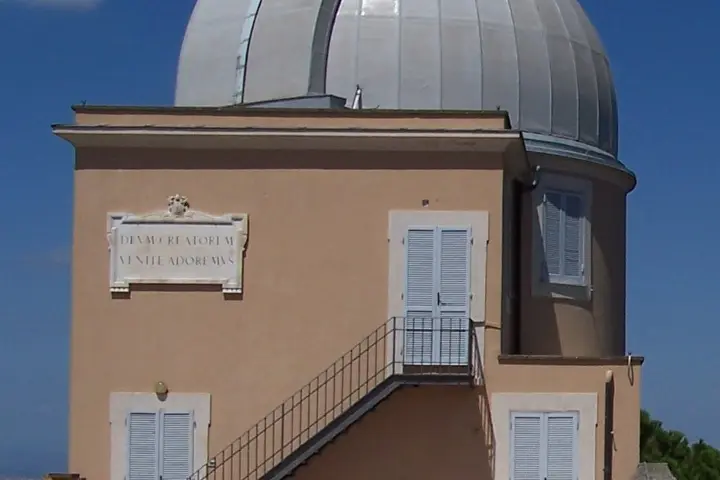
Photo: Rb85 (the picture's source, opens in a new tab), CC BY-SA 3.0 Vatican Observatory, Castel Gandolfo
Castel Gandolfo, Lazio, Italy
By booking or on set days
The Apostolic Palace was the observatory's home from 1935 to 2009, and a visitor centre in the papal villa gardens shows two historic telescopes.
Visit: Visits are booked through the Vatican Museums as part of the Castel Gandolfo complex, with guided visits to the observatory facilities as an option.
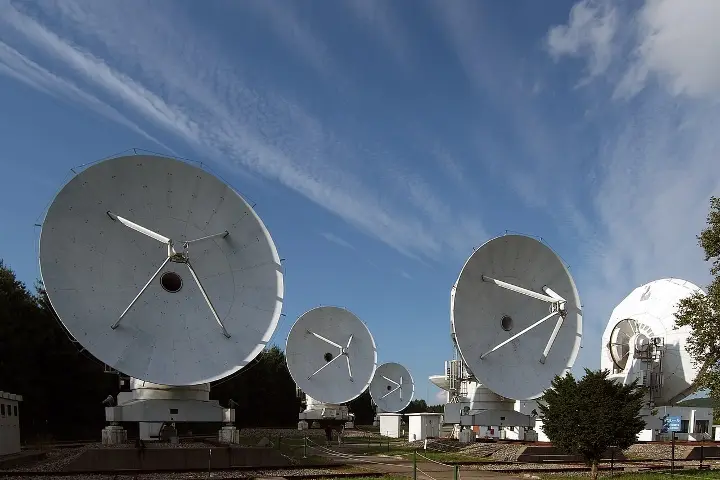
Photo: Wiiii (the picture's source, opens in a new tab), CC BY-SA 3.0 Nobeyama Radio Observatory
Minamimaki, Nagano, Japan
Open to visitors
A radio observatory of the National Astronomical Observatory of Japan with a tour course among its antennas.
Visit: Part of the campus is open daily for a free self-guided tour course, and an open campus day each summer opens more.
National Astronomical Observatory of Japan, Mitaka Campus
Mitaka, Tokyo, Japan
Open to visitors
The visitors' area includes the Observatory History Museum in the dome of the 65 cm refractor, the largest refractor in Japan, retired in 1998.
Visit: The visitors' area is open to the public, and small groups need no reservation and check in at the gatehouse.
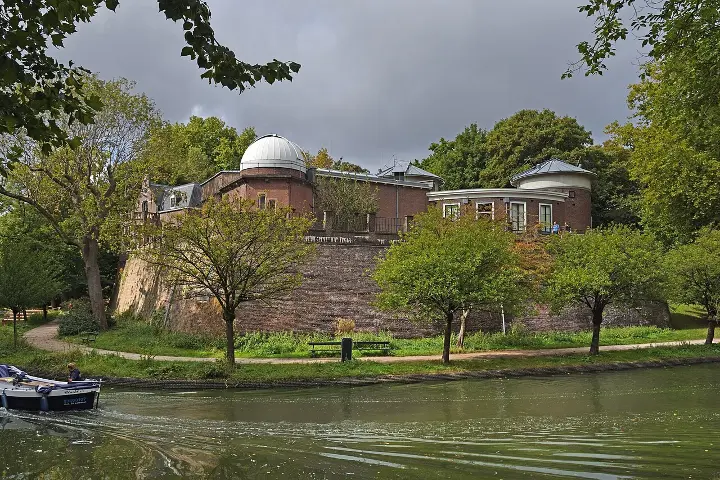
Photo: Ludvig14 (the picture's source, opens in a new tab), CC BY-SA 4.0 Sonnenborgh Museum and Observatory
Utrecht, Netherlands
Open to visitors
A museum and observatory in Utrecht whose stargazing evenings start with a short lecture and turn the telescopes to the sky when it is clear.
Visit: The museum is open on set days and holds stargazing evenings with tickets bought online in advance.
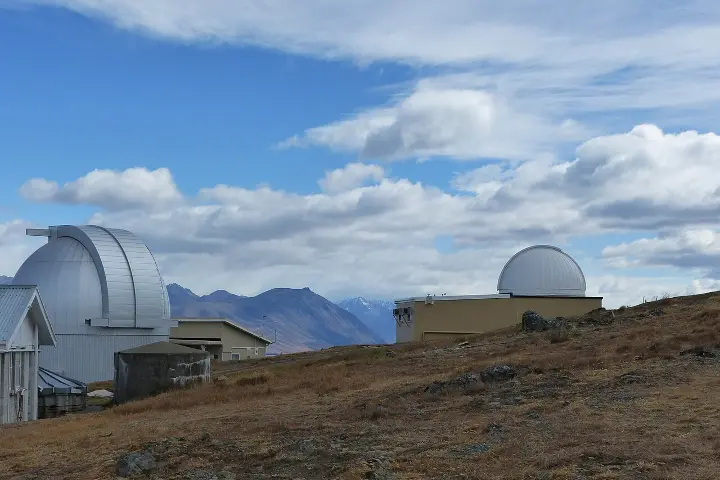
Photo: geekgirltakingpics (the picture's source, opens in a new tab), CC BY-SA 2.0 University of Canterbury Mount John Observatory
Lake Tekapo, Canterbury, New Zealand
By booking or on set days
A working mountaintop research observatory of the University of Canterbury above Lake Tekapo.
Visit: The summit is reached only on Dark Sky Project's booked guided night tours, which run every day of the week.
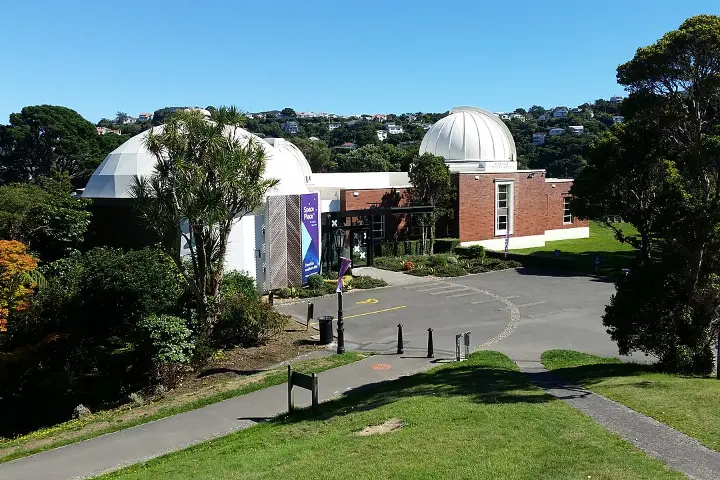
Photo: SPCarterObservatory (the picture's source, opens in a new tab), CC BY-SA 4.0 Space Place at Carter Observatory
Wellington, New Zealand
Open to visitors
It houses the Thomas Cooke refractor, made in 1867, and the Ruth Crisp telescope, alongside a planetarium.
Visit: Open for general admission on set days of the week, with late openings when the historic telescope is used for public viewing in clear weather.
Baikal Astrophysical Observatory
Listvyanka, Irkutsk Oblast, Russia · about 670 m · since 1980
By booking or on set days
The Large Solar Vacuum Telescope, with a 76 cm lens: the largest solar refracting telescope in Eurasia.
In summer the ice-cold lake calms the rising warm air that usually blurs the daytime Sun.
Visit: Visits appear to be by arranged excursion only, sold by Irkutsk tour operators. The institute's own site showed no public visiting page.
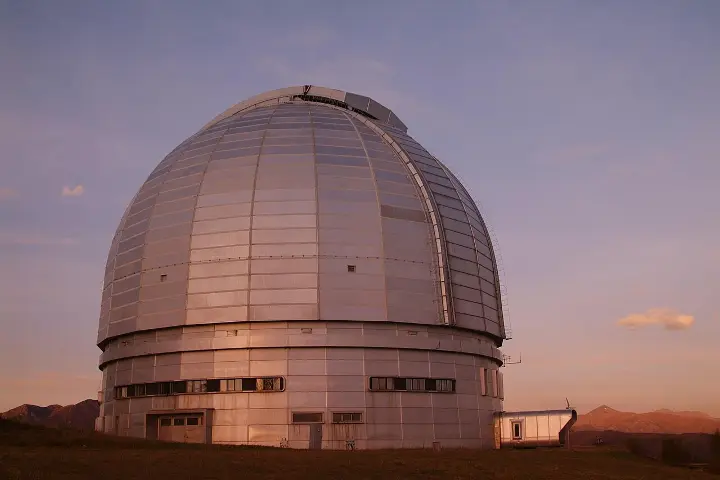
Photo: Tyavin Paul (the picture's source, opens in a new tab), CC BY-SA 3.0 Special Astrophysical Observatory
Nizhny Arkhyz, Karachay-Cherkessia, Russia · 2,070 m · since 1966
Open to visitors
BTA-6, a 6 m mirror in a 48 m dome, the world's largest telescope from 1975 until Keck; and RATAN-600, a radio telescope ring 576 m across.
The first mirror cracked because the glass cooled too fast. A third mirror in 1978 fixed the worst problems.
Visit: The observatory's own page lists daytime tours of the BTA telescope and visits to RATAN-600 by advance booking.
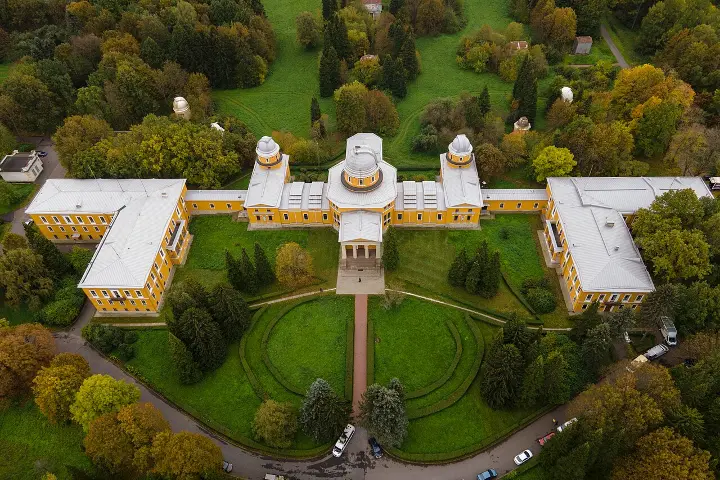
Photo: SadPetzl (the picture's source, opens in a new tab), CC BY-SA 4.0 Pulkovo Observatory
Saint Petersburg, Russia · 75 m · since 1839
By booking or on set days
Its 30-inch refractor (1885) was the biggest working refractor in the world until Lick's 36-inch.
Every building was destroyed in the Siege of Leningrad, but the main instruments were saved, and it reopened in 1954.
Visit: Visited only on guided excursions booked in advance.
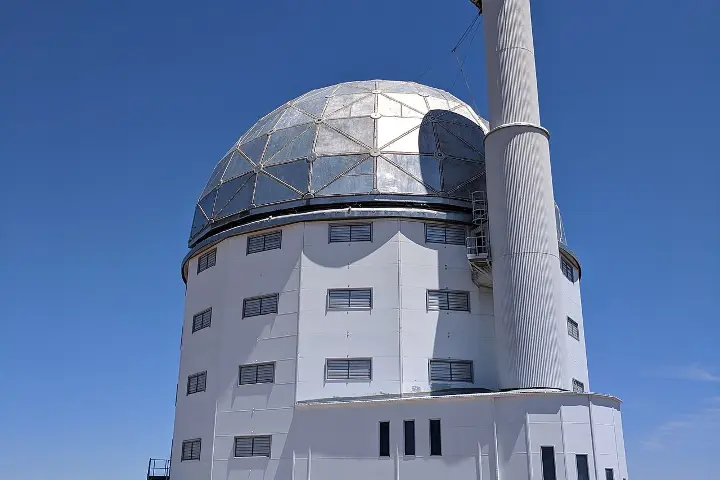
Photo: Lengau (the picture's source, opens in a new tab), CC BY-SA 4.0 South African Astronomical Observatory and SALT
Sutherland, Northern Cape, South Africa · since 1972
Open to visitors
SALT, the Southern African Large Telescope: 91 segments, 9.2 m effective, the largest optical telescope in the Southern Hemisphere.
A 2007 law protects the dark Karoo skies around it.
Visit: The visitor centre runs guided day tours that include SALT, and evening stargazing on visitor telescopes, booked in advance.
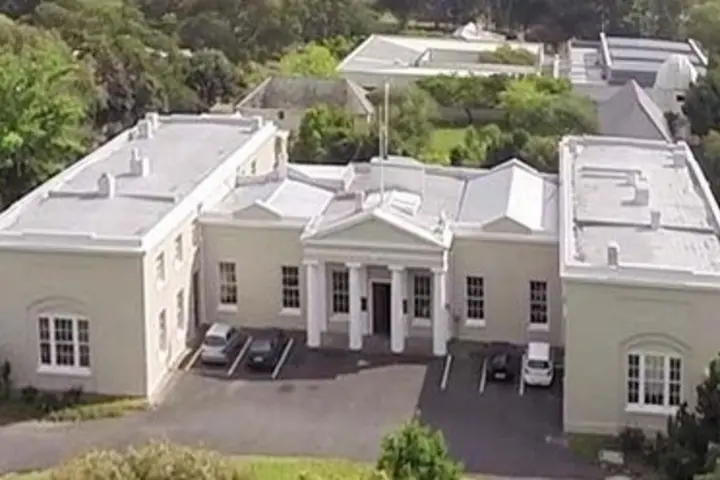
Photo: Janus Brink (the picture's source, opens in a new tab), CC0 South African Astronomical Observatory, Cape Town
Cape Town, Western Cape, South Africa
By booking or on set days
The observatory's Cape Town site, where an open night has a talk and a tour of the library, the museum and the 120-year-old McClean telescope.
Visit: Open nights are held on the second and fourth Saturday of most months, and day and night tours can be booked.
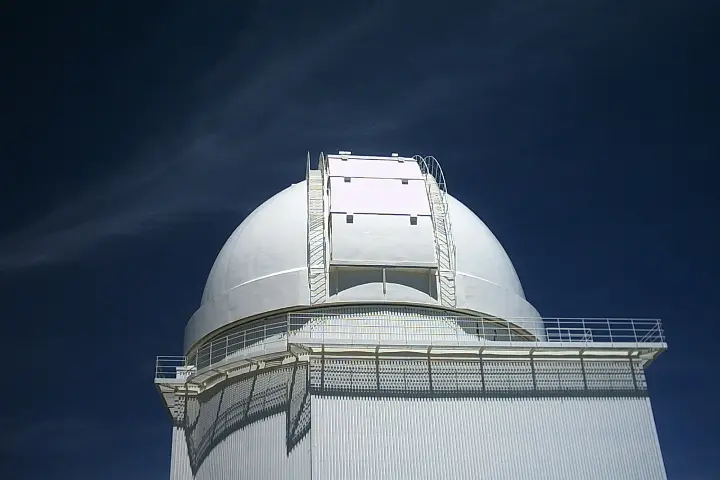
Photo: No machine-readable author provided. Jorgechp assumed (based on copyright claims). (the picture's source, opens in a new tab), CC BY-SA 3.0 Calar Alto Observatory
Gérgal, Andalusia, Spain
By booking or on set days
The visit enters the dome of the 3.5 m telescope, the observatory's largest optical telescope.
Visit: Guided visits, mostly at weekends, are run by the company Azimuth and must be booked.
Photo: H. Raab ( User:Vesta ) (the picture's source, opens in a new tab), CC BY-SA 3.0 Roque de los Muchachos Observatory
Garafía, La Palma, Canary Islands, Spain · about 2,300 m · since 1985
Open to visitors
The Gran Telescopio Canarias, 10.4 m across in 36 segments, the largest single-mirror optical telescope; also the 4.2 m William Herschel and the 2.5 m Isaac Newton telescopes.
One of the best observing sites in the Northern Hemisphere. The Isaac Newton Telescope was moved here from cloudy England.
Visit: The Roque de los Muchachos Visitor Centre, opened in December 2021, is open to the public, and guided visits to the observatory are by advance booking. The telescopes do not take walk-in visitors.
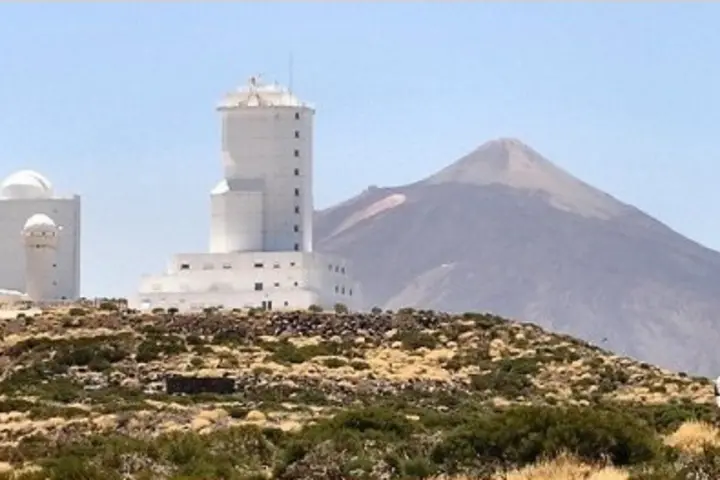
Photo: Besnier.m (the picture's source, opens in a new tab), CC BY 2.5 Teide Observatory
Izaña, Tenerife, Canary Islands, Spain
By booking or on set days
The Instituto de Astrofísica de Canarias observatory on Tenerife, shown on guided daytime visits in four languages.
Visit: Booked guided daytime visits are sold by Volcano Teide and are not open to children under eight.
Tycho Brahe Museum
Ven, Skåne, Sweden
Open to visitors
The museum marks the place where Tycho Brahe began his scientific work 450 years ago, and visitors can go into his Stjerneborg observatory by arranging a time slot.
Visit: The museum on the island of Ven, reached by ferry, opens for a season from May to September.
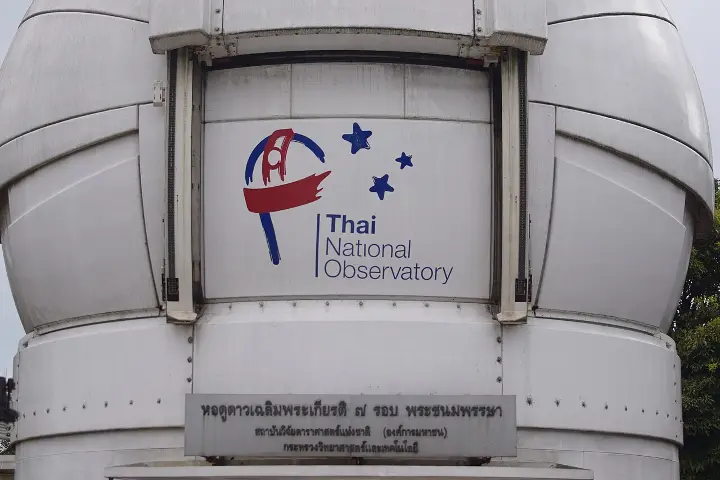
Photo: Jooshaa (the picture's source, opens in a new tab), CC BY-SA 4.0 Thai National Observatory
Doi Inthanon, Chiang Mai, Thailand
By booking or on set days
The research observatory of the National Astronomical Research Institute of Thailand on Doi Inthanon.
Visit: The public can visit only on the annual open house days, which need registration and have limited places.
Al Sadeem Observatory
Al Wathba South, Abu Dhabi, United Arab Emirates
By booking or on set days
An observatory in Al Wathba South that offers a behind-the-scenes tour, stargazing through its telescopes and time with a resident astronomer.
Visit: Guided evening tours with telescope viewing run on listed dates and must be booked online.
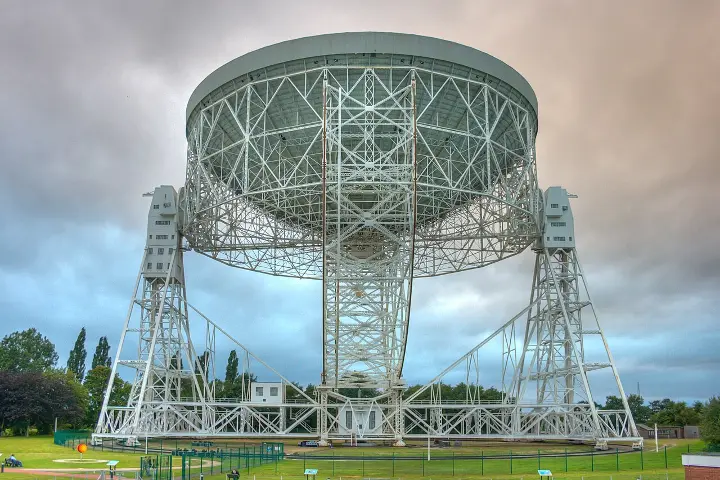
Photo: Mike Peel ; Jodrell Bank Centre for Astrophysics, University of Manchester (the picture's source, opens in a new tab), CC BY-SA 4.0 Jodrell Bank
Macclesfield, Cheshire, England, United Kingdom · since 1945
Open to visitors
The 76 m Lovell Telescope (1957), the world's largest steerable dish when built.
In October 1957 it was the only telescope able to track Sputnik's rocket by radar. A UNESCO World Heritage Site since 2019.
Visit: The visitor centre, with the First Light Pavilion and a path around the Lovell Telescope, is a ticketed attraction.
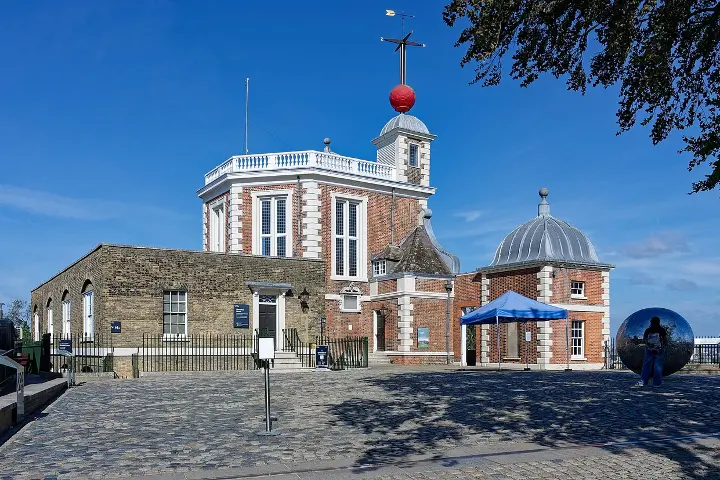
Photo: Jakub Hałun (the picture's source, opens in a new tab), CC BY 4.0 Royal Observatory Greenwich
London, England, United Kingdom · since 1675
Closed for now
The home of the Prime Meridian, longitude 0, since 1884.
Founded by King Charles II to help sailors solve the longitude problem: knowing how far east or west they were.
Visit: Closed since November 2, 2026 for a major redevelopment. Its website says it will reopen in phases from summer 2027.
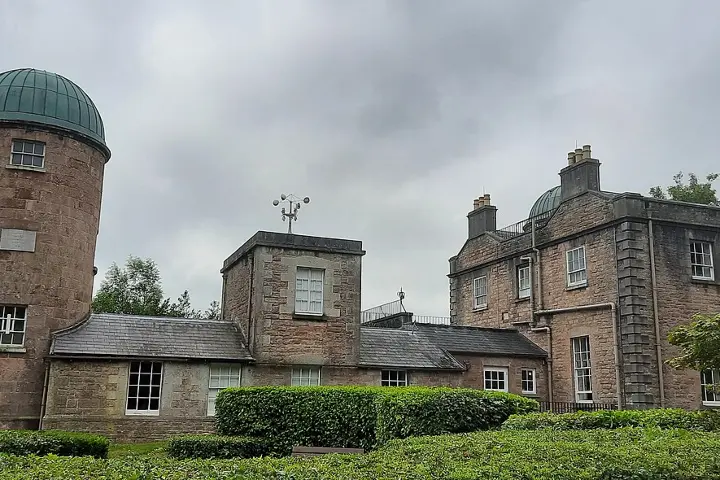
Photo: Csyogi (the picture's source, opens in a new tab), CC BY-SA 4.0 Armagh Observatory and Planetarium
Armagh, Northern Ireland, United Kingdom
By booking or on set days
The tour of the historic observatory building includes the 10-inch Grubb telescope installed in 1885.
Visit: The historic observatory is seen on the pre-booked Legendary Telescopes Tour, which includes access to the planetarium exhibition.
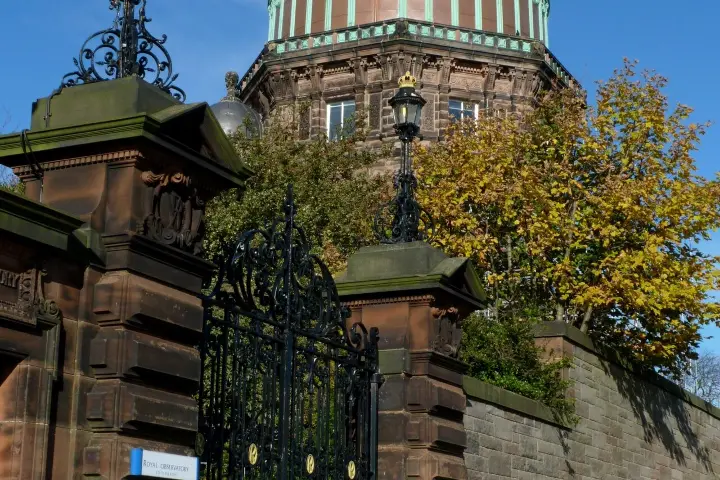
Photo: Chi And H (the picture's source, opens in a new tab), CC BY-SA 3.0 Royal Observatory Edinburgh
Edinburgh, Scotland, United Kingdom
By booking or on set days
A working observatory on Blackford Hill that opens for public astronomy talks and evening events.
Visit: There are no drop-in visits, so the public comes to pre-booked talks and astronomy evenings and to the Doors Open Days weekend in September.
TAKE IT WITH YOU
Telescope travel guide. The three biggest telescopes drawn to one scale, and the major observatories of the world. 6 pages, 280 KB.
New to telescopes? Telescopes: which kind does what explains the three main kinds and what radio, infrared and X-ray telescopes are for. Working on the Astronomy merit badge? A visit to an observatory or planetarium is requirement 8a; the Scouts page has the rest.
The first 27 observatories come from the telescope travel guide, whose facts were checked against Wikipedia, NASA and the observatories' own sites; the rest were added for the search. Each official website and visiting note was confirmed by web search on Nov 12, 2026; a note that says something was not confirmed means exactly that. The photographs are real: NASA's own, or Wikimedia Commons files under a free licence, each credited under the picture with a link to its source. SpaceDew is not connected to any observatory listed. Nothing you type in the search leaves this page.