Update: NASA's Orion Page Lays Out the Capsule Behind the Heat Shield Results
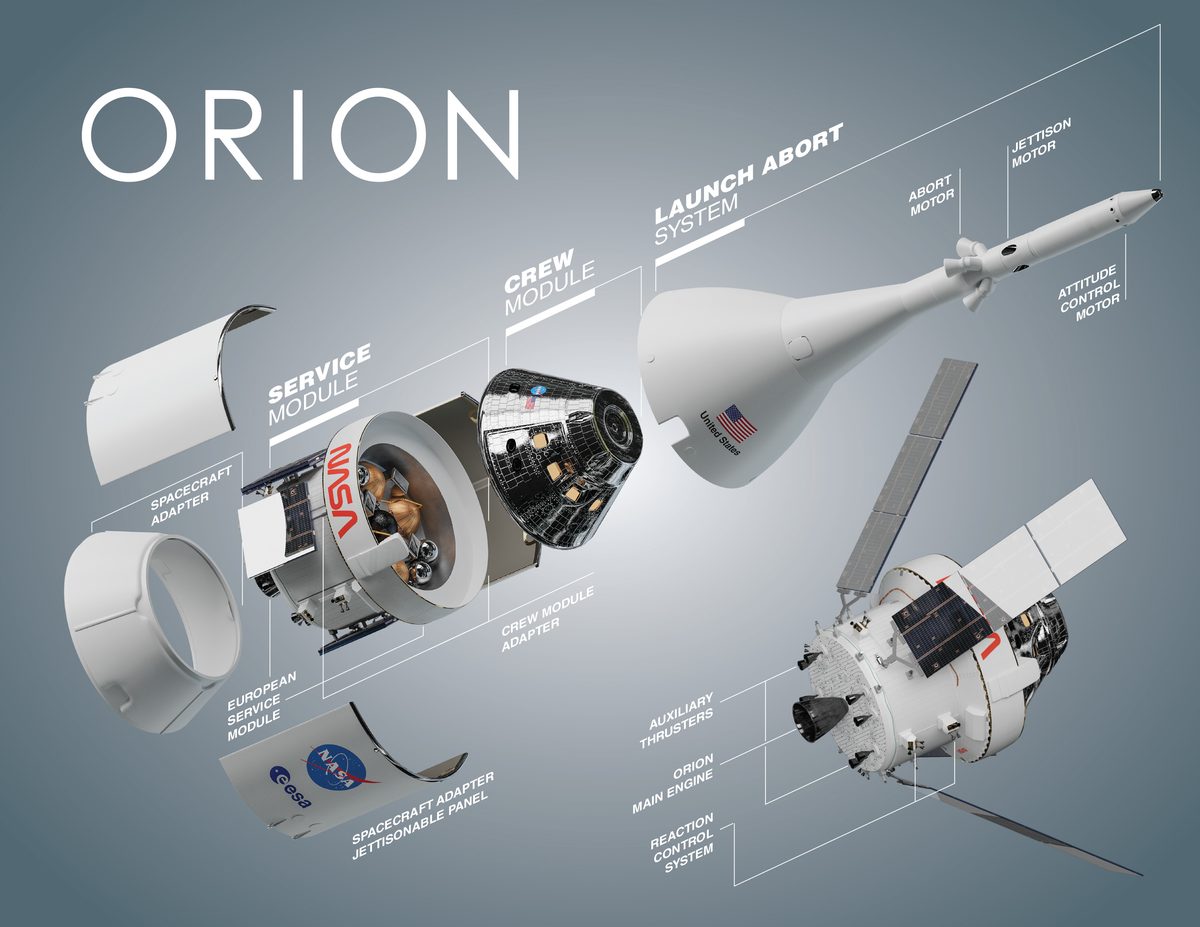
NASA's Orion reference page on nasa.gov, as of October 18, 2026, spells out the capsule's three main parts and what Artemis II tested, to show Orion is ready for longer Artemis flights.
Our October 16 story on the heat shield covered how the shield held up on the way home. This update is about the spacecraft wrapped around it.
Three parts, one spacecraft
NASA's page says Orion has three main elements. The crew module is where astronauts live and work. The service module provides power, propulsion and critical supplies. The launch abort system can pull the spacecraft and crew to safety if something goes wrong during launch or the climb to orbit.
The page says Lockheed Martin is the lead contractor and builds Orion for NASA. It says Orion builds on more than 50 years of spaceflight research and development. It also says that during Artemis II the capsule carried astronauts farther from Earth than ever before.
On the heat shield, the page makes a claim of its own: Orion has "the world's largest heat shield." That is NASA's wording on the page, and the page gives no measurements to go with it.
What the crew tested
The page lists what the Artemis II crew worked through. NASA says they ran a proximity operations demonstration, which was a test of how Orion handles when flown close to another object. They also checked the life support systems, including while wearing Orion crew survival system spacesuits, and during exercise and sleep periods.
The rest of the list, per NASA:
- communication and navigation systems
- Earth departure and return operations
- practice of emergency procedures
- other tests of the spacecraft's critical systems
NASA says this showed Orion's life support systems are ready to sustain astronauts on longer missions. It also says the crew's practice helps set up Artemis III and later flights.
Built for a long way from home
The page explains why Orion's systems have to be so dependable. Astronauts at the Moon will not get frequent resupply flights with spare parts, the way the International Space Station does. NASA says astronauts have lived and worked on the station for more than 25 years.
So the systems are compact. NASA says that saves room for crew comfort and for the food and water needed on a mission lasting days, weeks or even months.
The page also lists some plain items in the crew kit: advanced display and control panels, a compact toilet, and exercise equipment meant to help prevent muscle and bone loss. Those are small details, but they are the things a crew lives with day to day.
One line stands out on safety. NASA says the Orion spacesuits can keep astronauts alive for six days if the cabin loses pressure. The page ties that to a multi-day trip back from the Moon. The source for that number is NASA's own page.
Why Orion needs more than a heat shield
NASA's page says no other spacecraft has the technology to endure the extremes of deep space. It names advanced environmental and life support, navigation, communications and radiation shielding, along with the heat shield. This is NASA describing its own spacecraft, and the page does not compare Orion against any other vehicle by name.
The page also describes the program's purpose. NASA says Artemis returns American astronauts to the Moon "in order to stay," and that each flight works through a list of test objectives meant to build a lasting presence in deep space. It says the lunar South Pole is an area of scientific interest, and that the longer-term campaign leads toward Mars.
What is next
Orion gets a new tool on the next flight. NASA's page says that beginning with Artemis III, Orion will carry a rendezvous and docking system. It is meant for docking with a human landing system, which NASA describes as the craft that will take astronauts from Orion to the surface of the Moon or to another spacecraft.
NASA's heat shield release, as reported in our earlier story, puts Artemis III next year in low Earth orbit. The crew is Randy Bresnik, Frank Rubio and Andre Douglas of NASA, plus Luca Parmitano of the European Space Agency. NASA says they will work with test versions of landers from Blue Origin and SpaceX, with landings beginning on Artemis IV in 2028.
The first test of that docking system is planned, not done. The Artemis III date has not been set beyond "next year" in anything NASA has published here. NASA has announced a briefing at 2 p.m. EDT on Friday, October 23, at Kennedy Space Center to update its plans for returning astronauts to the Moon's surface. That is the next scheduled chance to hear more.
Stay curious.
Find more at spacedew.com and @boggleriley on X
Get the Morning Dew
The daily brief, live quotes and the newest File Zero story, every morning. Plus a Friday recap of the week. Nothing else, ever.