The Flying Saucer Summer of 1952
The Filing System That Tells the Real Story
The Air Force held its largest press conference since World War II on July 29, 1952, to dismiss UFOs over Washington as weather mirages—but the military's own filing system reveals they were running multiple parallel investigations while telling the public there was nothing to see.
Major General John Samford stood at the Pentagon podium that summer day and explained away the radar blips and pilot sightings as temperature inversions. Case closed. Project Blue Book would handle any future reports through proper channels.
The National Archives tells a different story.
While Samford was reassuring reporters that Blue Book had everything under control, the Secretary of Defense was quietly establishing separate UAP records under what would become Record Group 615. The Office of the Secretary of Defense maintained its own files on unidentified anomalous phenomena—files that exist today, decades after Blue Book supposedly wrapped up the mystery with weather explanations and swamp gas.
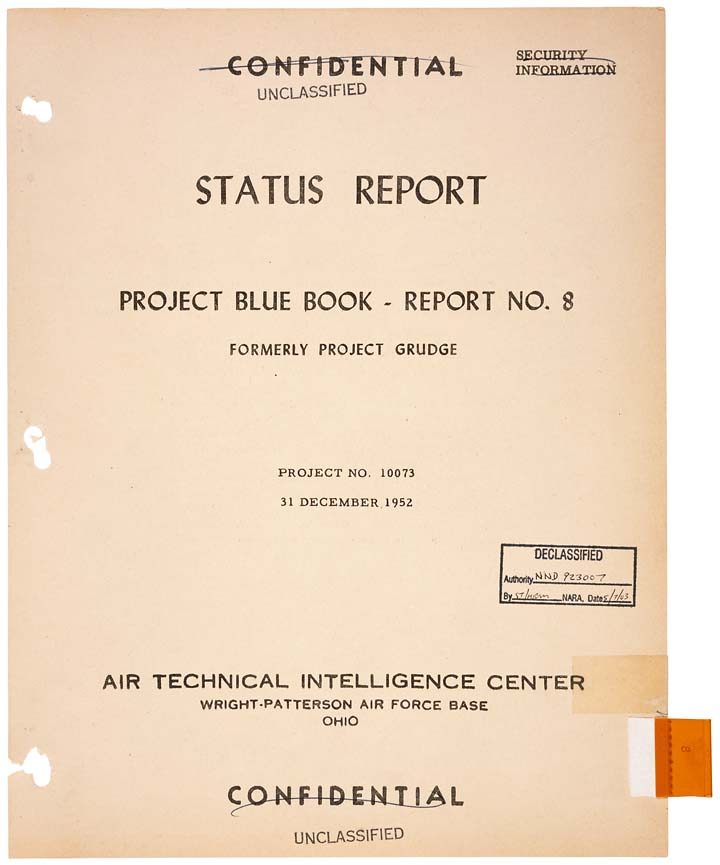
Blue Book Status Report
Source: National Archives, NAID 595507. View full document
The administrative machinery tells the real story. Project Blue Book Status Report Number Eight reveals a bureaucratic apparatus far more complex than the simple "investigate and dismiss" narrative sold to the press. The numbered reporting system, the specialized analysis teams, the cross-referencing with other agencies—none of this suggests a program designed to debunk weather balloons.
More revealing: Blue Book's own administrative files reference something called "USAF SAT" dated February 3, 1966. SAT typically stood for Special Analysis Team or Satellite operations. Either designation suggests capabilities and organizational structures that weren't part of the public Blue Book story.
The filing system fragments across multiple record groups. Blue Book cases sit in RG 341 under Air Force Headquarters. But related investigations appear in RG 342—Air Force Commands, Activities, and Organizations. A UFO interview film sits there, catalogued separately from Blue Book's main files.
Why maintain parallel filing systems if everything was being handled through one program?
The Air Intelligence Information Reports from 1958 span 331 pages. These weren't casual incident summaries. The military was collecting detailed intelligence reports on aerial phenomena six years after the Washington incidents were supposedly explained away. The volume suggests ongoing collection, not the wrap-up of a concluded investigation.
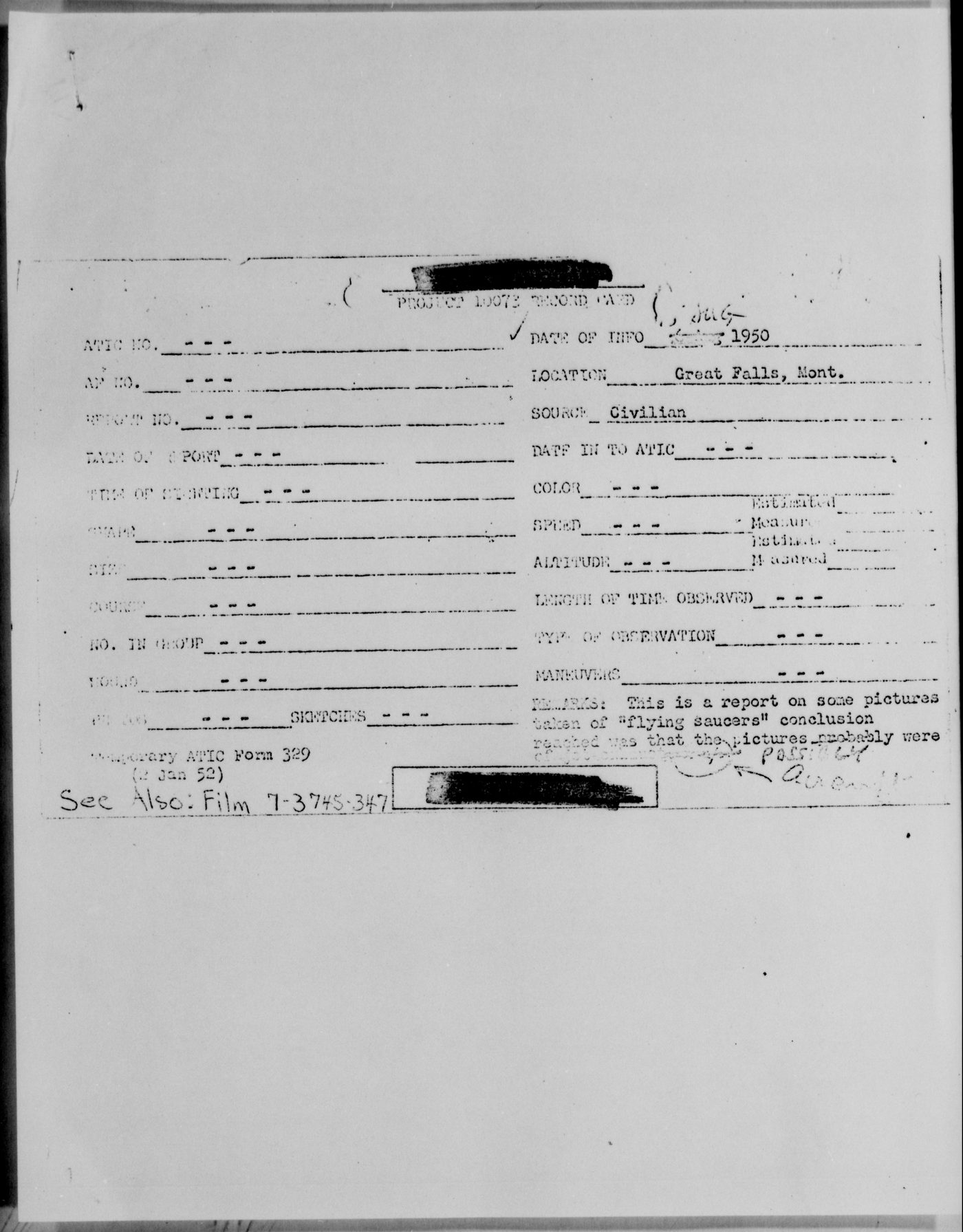
Great Falls UFO Report
Source: National Archives, NAID 28938188. View full document
Physical evidence tells another story entirely. Project Blue Book maintained an artifacts series—actual physical specimens collected from alleged UFO incidents. Pieces of quartz from Germany. Radar chaff from Arkansas. Charred rocks from New Jersey. The Air Force was quietly collecting and cataloguing physical evidence while publicly maintaining that most sightings were misidentified conventional objects.
The buried detail: Blue Book's administrative files reference coordination with the National Archives as early as the program's active years. The military wasn't just investigating UFO reports—they were already planning how to preserve and organize the records for long-term storage. That's not the behavior of an agency dismissing everything as weather phenomena.
The current AARO Historical Record Report sits in RG 615, a record group specifically created for UAP materials. The Pentagon didn't create a specialized record group for debunked weather reports. They created it because decades of files from multiple agencies and commands needed a permanent home.
The 1952 press conference worked as intended. The public bought the temperature inversion story. The press moved on. But the filing cabinets kept growing.
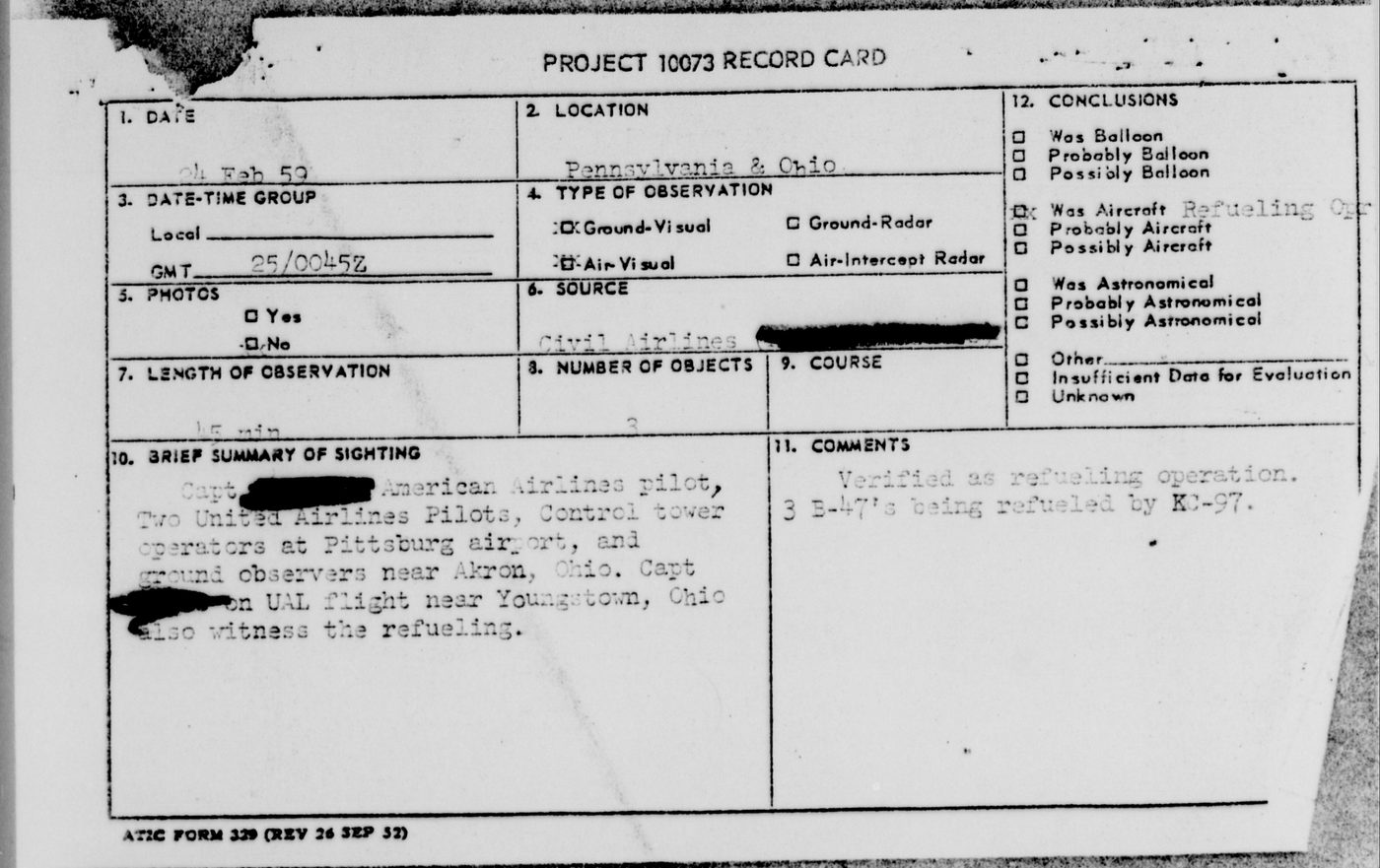
Project Blue Book Pennsylvania Case
Source: National Archives, NAID 28982097. View full document
The real disclosure happened decades ago. It's sitting in College Park, Maryland, organized by record group and series, available to anyone with a researcher card. The files reveal a military bureaucracy that took UAP reports seriously enough to maintain multiple investigation channels, collect physical evidence, and coordinate with other agencies—all while telling the public there was nothing worth investigating.
The biggest UFO story isn't what the government might reveal. It's what they already filed away, thinking nobody would connect the organizational dots.
Stay curious.