Foo Fighters: The Original UAP
The NSC Was Reading Foo Fighter Reports Before the Air Force Had a Program to File Them
A U.S. military attaché in postwar Prague routed an unconventional aircraft sighting directly to the National Security Council — before Project Sign existed, before "flying saucer" was a household phrase, and before anyone in the official record admits the government was paying this kind of attention.
The standard story goes like this: Kenneth Arnold sees something over Mount Rainier in June 1947. The press coins "flying saucer." The Air Force stands up Project Sign in December 1947. Institutional concern begins. File that under History, move on.
Except there's a message sitting in the National Security Council's own records — not the Air Force's, not Army intelligence's, the NSC's — from a military air attaché stationed in Prague. Routing an unconventional aircraft sighting. Into the highest national security channel in the U.S. government.
That document is real. It's at the National Archives. You can look at it today.
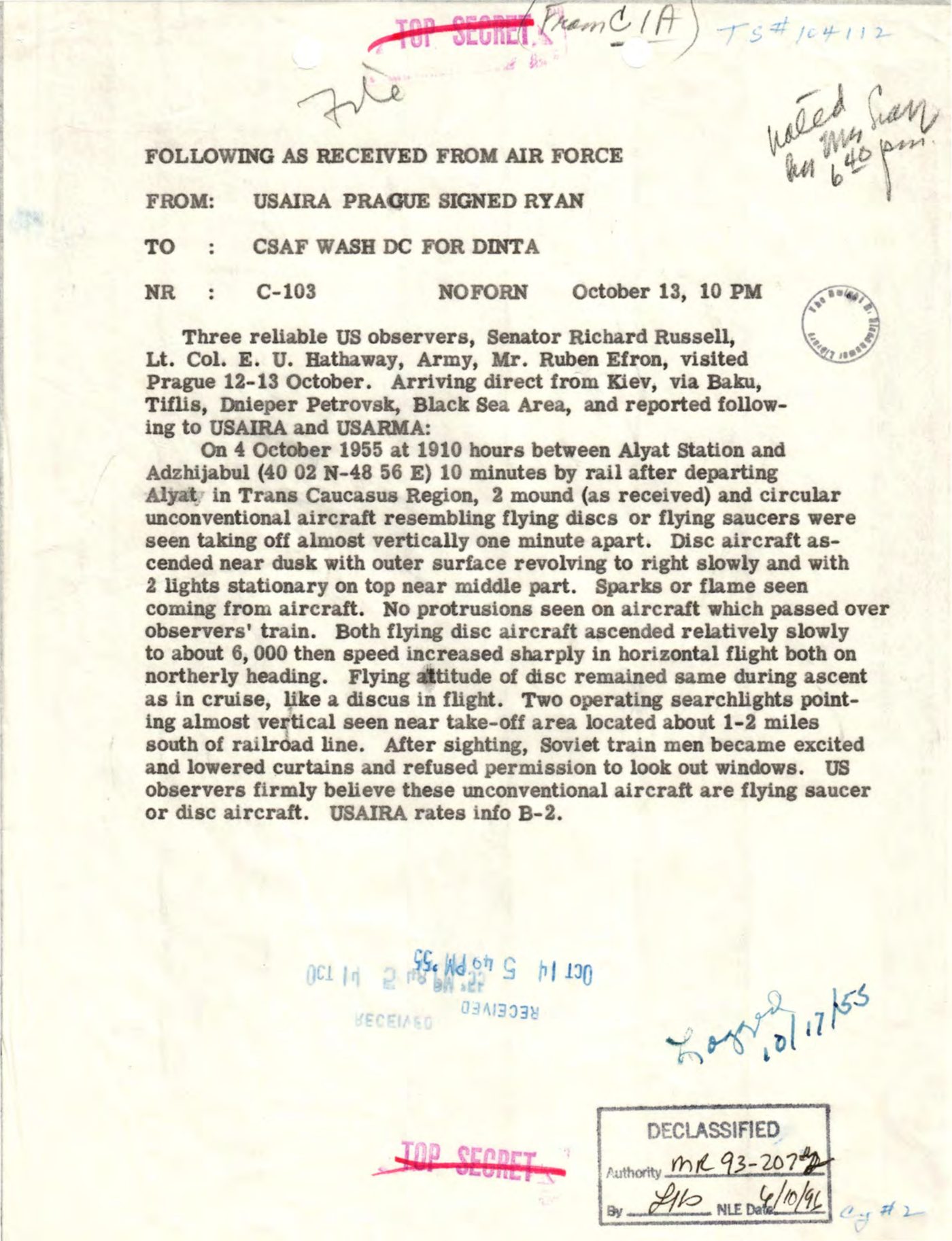
USAIRA Prague message regarding unconventional aircraft sighting, routed to the NSC
Source: National Archives, NAID 493470226. View full document
The pilots who first reported foo fighters were not impressionable civilians. They were combat veterans who had flown through flak barrages over the Ruhr Valley and lived. Experienced men. Hard to rattle. And they were rattled.
The term "foo fighter" came from the 415th Night Fighter Squadron, late 1944. Glowing orbs. Fireballs that paced the aircraft. Objects that banked and climbed with apparent intent. The official wartime explanation cycled through ball lightning, St. Elmo's fire, and — implicitly — combat fatigue. The cases were noted. Then the war ended, and the official story was that the mystery ended with it.
It didn't.
The Prague message changes the timeline in ways that haven't been fully reckoned with. Prague, in the postwar period, means something specific. By 1948, Czechoslovakia was firmly behind what was becoming the Iron Curtain. A U.S. military air attaché operating there was in one of the most intelligence-sensitive postings in Europe — watching Soviet aerospace activity, monitoring airspace that both superpowers cared about deeply.
When that attaché filed an unconventional aircraft report and it landed in NSC files — not Air Force files, NSC files — someone made a deliberate routing decision. The Executive Secretary's Subject Files in Record Group 273 aren't a miscellaneous drawer. That's where things go when the NSC decides they belong there. Someone looked at this sighting report from Prague and thought: this goes to the top.
The question the document's metadata raises but can't answer: when, exactly? If this message predates December 1947, the official Project Sign start date, then the institutional concern runs higher and earlier than the public record admits. If it postdates Sign, then the NSC was running a parallel track while the Air Force was publicly managing the story. Either scenario is more complicated than the textbook version.
While the NSC was apparently receiving attaché reports, the Air Force was busy concluding it had solved the problem.
Project GRUDGE's technical report, published August 1949, is 412 pages of the Air Force telling itself the phenomenon was explained. Misidentifications. Weather phenomena. Psychological factors. Case closed. The report sits today in the Project Blue Book administrative files — not the case files, the administrative files — which is its own small detail worth noting. Administrative files are where you keep the paperwork about how you ran the program, not the evidence the program collected.
GRUDGE said it was over. The Prague attaché report, filed in NSC channels, says it wasn't. Two institutions, same phenomenon, apparently not comparing notes — or not wanting to.
Then there's the document with no record group.
A 346-page UFO file, partially restricted, scanned and digitized, sitting in the National Archives catalog under Record Group: Unknown. In NARA's cataloging system, that designation is genuinely unusual for a processed, digitized document. The images are from the Clinton Presidential Library. The file is titled, straightforwardly, "[UFO] [2]."
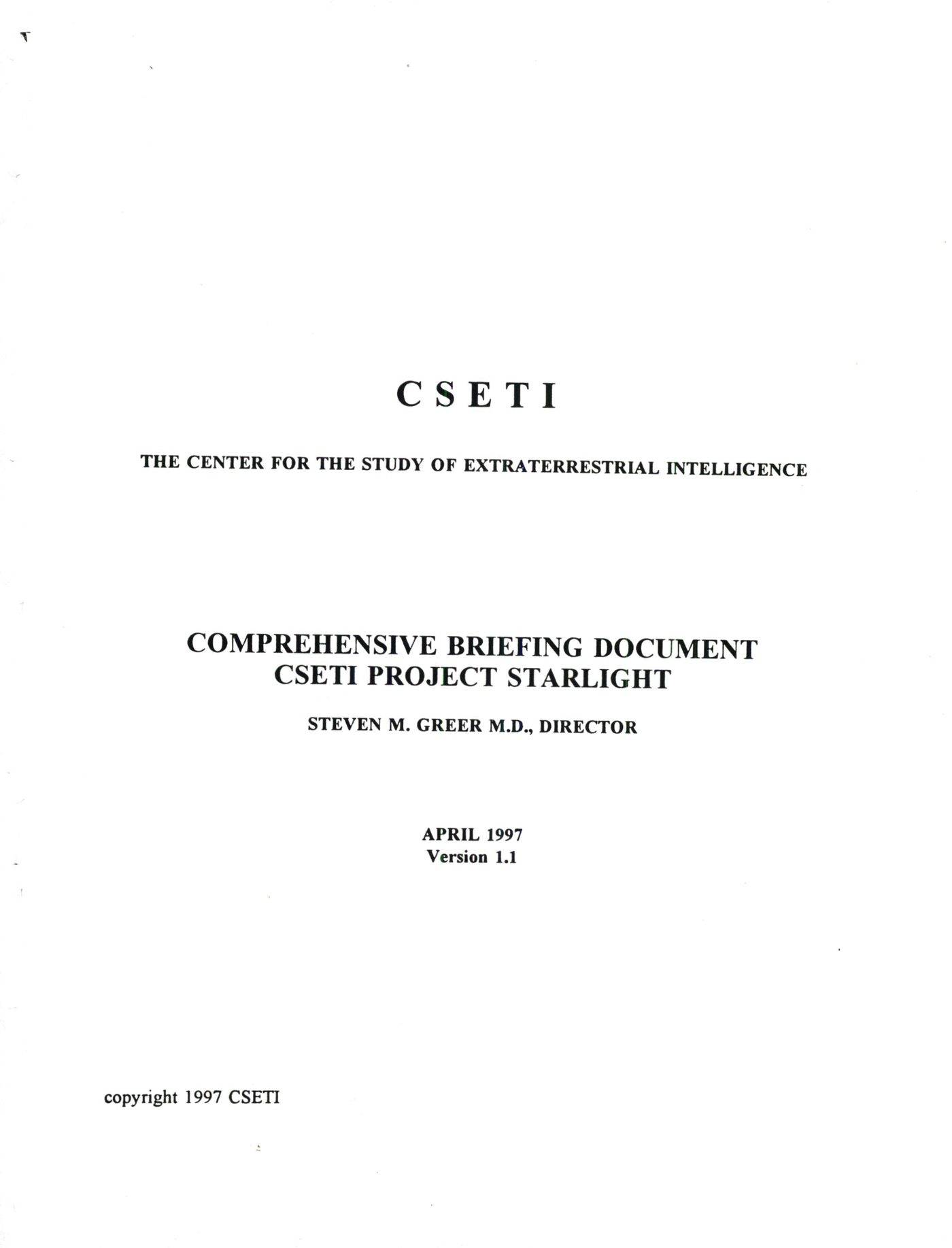
UFO file from Clinton Presidential Library, partially restricted, unknown record group
Source: National Archives, NAID 297910574. View full document
Someone processed it enough to scan 346 pages. Someone decided part of it stays restricted. Nobody put their agency's name on it. That's not bureaucratic sloppiness. Documents don't accidentally lose their record group attribution after being digitized. Either it's been deliberately kept unattributed, or it originated with an agency that didn't want its name attached to a UFO file. Both explanations are interesting. Neither is reassuring.
The buried lede is in the Roswell source files.
In 1994, the Air Force conducted its own investigation into the Roswell incident — the "Roswell Report," released publicly to put the matter to rest. To compile that report, researchers pulled files they considered relevant. One of those files is a UFO document now cataloged under the Roswell Report Source Files in Record Group 341.
Someone on the 1994 Air Force research team looked at a file connected to the wartime and postwar foo fighter documentation and decided it was relevant to Roswell. They pulled it. They used it. They never publicly explained why.
That's a thread connecting 1944 European theater sightings to a 1947 New Mexico incident, drawn by the Air Force's own investigators. It's sitting in the archives. It's been sitting there since 1994.
There's one more document worth flagging. An Air Intelligence Report — 406 pages, Record Group 341 — that remains partly restricted today. Most Air Intelligence reports from this era are fully declassified by now. Eighty years is a long time. Somebody made an affirmative, recent decision to keep part of this one closed. A name. A location. An assessment. Something in those 406 pages still matters to someone.
That's not a conspiracy. That's a fact about how classification works. Restricted-partly means a human reviewer looked at it and checked a box. Worth knowing.
What to watch: the NSC's Executive Secretary Subject Files in Record Group 273 haven't been systematically mined for UAP-related material. The Prague message is cataloged. There are almost certainly others that aren't. The National Declassification Center has been working through Cold War-era NSC records for years. If more attaché reports surface — from Prague, from Vienna, from Berlin — the timeline problem gets worse for the official narrative, not better. The Air Force closed its file in 1969 when it shuttered Blue Book. The NSC didn't answer to Blue Book.
Nobody's really asked what the NSC kept.
Stay curious.
Follow @boggleriley and read the full archive at spacedew.com
Further Reading — National Archives Documents Referenced
- USAIRA Prague — Unconventional Aircraft Sighting, NSC Records (NAID 493470226)
- Project GRUDGE Technical Report, Aug. 1949 (NAID 461456800)
- UFO File (1 of 2) — Roswell Report Source Files (NAID 40989309)
- [UFO] [2] — Unknown Record Group, Partly Restricted (NAID 297910574)
- AF-180273 — Air Intelligence Reports, Partly Restricted (NAID 333335413)