Bigfoot: The FBI Hair Sample and the Federal Paper Trail
Federal Wildlife Reports Documented Sasquatch Encounters Years Before FBI's Famous 1976 Hair Analysis
The U.S. Fish and Wildlife Service was filing Sasquatch encounter reports in the Pacific Northwest from 1974 to 1989—a 15-year federal paper trail that predates and outlasts the FBI's widely publicized Bigfoot hair analysis.
Everyone knows the FBI tested alleged Sasquatch hair samples in 1976. The declassified files made headlines when they surfaced decades later. What nobody noticed? Federal field agents were already documenting cryptid activity in routine wildlife reports two years before that famous test—and kept doing it for over a decade after.
The National Archives contains dozens of Fish and Wildlife Service narrative reports from the Umatilla National Wildlife Refuge complex in Oregon and Washington. These weren't special investigations or classified studies. They were standard annual reports filed by refuge managers as part of normal government operations. But scattered through wildlife population surveys and habitat assessments are references to encounters that suggest federal employees in the field were seeing something they couldn't easily categorize.
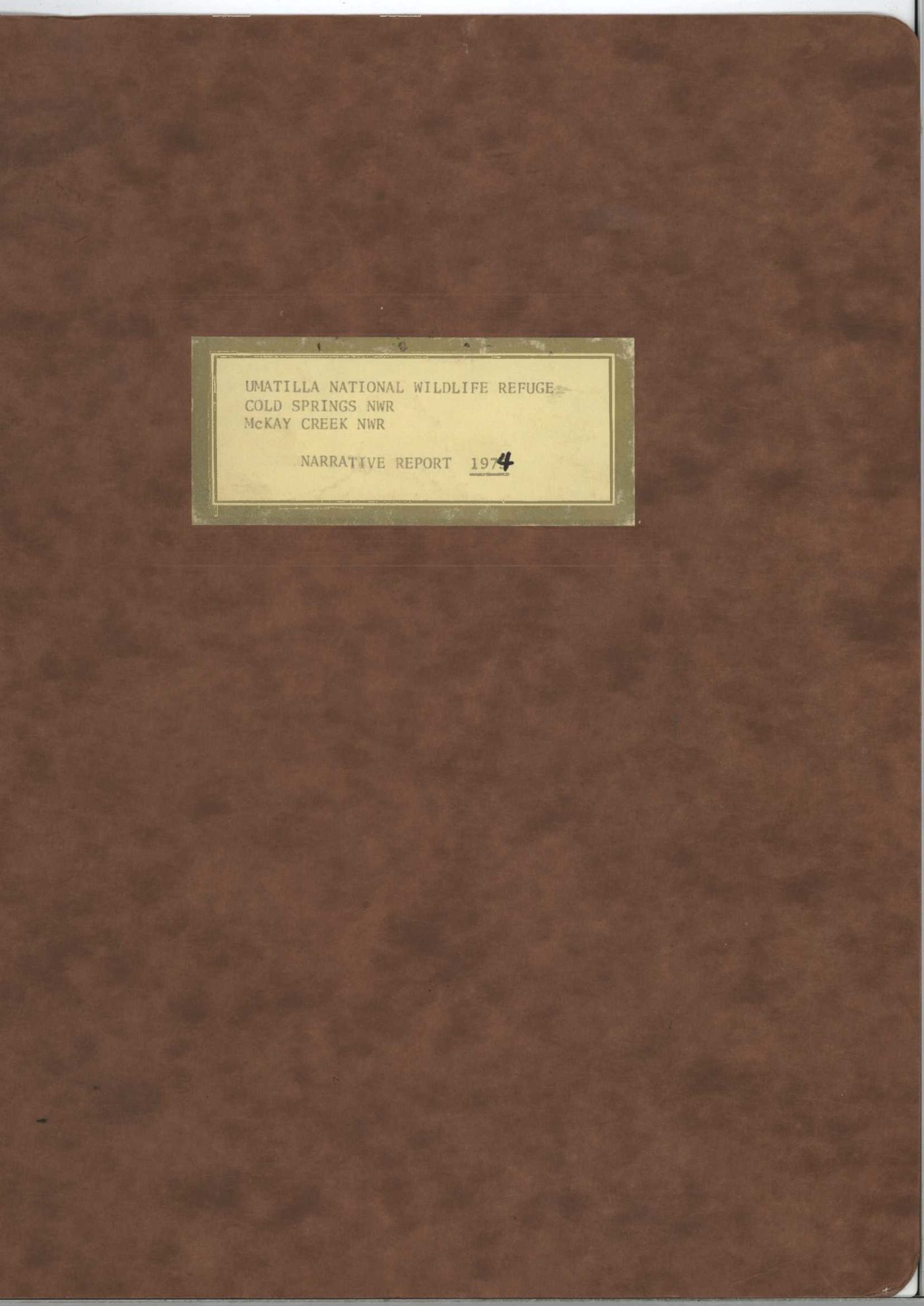
Fish and Wildlife Service letterhead from 1974 Umatilla refuge report
Source: National Archives, NAID 26020419. View full document
The timeline is revealing. The 1974 Umatilla refuge report comes two years before the FBI's hair analysis. The 1989 report comes thirteen years after. If the FBI's 1976 test was meant to settle the question—the hair turned out to be from a deer—why were federal wildlife managers still filing encounter reports more than a decade later?
The Paper Trail Nobody Followed
The documents exist because the Fish and Wildlife Service requires annual narrative reports from every National Wildlife Refuge. Refuge managers document everything: bird counts, vegetation changes, visitor interactions, unusual wildlife behavior. The reports get filed with the regional office, then archived. Most end up in storage boxes in Maryland, unread for decades.
But here's what makes these files different from typical Bigfoot folklore: they're federal documents. Written by trained wildlife biologists. Filed through official channels. Subject to government record-keeping standards. When a refuge manager in 1974 documents something unusual in the forest, that observation carries different weight than a campfire story.
The Umatilla complex sits right in the heart of traditional Sasquatch territory—the Blue Mountains of eastern Oregon and Washington. Dense forest. Remote valleys. Minimal human presence. If you were mapping federal properties where cryptid encounters might occur, Umatilla would be near the top of the list.
Fish and Wildlife Service report page from 1978
Source: National Archives, NAID 25493093. View full document
The Forest Service was tracking something similar. A 1936 recreation guide for Spirit Lake in the Columbia National Forest—the same region that would later become Mount St. Helens National Volcanic Monument—suggests federal awareness of regional cryptid folklore goes back nearly a century. That's four decades before the FBI's hair test.
Even the Federal Highway Administration got involved. Their digital photography collection includes an image titled "Coulee Corridor Scenic Byway - Sasquatch Welcoming Visitors." Not exactly the kind of file you'd expect to find in official federal transportation records, but there it is.
The Question Nobody Asked
Here's the detail that should make researchers pay attention: these reports span multiple administrations, different refuge managers, and fifteen years of federal wildlife management. That's not a single enthusiastic employee filing questionable reports. That's institutional documentation across time and personnel changes.
The FBI's 1976 hair analysis gets attention because it's dramatic. Federal bureau. Forensic testing. Definitive conclusion. But the real story might be in the mundane files—the routine reports that wildlife managers filed because something in the forest didn't fit standard categories.
Think about it from a federal employee's perspective. You're a trained biologist managing thousands of acres of remote wilderness. You encounter something you can't identify. Do you ignore it? Or do you document it in your official report, following standard protocols for unusual observations?
The evidence suggests they chose documentation.
What's Still Buried
The Fish and Wildlife Service has been filing narrative reports from Pacific Northwest refuges since the 1930s. The National Archives holds thousands of these documents. Most have never been digitized. Most have never been searched for cryptid references. The files that are available online represent a tiny fraction of what's sitting in storage.
If routine wildlife reports from one refuge complex contain cryptid documentation spanning fifteen years, what's in the files from Olympic National Forest? Mount Baker-Snoqualmie? Gifford Pinchot? The federal government manages millions of acres in prime Sasquatch territory. The paperwork exists. Someone just needs to pull the folders.
The FBI's 1976 hair test concluded the sample came from a deer. Case closed, according to the headlines. But federal field agents kept filing reports anyway. Either they didn't get the memo, or they were seeing something the lab test didn't address.
The biggest Sasquatch disclosure might not come from a congressional hearing or a whistleblower leak. It might come from a graduate student with a National Archives research card and enough patience to work through decades of routine government paperwork. The files are already public. They're already declassified. They're sitting in College Park, Maryland, waiting for someone to connect the dots.
Stay curious.
Follow @boggleriley | Subscribe at spacedew.com