Perseverance Laser Finds Ruby-Type Glow in Jezero Crater Rocks
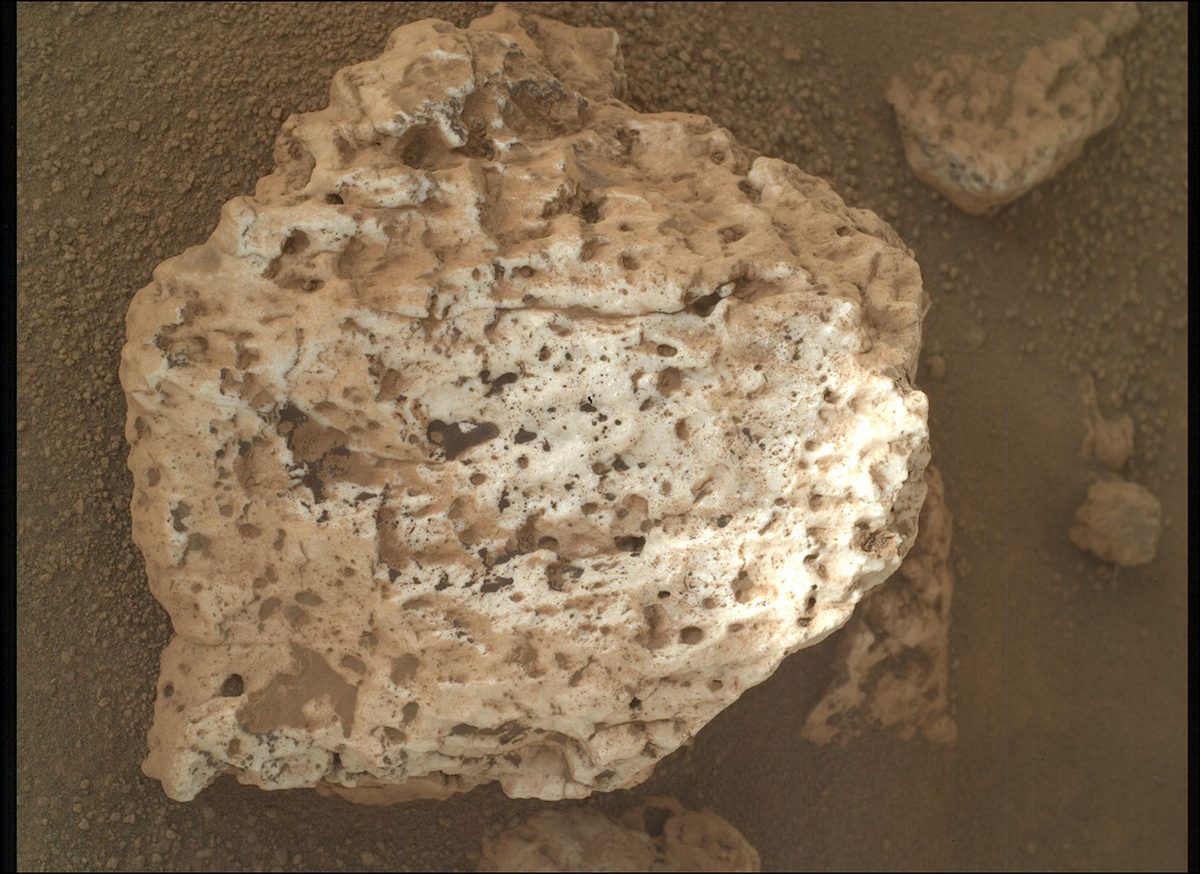
Perseverance's SuperCam team, led by Roger C. Wiens of Purdue University, has detected a ruby-type chromium glow in light-toned rocks in Jezero Crater, pointing to impact heating, NASA said Nov. 4.
What NASA says
Wiens, the SuperCam principal investigator, wrote the account in a post on NASA's science site. SuperCam is the rover's laser instrument. It zaps a rock and reads what comes back.
Two years ago, Wiens wrote, the team was startled when the laser hit a light-colored rock and produced strong, narrow peaks of light at two wavelengths: 692.7 and 694.1 nanometers. A nanometer is a billionth of a meter.
That glow is called luminescence, light given off with a delay. Wiens wrote that this particular signal comes from delayed atomic transitions in chromium atoms sitting inside a corundum crystal structure. SuperCam can time the delay, so the team could verify the light came from chromium in corundum.
The gemstone form of chromium-bearing corundum is ruby. Wiens wrote that before SuperCam was installed on Perseverance, the team put a ruby in the laser beam and watched the entire room pulse a brilliant red.
He is clear about the limits. "While we haven't found collectable rubies on Mars yet, the little corundum crystals are helping us learn more about Mars' past," he wrote.
The results were published in Geophysical Research Letters by a team led by Ann Ollila earlier this year, Wiens wrote.
Why a ruby mineral is odd on Mars
Wiens wrote that corundum is a metamorphic and pegmatitic mineral. Metamorphic means rock changed by heat and pressure. He wrote that it would not be expected on Mars, a planet that lacks plate tectonics.
Large meteor and asteroid impacts offer a way around that. Wiens wrote that big impacts can create local metamorphism through long-term heating. Perseverance is working in very ancient terrain near the rim of Jezero Crater, so he says some evidence of localized metamorphism is to be expected there.
One detail from his post shows how the work has changed. Early in the mission the team tried this luminescence technique only rarely. Lately they run it frequently on light-toned rocks, looking for more signs of impact effects. Wiens calls it an unexpected tool, and a side benefit of the way SuperCam does its Raman spectroscopy, a method that identifies minerals by how they scatter laser light.
What the published work adds
Other coverage fills in the research behind the post. Reports on the Ollila paper say three pale, plagioclase-rich float rocks showed the signal. Float rocks are loose chunks no longer attached to the bedrock they came from. According to those accounts, they were named Hampden River, Coffee Cove and Smiths Harbour, and were examined in March, April and July of 2025.
Live Science reports that the research was first presented March 16 at the 57th Lunar and Planetary Science Conference in Texas. It quotes co-author Valerie Payré of the University of Iowa on the limits. The crystals are too small for the rover's cameras to see, and the amount of chromium cannot be measured, so the team cannot say whether they are rubies or another kind of corundum. Live Science reports the crystals are under 0.2 millimeters across.
Payré also said the rocks are out of context, meaning they came from somewhere else. That makes the full story hard to pin down. The researchers say they need samples at their source to explain how the corundum formed.
Scientific American quotes Candice Bedford, a Purdue research scientist and co-author of a study on the finding, saying the Mars corundum is not gem quality. She says it likely formed within seconds of an intense impact.
What nobody knows yet
Where the corundum actually formed is not known. Impact heating is the explanation Wiens points to, and it fits the terrain, but the loose rocks do not settle it. According to accounts of the Ollila paper, the authors say that a core sample from the source outcrop, returned to Earth, could answer it. No such sample exists.
What is next
Wiens wrote that the team now runs these luminescence checks often on light-toned rocks, and that work continues. NASA's post gives no dates and names no target rock. More detections, ideally in rock still in place, are what would tie the glow to a specific impact.
Stay curious.
Find more at spacedew.com and @boggleriley on X
Get SpaceDew by email
Free. Tick what you want, and nothing else is sent.