Perseverance Finds Bright Rocks Rich in Hydrated Silica Outside Jezero Crater
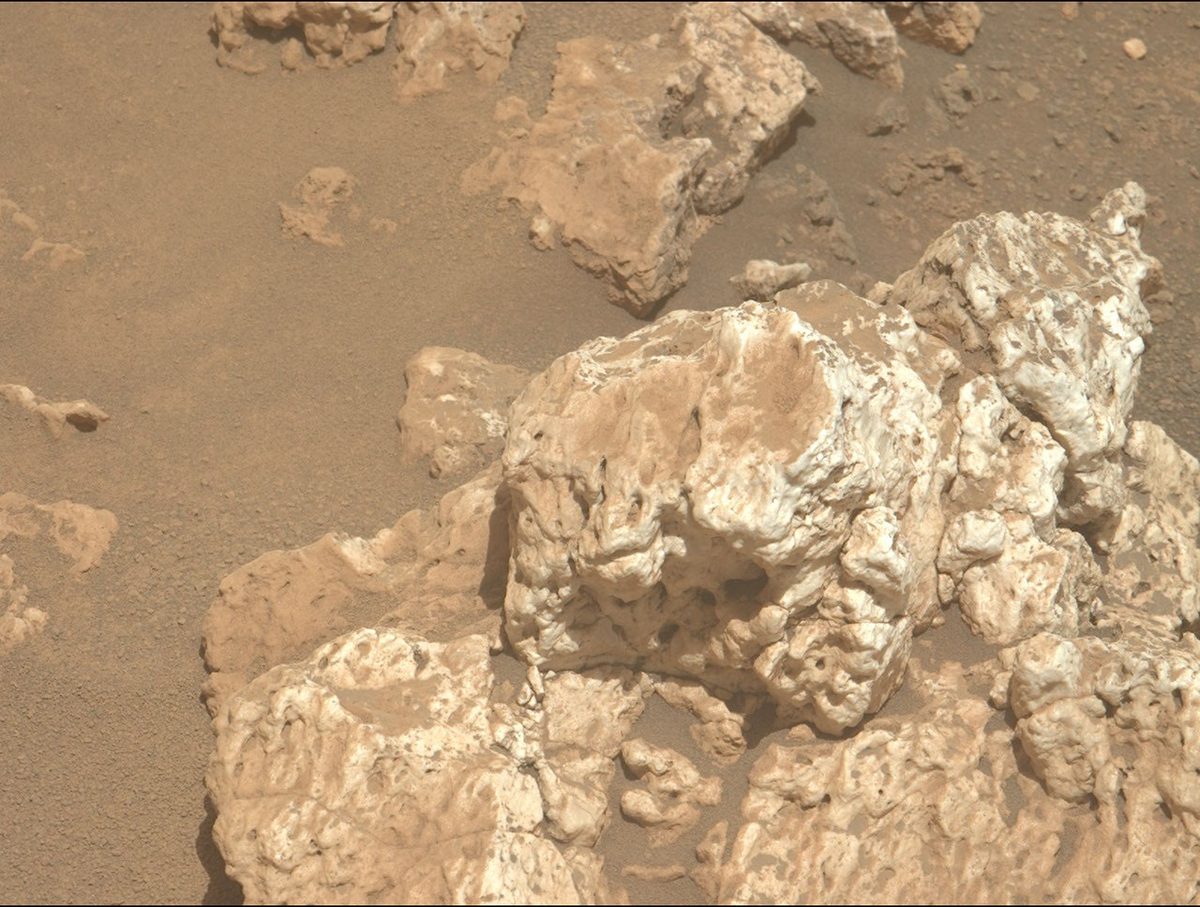
Purdue University research scientist Candice Bedford reported on Nov. 16, 2026, in a NASA Science blog post, that NASA's Perseverance rover found bright rocks at "Idubi," outside Jezero crater, rich in hydrated silica.
What the team says
Bedford writes that the rover team has been "captivated" by a cluster of light-toned rocks at Idubi. Idubi is an area of ancient Martian crust exposed in the "Lac de Charmes" region, outside Jezero crater, according to the post.
The fragments stand out against the darker, often dust-covered ground around them. Bedford says they are even brighter than the igneous and impactite rocks the rover has already looked at. Igneous rocks form from cooled molten rock. Impactite rocks are shaped by the heat and force of an impact. Both are in the post's own terms.
The team suspected these rocks were different from the usual igneous rocks in the area, so it directed Perseverance to investigate. Bedford says newly downlinked data from the SuperCam instrument confirm it. The light-toned rocks are not igneous in origin, and they are rich in hydrated silica. "Downlinked" means the data came down from the rover to Earth. Hydrated silica is silica that has water locked into it.
Why hydrated silica matters
Bedford writes that hydrated silica can form in many watery settings on Earth, including hydrothermal (heated water), pedogenic (soil-forming) and groundwater systems. She calls these deposits prime targets for understanding Mars' water history, because several of those environments could have been able to support life.
Then comes the part that explains the team's interest. Bedford says hydrated silica holds "immense astrobiological value" because of its remarkable capacity to preserve microfossils. Astrobiology is the study of life beyond Earth. A microfossil is the trace of a very small organism.
She puts the question plainly: could these pale remnants of an ancient Martian water system hold signs of ancient life?
The detail worth noting
This is not the rover's first silica. Bedford writes that Perseverance previously found silica-rich rocks on the inner rim of Jezero Crater. Those deposits were too small for the rover to use its proximity science instruments on. Those are the tools that work up close, and they gather the high-resolution chemical and mineral data needed to pin down where a rock came from and how well it could have kept signs of life.
The rocks at Idubi are different on that point. Bedford says they offer "a much more promising scale," and a detailed proximity science campaign is already underway.
What is not known yet
The post does not say what the proximity science campaign has found so far. It does not say what kind of watery setting formed these rocks, or whether they hold any trace of life. Bedford frames the life question as a question, and the post offers no answer to it.
What is next
The detailed proximity science campaign at Idubi is underway, according to Bedford's Nov. 16 post. The post gives no end date and no schedule for results. The close-up chemical and mineral data it is meant to collect are what the team needs to work out how these rocks formed and how well they could have preserved signs of past life.
The rover has found the right kind of rock, in a size it can finally study up close. The work now is in the details.
Stay curious.
Find more at spacedew.com and @boggleriley on X
Get SpaceDew by email
Free. Tick what you want, and nothing else is sent.