NASA Signs Deals to Speed Nuclear Power Module for SR-1 Freedom
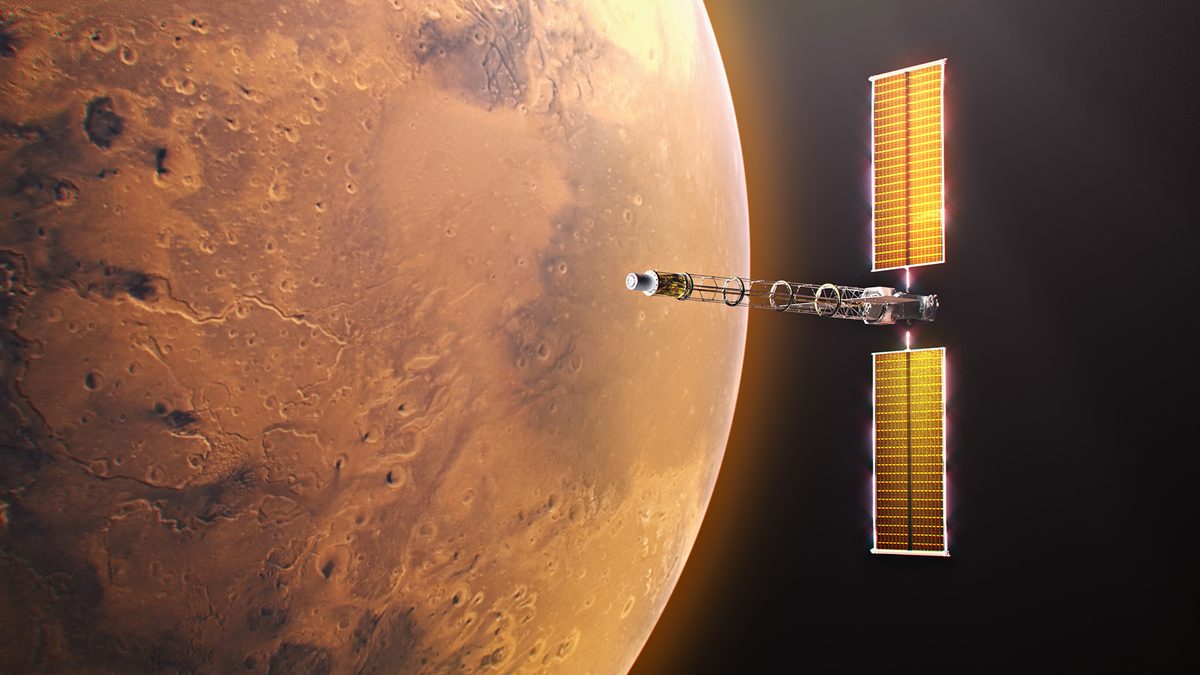
NASA and its partners agreed to contract actions to speed up the nuclear power module for the SR-1 Freedom spacecraft, NASA said Tuesday, October 20, 2026, at its Glenn Research Center in Cleveland.
The date matters, so a note on it: the NASA release is the record here, and the company and lab named below are the partners doing the work. The Tuesday date comes from the release's listing in NASA's news feed. The release itself carries no clock time, so none is given here.
What NASA says
SR-1 stands for Space Reactor-1. NASA's release calls Freedom "humanity's first fission-powered spacecraft to travel outside Earth's orbit." Fission means splitting atoms to make heat. The spacecraft will use that heat to make electricity and drive an electric propulsion system, which NASA says the mission will demonstrate in deep space.
Steve Sinacore, the SR-1 Freedom program director, said the contract actions "reduce technical risk and help us maintain momentum toward our 2028 launch." He also said they strengthen collaboration across the partners. NASA says the partners "mutually agreed" to the actions.
The release splits the work between two partners. Sierra Lobo Inc. will provide the closed Brayton cycle power conversion system. That is the piece that turns heat from the reactor into the electricity the propulsion demonstration needs. Sierra Lobo's work falls under the Space Flight Systems Development and Operations Contract III, which NASA says was awarded in 2024. The contract covers spaceflight hardware design, development, testing and operations at Glenn.
The Department of Energy's Idaho National Laboratory is designing and developing the fission reactor. NASA says the power conversion system will be integrated with that reactor to complete the nuclear power module.
Safety
NASA's release spends a full paragraph on safety. It lists interagency safety reviews, continuous oversight by a NASA chief safety officer, regulatory compliance, and a design process focused on hazards, failure tolerance and nuclear safety. NASA says it and the Department of Energy apply these standards throughout development.
One detail worth noting: NASA says the reactor will stay inactive until the spacecraft leaves Earth orbit.
The mission it carries
According to NASA, SR-1 Freedom launches in late 2028 and will deliver the SkyFall science mission. SkyFall is a team of three Mars helicopters evolved from the Ingenuity design. NASA says they will collect scientific data, demonstrate exploration zones and identify potential water sources.
NASA also ties the work to its Moon Base. The release says the mission will pave the way for next-generation fission-powered systems meant to keep the base operating through periods of darkness and in places where solar power alone is not enough.
Context
NASA's release says Freedom was announced at the agency's "Ignition" event. Coverage of that event describes it as the moment NASA laid out changes to the Artemis program along with plans for this spacecraft. Coverage of the new update also says the helicopters are designed to be released into the Martian atmosphere from an entry capsule, and that NASA is still picking a landing area. NASA's own release does not address either point, so treat them as reported accounts, not NASA statements in this release.
The same coverage notes that the reactor's exact components and features are not public. It also says nothing has been disclosed about how fast the spacecraft will travel or how long it will take to reach Mars. NASA's release gives neither figure.
What is next
The launch target is late 2028, per NASA's release. That is a target, not a scheduled date, and the release gives no specific day. NASA's mission page for the spacecraft is at nasa.gov/mission/space-reactor-1-freedom. The next thing to watch is the integration of Sierra Lobo's power conversion system with the Idaho National Laboratory reactor, which the release describes as the step that completes the nuclear power module. NASA has not given a date for it.
Stay curious.
Find more at spacedew.com and @boggleriley on X
Get the Morning Dew
The daily brief, live quotes and the newest File Zero story, every morning. Plus a Friday recap of the week. Nothing else, ever.