NASA Settles Key Design Choices for SR-1 Freedom, Its First Nuclear Electric Spacecraft
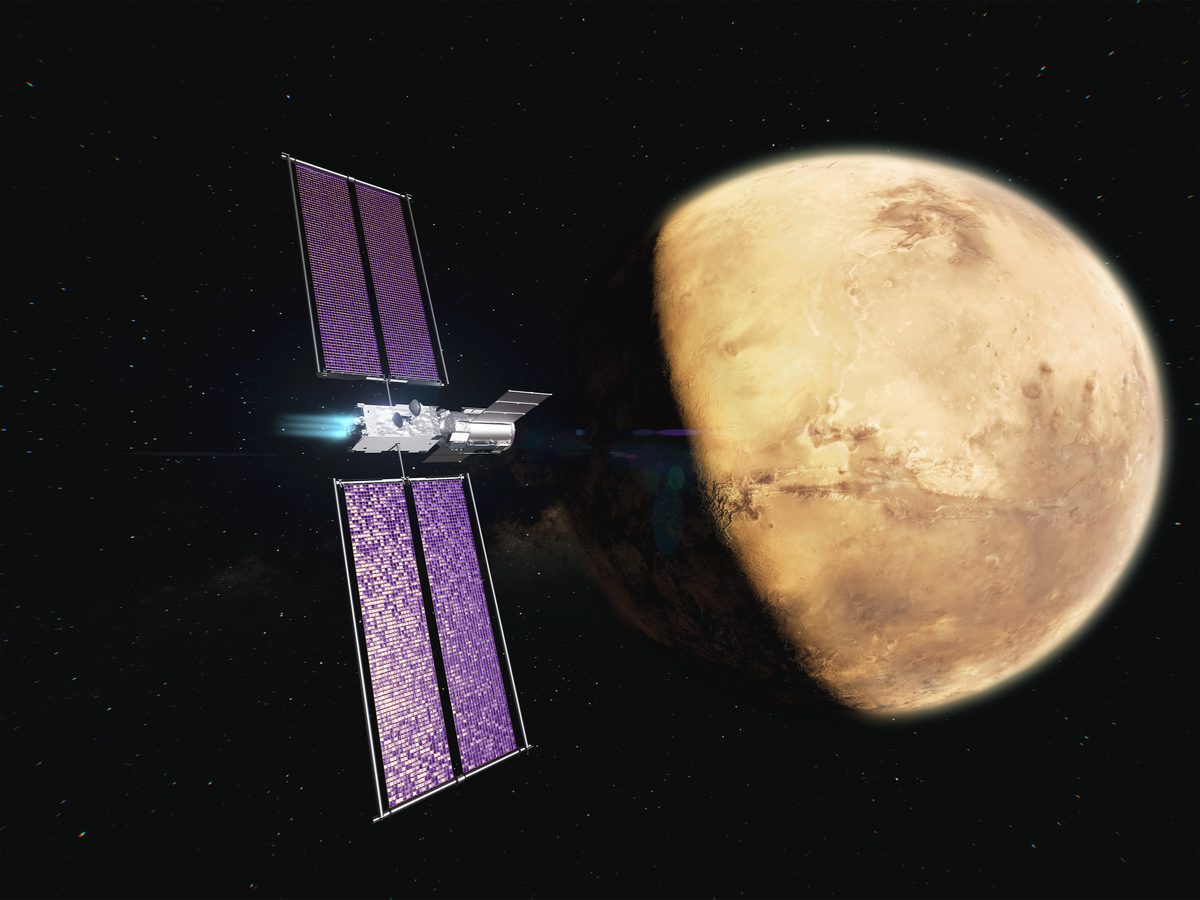
NASA finished a major design review of Space Reactor-1 (SR-1) Freedom in October at Glenn Research Center in Cleveland, locking in key parts of a spacecraft meant to carry a nuclear reactor to Mars, the agency said in a release dated November 24, 2026.
What NASA says it decided
NASA says experts from across the agency, the U.S. Department of Energy, and industry met at Glenn for the review. The agency says several decisions moved the mission "from an early concept toward a defined spacecraft design."
SR-1 Freedom is targeted to launch in 2028 and would be the first test of nuclear electric propulsion in deep space, according to NASA. Nuclear electric propulsion means a reactor makes electricity, and that electricity drives the engines. NASA's release says the launch is planned for late 2028.
The spacecraft will use both nuclear and solar power to deliver SkyFall, a capsule carrying three next-generation helicopters, to Mars. NASA says that once deployed, the helicopters will study Martian geology and climate history, explore new terrain, and search for signs of subsurface ice.
Two design changes are named in the release. The first is a shorter boom than the one shown in early illustrations. The boom holds the reactor away from the spacecraft's main body, which NASA calls the Power and Propulsion Element. NASA says the shorter boom will cut weight, simplify assembly, and streamline the design.
The second follows from the first. NASA and Energy Department experts found that better shielding and spacecraft design let the reactor sit closer to the rest of the spacecraft. NASA says that simplifies putting the pieces together while keeping enough radiation protection for the electronics and the SkyFall payload.
The communications system is also being changed. NASA says SR-1 Freedom will carry larger X-band antenna dishes to send data back to Earth across deep space. X-band is a radio frequency range used for spacecraft links.
The money and the hardware
NASA says it awarded a $39.3 million contract to the Johns Hopkins University Applied Physics Laboratory to develop the heat rejection system for the nuclear power module. That system removes the extra heat the reactor makes so the power system can run safely.
The lab is working with a company called Advanced Cooling Technologies, which NASA describes as a key strategic commercial partner. The company is to supply the heat pipe and composite radiator technology. NASA says the award was made under its Aerospace Research, Development, and Engineering Support II contract, and that the lab will design, build, test, and evaluate the system and make the flight hardware.
How the flight is meant to go
Teams have also set out the mission timeline, according to NASA. After launch, once the spacecraft has left Earth orbit, SR-1 Freedom will switch on the reactor and raise its power step by step. The reactor will run for an initial period, then shut down, while the spacecraft collects performance data and sends it to Earth. Solar arrays will then supply power for the cruise to Mars.
One detail from the release is easy to miss: the reactor is planned to run a second time. After SR-1 Freedom delivers SkyFall to Martian orbit, NASA says, it will restart the reactor and gather more data on how the spacecraft performs in deep space.
Context
NASA says the design has changed since Administrator Jared Isaacman first described the concept in March at the agency's Ignition event, where leadership shared plans for a fission-powered spacecraft in time for the next Mars launch window.
Steve Sinacore, the SR-1 Freedom program director, called the mission "the first freight run on the railroad of the solar system." NASA says the larger goal is to show that fission power can support long missions, help prepare reliable surface power for its future Moon Base, and open up exploration deeper in the solar system. The agency says future spacecraft and surface work will need much more power than current systems give, especially where sunlight is weak or missing.
What is still open
NASA says teams are still weighing several design features: how many radiator panels SR-1 will carry, the output power levels of the nuclear power module, and how long the reactor will run. Those choices are not made yet, and the release gives no date for them.
What is next
The mission is planned for launch in late 2028, per NASA. The agency says further work will focus on reducing risk, simplifying the design, and staying on schedule. More on NASA's nuclear power work in space is at nasa.gov/space-nuclear.
Stay curious.
Find more at spacedew.com and @boggleriley on X
Get SpaceDew by email
Free. Tick what you want, and nothing else is sent.