NASA Drone Flies Simulated Moon Landing, Picks a Safer Spot on Its Own
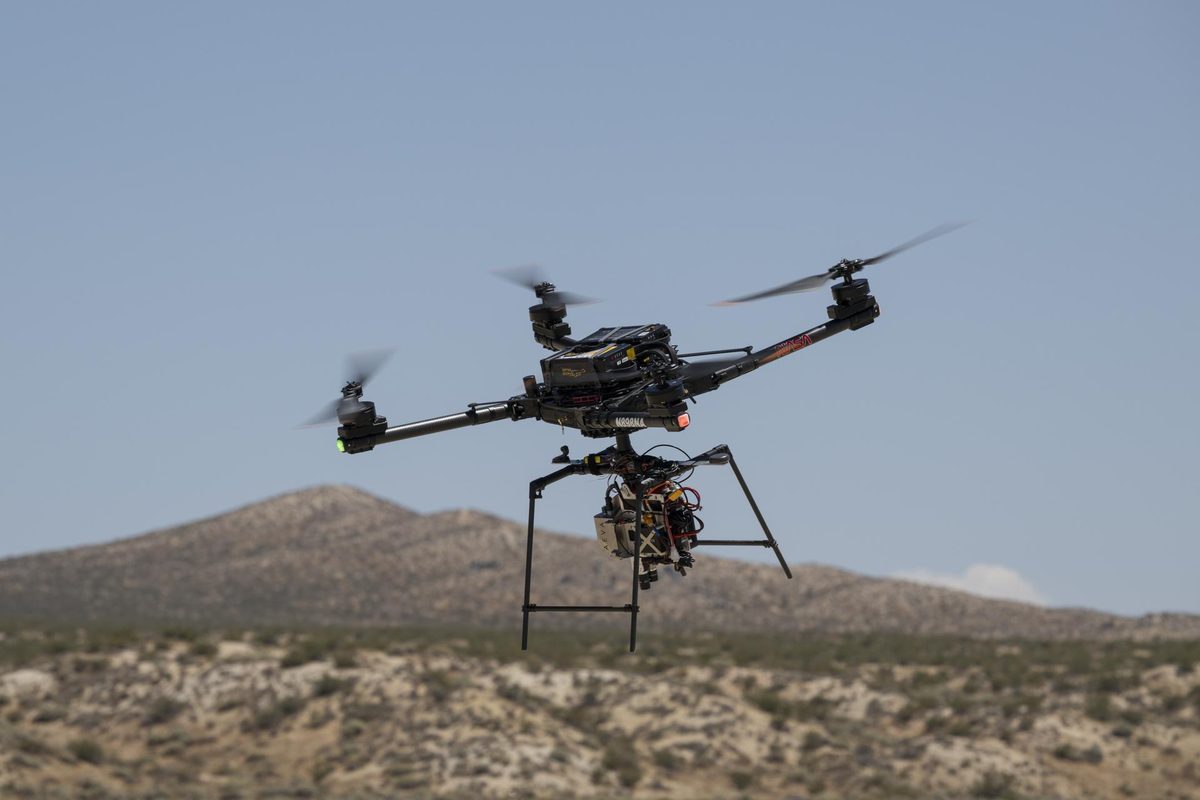
NASA project manager Davis Adams said a drone carrying the agency's SPLICE landing payload diverted to a safer simulated lunar landing site during an Aug. 27 test at Rogers Dry Lake, California.
The flight took place near NASA's Armstrong Flight Research Center in Edwards, California, according to a NASA release. The aim is to help spacecraft steer themselves to safe landing sites on the Moon and other planets.
What NASA says happened
An Alta-X drone carried the payload, called SPLICE. That stands for Safe and Precise Landing, Integrated Capabilities Evolution. NASA says the drone completed simulated lunar descent and landing maneuvers on Aug. 27.
Here is how the system works, as NASA describes it. SPLICE maps the ground below and judges possible landing areas. If it decides the target area is unsafe, it sends the drone to a better spot. NASA says the system builds high-resolution digital elevation maps (maps of how high and low the ground is) from light-detection sensor data.
Adams called the flight "the culmination of almost a decade of work, for the SPLICE project." He also said it "raised the technology readiness level, priming it for integration into future robotic and crewed lunar flights." Technology readiness level is NASA's scale for how mature a piece of technology is.
Adams said the guidance and navigation systems apply to landings on Earth, the Moon and Mars.
Who built it and how it got here
Researchers at NASA's Johnson Space Center in Houston developed the SPLICE payload, NASA says. Specialists at NASA Armstrong worked with them to integrate, test and fly it on the Alta-X drone.
One detail shows how much groundwork came first. According to NASA, earlier flights in June and July checked communications, data handling, telemetry and command and control between the payload and the drone. Those flights were meant to prepare for a full-scale test at Voyager Technologies in Mojave, California, later this month. NASA's release does not say which month "this month" means in the final sentence of that passage, so the timing of that test is not stated precisely here.
NASA also credits its Flight Opportunities project, based at Armstrong, with enabling early flight testing of SPLICE. NASA says that testing included a descent altitude and landing path in 2019 similar to what is expected on a lunar mission. In 2020, it included a demonstration of two NASA-developed precision landing sensor systems.
Why it matters for Moon landings
NASA says it has worked with a number of commercial lunar lander providers to put versions of SPLICE into their vehicles. According to the release, a number of landers slated for upcoming Moon Base missions use data NASA collected while developing systems like SPLICE to make soft touchdowns on the lunar surface.
Adams said some of those companies are also evaluating the system's navigation for precision landing, and for possible extensions to autonomous surface mobility, meaning vehicles that drive themselves on the ground.
A drone is not a lander. It flies in Earth's air and gravity, and this was a simulated lunar descent. What NASA reports is that the guidance software did its job in that setting: it mapped, judged and diverted.
What is next
NASA says the full-scale test at Voyager Technologies in Mojave is planned for later this month, as stated in the release. The release does not give a date or describe the test vehicle.
Adams said NASA is coordinating with industry on use of the guidance system once it is available in the NASA software catalog, which NASA says is currently planned for this fall. That is a plan, not a release. Whether any specific lander will fly with SPLICE guidance, and on which mission, is not stated in NASA's account.
Stay curious.
Find more at spacedew.com and @boggleriley on X
Get the Morning Dew
The daily brief, live quotes and the newest File Zero story, every morning. Plus a Friday recap of the week. Nothing else, ever.