NASA and Boeing Plan Uncrewed Starliner Flight by January, Crewed Return by 2028
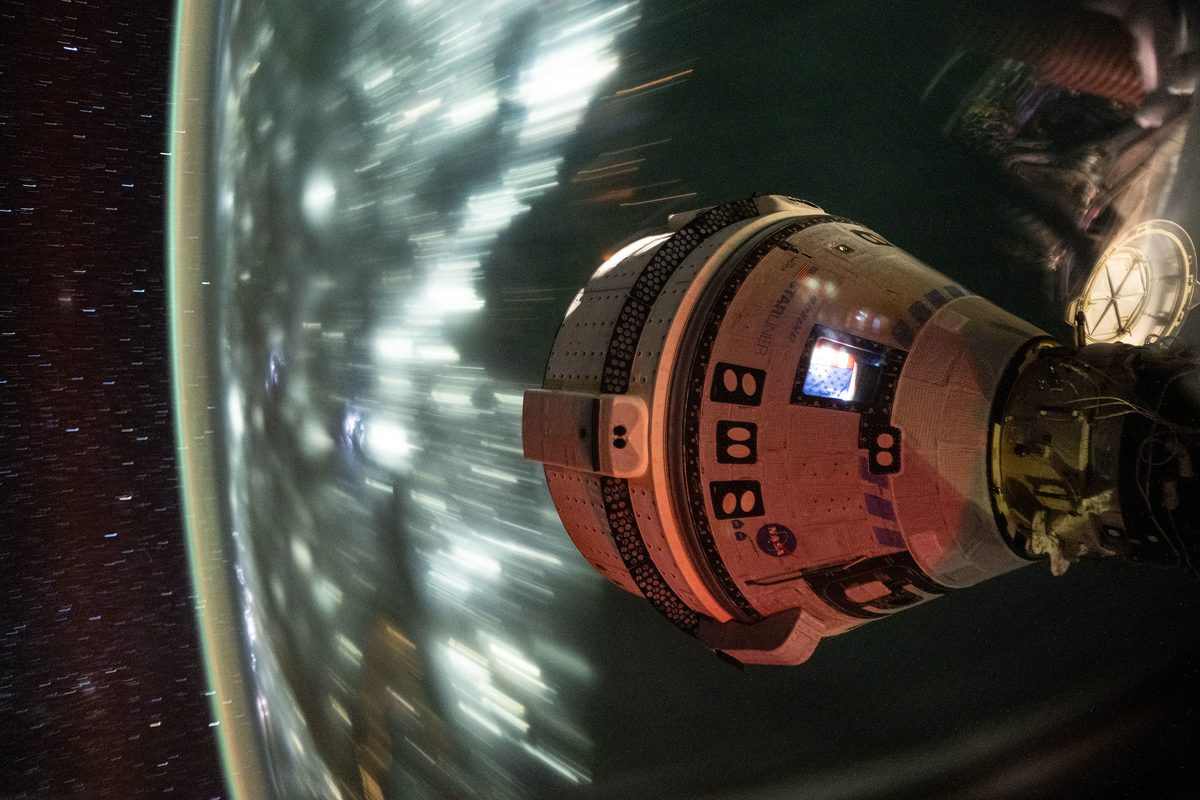
NASA Administrator Jared Isaacman said Monday that Boeing's Starliner spacecraft will return astronauts to the International Space Station by 2028, following an uncrewed test flight planned for as early as December, NASA announced.
Isaacman made the announcement at a news conference on September 28, alongside Dana Weigel, manager of NASA's Low Earth Orbit Program, NASA astronaut Woody Hoburg, and Boeing Commercial Crew Vice President and Program Manager John Mulholland, according to the NASA news release published at nasa.gov.
The plan has two steps. First, an uncrewed Starliner-1 mission will fly to the station to test fixes made to the spacecraft's propulsion system. Then, if that goes well, Starliner-2 will carry crew, with a target of 2028, Isaacman said in the release.
"We are starting with an uncrewed Starliner-1 mission to the International Space Station to validate the improvements made to the spacecraft and gather the flight data we need," Isaacman said. "Our current plan is to return astronauts on Starliner-2 by 2028."
The uncrewed Starliner-1 has the potential to fly in December of this year or January 2027, NASA said in the release. The mission will serve as an engineering evaluation, verifying improved thermal environments and obtaining performance data for system qualification, NASA said.
The path to this point was not smooth. Starliner's only crewed flight launched in June 2024 and was expected to last about eight days. Helium leaks and thruster failures during the trip to the station led NASA to return the capsule to Earth without its crew in September 2024, according to accounts of the event. Astronauts Butch Wilmore and Suni Williams remained aboard the station before returning on a SpaceX Crew Dragon in March 2025, after spending more than nine months in orbit, according to the same accounts.
In February 2026, NASA classified the flight as a Type A mishap, the agency's most serious mishap category, which applies to events that can endanger a crew or fail to achieve a primary mission objective, NASA said.
A NASA Program Investigation Team identified the core problem: Starliner's service module reaction control thrusters, small engines used to maneuver the spacecraft, operated outside their engineering qualification limits. The investigation found the failures resulted from a combination of factors, including the thermal environment around the thrusters and features in their design, NASA said in the release. In total, the investigation identified 61 recommendations to NASA for future missions, the release states.
Boeing has already made thermal modifications to the service module, and NASA will evaluate those on the Starliner-1 flight, the release says. After that flight, NASA and Boeing plan to implement an additional thruster valve design modification, focused on addressing what the release describes as poppet seal extrusion, a condition in which a small sealing component deforms under pressure and degrades thruster performance. Boeing will also install new crew module thrusters, batteries, and make minor modifications to the parachute system before crewed flights resume, NASA said.
"With the safety of our space station crew and the public as our highest priority, we will test Starliner's propulsion system through targeted demonstration objectives and disciplined operational controls," Weigel said in the release. "These steps are essential to validating Starliner's thermal performance, which is a key element for the certification."
NASA's original commercial crew awards were about $4.2 billion for Boeing's Starliner and $2.6 billion for SpaceX's Crew Dragon, according to accounts of the program's history. SpaceX has conducted regular crew rotations since 2020. Starliner has not yet been certified for operational crew flights.
A NASA inspector general audit found that unexpected testing problems since 2020 added about six years of delays to the Starliner program, according to accounts of the audit. As of March 2026, the audit said helium leaks and propulsion failures remained unresolved at that time, and the inspector general noted that human-rating certification could be delayed to 2027, leaving a limited window for crewed flights before the station's planned end of operations after 2030, according to the same accounts.
NASA said it intends to exercise options for a fifth and sixth Starliner flight to and from the space station, and will work with Boeing and United Launch Alliance to certify the Vulcan rocket for crew transportation after the Atlas V rocket's final flight, according to the NASA release. The Vulcan certification timeline was not specified in the release.
Spaceflight Now reported on September 29 that if the uncrewed test flight goes well, NASA and Boeing hope to launch a piloted Starliner flight in mid-2028, incorporating redesigned propulsion system valves.
What is not yet known is whether the December or January window for Starliner-1 will hold, or when exactly the thruster valve redesign will be complete enough to support crewed certification. NASA did not give a date for either in the release.
"NASA has been committed to having multiple crew transportation options since the beginning of the Commercial Crew Program," Isaacman said. "We intend to see this vehicle return to flight in support of the International Space Station and future commercial destinations."
Stay curious. Find more at spacedew.com and @boggleriley on X
Get the Morning Dew
The daily brief, live quotes and the newest File Zero story, every morning. Plus a Friday recap of the week. Nothing else, ever.