Four Volunteers Leave Mars Simulation Habitat in Houston After 378 Days
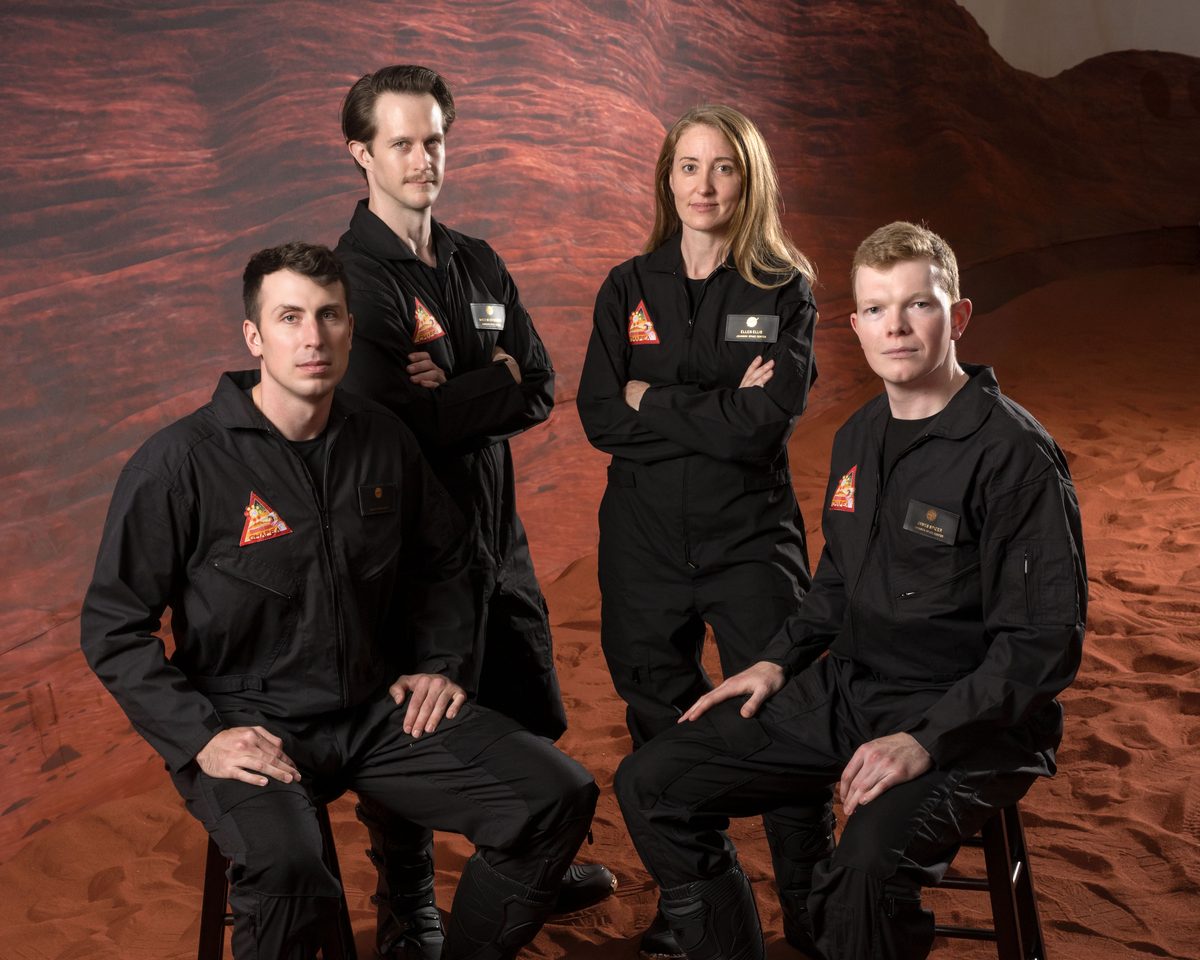
NASA's four CHAPEA volunteers, Ross Elder, Ellen Ellis, James Spicer and Matthew Montgomery, will walk out of their Mars simulation habitat at Johnson Space Center in Houston on Saturday, Oct. 31, after 378 days, NASA said, to help protect future Moon and Mars crews.
What NASA says
The agency's release says the four will exit after 378 days of isolation in a facility at Johnson. NASA says the health and performance data from the simulation can help it develop ways to counter the risks of human spaceflight on future Artemis and Moon Base missions.
CHAPEA stands for Crew Health and Performance Exploration Analog. NASA says it is pronounced cha-pea'-ah. This run is CHAPEA Mission 2.
NASA says live coverage begins at 3 p.m. EDT on Oct. 31. The exit ceremony will stream on NASA Johnson's YouTube and social accounts. Johnson Center Director Vanessa Wyche and NASA astronaut Jack Hathaway will give remarks, and so will the four crew members.
Media can watch the ceremony on a screen outside the hangar that holds the habitat. A subject matter expert will then be available in person for questions. NASA says reporters will have the chance to capture the moment the crew steps outside for the first time in more than a year.
What the crew did inside
According to NASA, the second CHAPEA mission began on Oct. 19, 2025. The crew lived and worked inside a 3D-printed, 1,700-square-foot facility. They simulated Mars mission operations, carried out simulated spacewalks, exercised, kept up the habitat, grew plants, and more.
They did it under the kind of stress NASA says future deep space crews will likely face. The release names three: communication delays, limited resources and isolation.
One detail from the release is worth noting. The data is not only about the people. NASA lists the bandwidth on its Deep Space Network, the system of antennas it uses to talk with distant spacecraft, as one of the things the findings can help with. Talking to a crew far from home takes a limited resource, and the simulation tests how to share it.
Why the data matters
NASA says the mission's data can help it prepare for lunar missions in several ways: by improving how food systems are designed, by making better use of crew time, and by managing Deep Space Network bandwidth, among other parts of life in deep space.
NASA also says the data can help flight doctors and psychologists strengthen medical care and behavioral support, so crews stay ready and perform well.
The release does not say what the crew found. It does not describe results on food, communications or health, and none are reported here.
What is next
The exit is scheduled for Saturday, Oct. 31, with NASA's live coverage starting at 3 p.m. EDT, according to the agency.
U.S. media who want to attend in person, or who want to speak virtually with the crew in the days after the mission ends, must contact the NASA Johnson newsroom by 2 p.m. Friday, Oct. 30, at jsc-newsroom@mail.nasa.gov, NASA says. More on the program is on NASA's CHAPEA page at https://www.nasa.gov/humans-in-space/chapea.
Four people go in on a day in October and come out on a day in October, a year and change later. On Saturday, they step outside.
Stay curious.
Find more at spacedew.com and @boggleriley on X
Get the Morning Dew
The daily brief, live quotes and the newest File Zero story, every morning. Plus a Friday recap of the week. Nothing else, ever.