Cargo Ship Leaves Space Station Carrying 12 Small Heat Shield Test Capsules
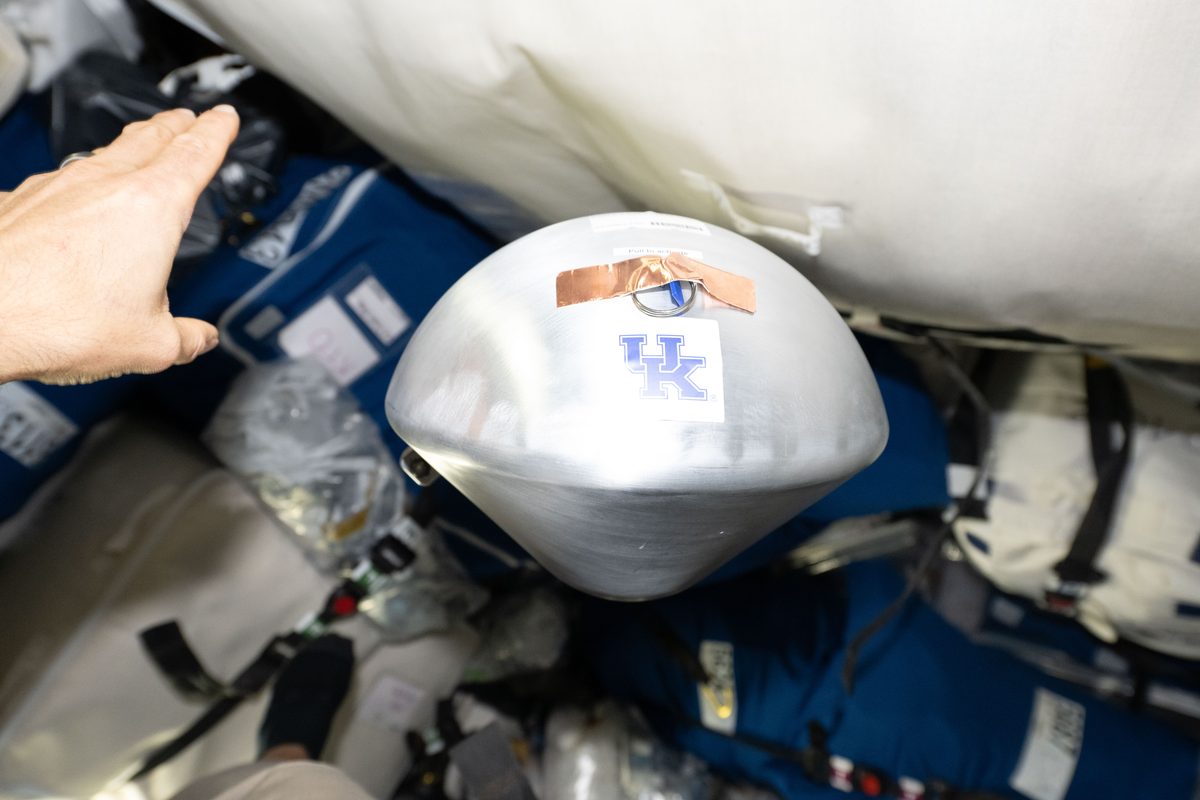
Northrop Grumman's Cygnus XL cargo ship has undocked from the International Space Station with 12 student-designed capsules aboard to test heat shield materials during its fiery return, NASA said in a release on its website.
The release describes the experiment as the Kentucky Reentry Probe Experiment, or KREPE-3. It is the third in a series that uses the last moments of a cargo spacecraft's life to collect data. NASA calls the missions low-cost and high-impact.
What NASA says happened
Before Cygnus XL left the station, astronauts packed it with waste and activated the 12 capsules carried inside, according to NASA. The University of Kentucky students who designed them built in sensors for temperature, pressure, motion, magnetic field and light.
The plan is simple. NASA says the spacecraft will break apart harmlessly in Earth's atmosphere on its planned route. As it does, the capsules eject and start recording how each set of experimental heat shield materials holds up. Satellite signals will send live data to researchers, per the release.
The release names the partners: the University of Kentucky, the state of Kentucky, NASA's Established Program to Stimulate Competitive Research (EPSCoR), several NASA centers, and other federal and commercial partners.
"KREPE-3 is a great example of the goals of NASA's EPSCoR program," said David Berger, the program manager at NASA Headquarters in Washington. He said the program supports "the next generation of scientists and engineers as they develop unique projects that benefit their education and NASA's mission goals."
Keith Peterson, a materials engineer at NASA's Ames Research Center in California's Silicon Valley, put the idea in plainer terms. "We're essentially hitching a ride on a vehicle that's already coming back to Earth," he said.
What is inside the capsules
The 12 capsules do not all test the same thing. NASA's release lists a mix of old and new.
One group uses proven technology, including the ceramic tile material flown on the space shuttle. Another tests a 3D-printed heat shield from the Additive Manufacturing of Thermal Protective Systems project, developed at NASA Johnson and Oak Ridge National Laboratory.
Researchers at Ames are contributing several materials. Two capsules will fly a family of coverings called Materials Engineered for Re-entry using Innovative Needling Operations, or MERINO. NASA says they are made from layers of carbon and phenolic fibers stitched together like felt. The release says they are more flexible, faster to produce and less expensive than traditional protective substances, which makes them promising for Mars missions. NASA ties that to Mars' thinner atmosphere, which it says means lower heat loads and allows lighter protection.
A third capsule, the Kentucky Instrumented Conical Hypersonic Experiment, uses a dual-cone shape. NASA describes a tungsten tip on a cone layered with carbon and heat-resistant plastic fibers, and a rear cone wrapped in MERINO. The goal is to check computer models against real-world data.
Another capsule is shaped like the aeroshell, the protective outer shell, that will shield NASA's upcoming Dragonfly mission as it arrives at Saturn's moon Titan. It will test how stable that shape is in flight. NASA says it is covered in Phenolic Impregnated Carbon Ablator, a material developed at Ames that flew on NASA's Stardust, Mars Science Laboratory and Mars 2020 missions.
One capsule carries an umbrella-shaped deployable heat shield called Adaptable Deployable Entry and Placement Technology. The umbrella shape adds surface area to slow descent. NASA says a full-size version could be folded, which would suit payloads larger than the rockets that launch them.
The release adds that other capsules from domestic and international partners will test known and new materials. One of those carries a heat flux sensor developed at the University of Stuttgart in Germany. It is meant to show how heat moves across a surface during re-entry.
Context
The release frames the work around returns from the Moon and Mars. NASA says the aim is to get flight data on materials still in development, and to do it, in Peterson's words, in a way that is "fast, affordable, and incredibly effective."
The mission itself is the Northrop Grumman 24th cargo resupply mission for NASA, per the release. That is the flight whose Cygnus XL spacecraft serves as the carrier.
One small detail stands out in the release. Several of the capsules are not built to protect anything yet. They are built to check the math, whether that is a dual-cone shape against computer models or a Titan-style shell against stability predictions. The data is as much about teaching the software as it is about testing the materials.
What is next
The next step is the re-entry itself. NASA says the capsules will eject as Cygnus XL breaks apart on its planned route, and that live data will reach researchers by satellite. How each material performs is not known yet. NASA's release does not report any results, so none are reported here.
If the capsules work as designed, the readings should show how MERINO, the shuttle-style tiles, the 3D-printed shield, the umbrella design and the rest compare under real re-entry heat. NASA says the findings are meant to inform how larger heat shields could protect future cargo or crew.
Stay curious.
Find more at spacedew.com and @boggleriley on X
Get the Morning Dew
The daily brief, live quotes and the newest File Zero story, every morning. Plus a Friday recap of the week. Nothing else, ever.