Black Hole and Colliding Clusters Explain the Treble Clef
Astronomers led by Andrea Botteon of Italy's National Institute for Astrophysics (INAF) reported Wednesday, October 14, 2026, that a black hole outburst and a galaxy cluster collision likely made the "Treble Clef" radio shape, NASA said.
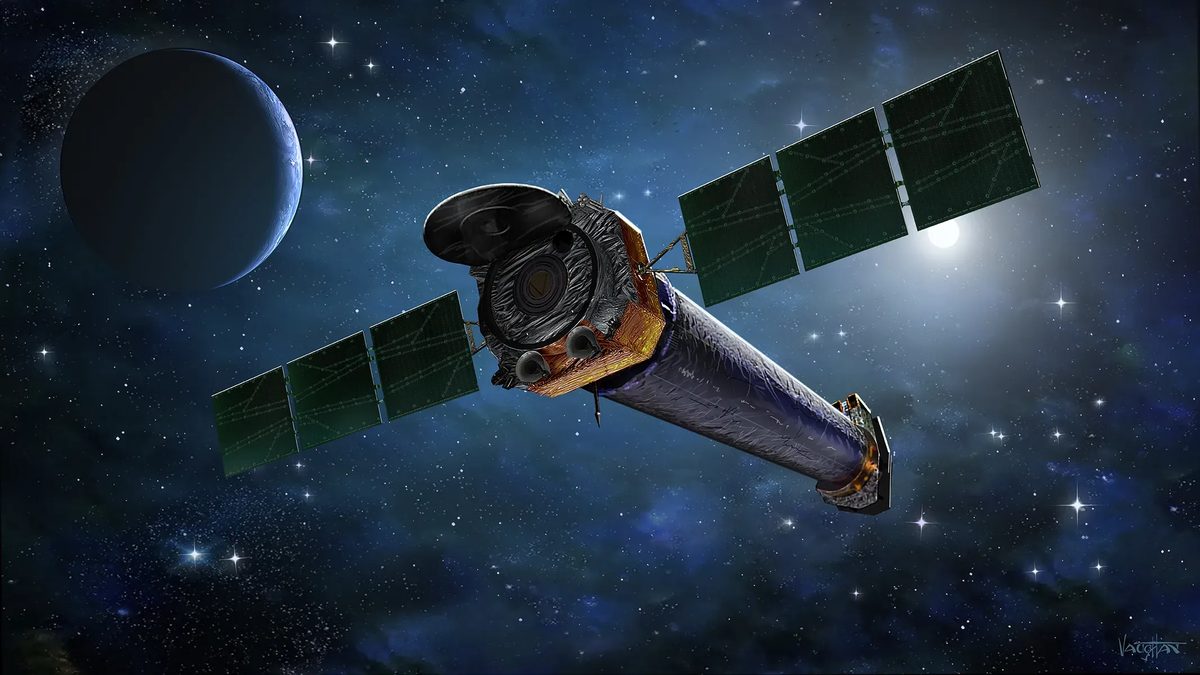
The team used NASA's Chandra X-ray Observatory, according to NASA's science site. Their paper appeared Wednesday in the journal Astronomy & Astrophysics. NASA says the shape sits almost directly behind the plane of the Milky Way, where stars, gas and dust largely block the view from Earth. Chandra and the German eROSITA X-ray telescope found hot, thinly spread gas at the spot. That showed a galaxy cluster hosts the object, and that the cluster is really two clusters merging.
NASA describes a two-stage story. First, an outburst from a supermassive black hole in the cluster's center pushed clouds of charged particles and magnetic fields outward at close to the speed of light. The radio glow faded as the particles lost energy. Then the two clusters collided, compressing or re-energizing the cloud, and it brightened in radio waves again. NASA says shock waves from the collision may have played a part.
Here is the detail I liked. To find the collision in the X-ray data, the authors subtracted the smooth, oval-shaped part of the hot gas and studied what was left. NASA says the leftover glow is brightest on the left and right, so the clusters likely met along that line. The researchers think the direct collision happened a few hundred million years ago, and the clusters are now moving apart.
The treble clef look is a coincidence, NASA says. It calls it pareidolia, people seeing familiar shapes in random data.
The paper is out and the findings are published. NASA calls the cause "likely," and the release does not list any follow-up observations.
Stay curious.
Find more at spacedew.com and @boggleriley on X
Get the Morning Dew
The daily brief, live quotes and the newest File Zero story, every morning. Plus a Friday recap of the week. Nothing else, ever.